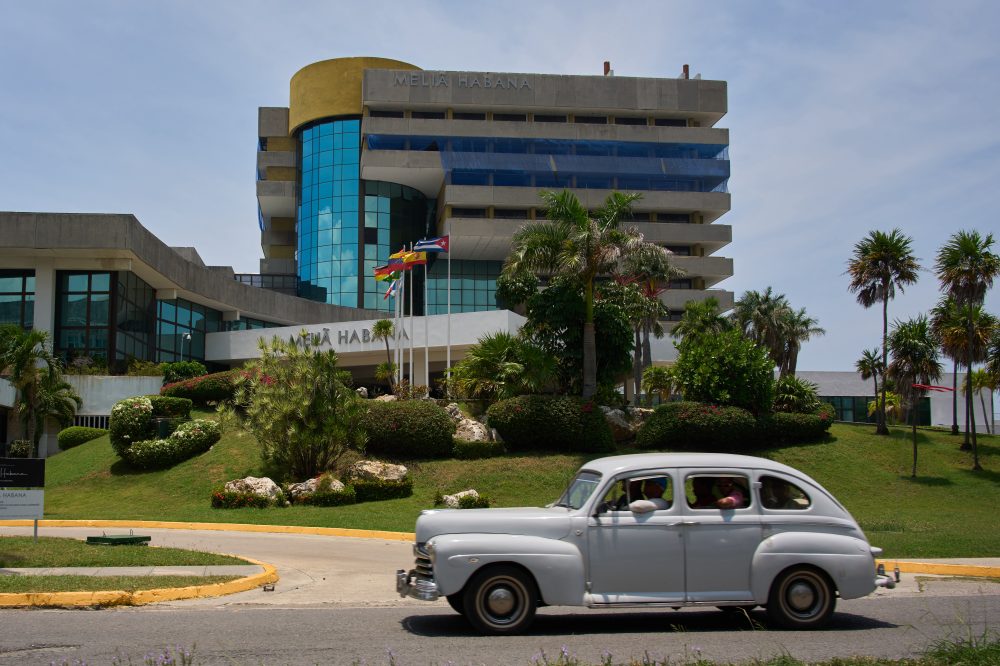

HAVANA (AP) — Spanish hotel chain Meliá announced Tuesday that it is closing down all of its operations in Cuba, dealing a serious setback to the Caribbean island’s tourism sector as it continues to struggle under heavy U.S. sanctions and an energy embargo.
In an official statement, the company cited “the significant operational, legal, economic and financial difficulties that have persistently affected, and continue to affect, the environment” in Cuba as the reason behind the move, which takes effect Friday.
Cuba’s tourism industry was once a major driver of the nation’s economy. Meliá’s withdrawal comes on the heels of new U.S. sanctions announced July 13 that blacklisted Cuba’s Ministry of Tourism — the business partner connected to more than a dozen hotels the chain was still running on the island.
Earlier, the company had already suspended management of 15 hotels it operated through an arrangement with a tourism agency tied to GAESA, a Cuban military-business conglomerate that the U.S. sanctioned back in May. With this latest move, Meliá has now fully exited Cuba.
At its peak, Meliá operated 34 five-star hotels across Cuba, concentrated in Havana and popular destinations such as the Varadero resort and the country’s main keys. The chain held deep symbolic significance for the island, having been among the first international hotel brands to arrive following Cuba’s opening to tourism after the Soviet Union’s collapse more than 35 years ago.
U.S. penalties against businesses operating in Cuba include freezing their assets, seizing their American accounts — effectively cutting them off from U.S. financial markets — and imposing travel bans on their shareholders, investors, and staff.
The pressure from Washington intensified following the capture of Venezuela’s then-President Nicolás Maduro in January, with the U.S. pushing for the downfall of the Cuban government and a transformation of its political and economic system. An energy embargo was also put in place, worsening an already serious crisis on the island.
The consequences have been severe: daily power outages lasting more than 20 hours, critical medicine shortages straining the healthcare system, a failing water supply, and transportation that has largely ground to a halt.
Paolo Spadoni, an associate professor in the Department of Social Sciences at Augusta University in Georgia, told The Associated Press that Meliá’s departure illustrates the sweeping impact of U.S. President Donald Trump’s policies, which are “methodically and systematically closing every source of foreign currency for the Cuban government.”
Tourism across the island has collapsed as major international chains — including Spanish brand Iberostar and Canada’s Royalton — have pulled out, and airlines such as World2Fly, Air France, and Iberia have canceled flights to Cuba.
During the first three months of this year, tourist arrivals in Cuba fell 48% compared to the same period in 2015, with only 298,000 visitors recorded.