
A federal appeals court has blocked the Trump administration from implementing new restrictions on billions of dollars in federal grants that support housing and services for homeless individuals across the country.
The 1st U.S. Circuit Court of Appeals in Boston declined Wednesday to overturn a lower court decision that prevented the Department of Housing and Urban Development from changing how it distributes money through the Continuum of Care program.
Circuit Judge Julie Rikelman, appointed by President Biden, warned that allowing the policy changes would create chaos for funding recipients and result in housing organizations closing their doors, leaving vulnerable people without shelter.
“In sum, the record paints a disturbing picture of the harms that would flow to the plaintiffs, their constituents, and the public from issuing a stay,” Rikelman wrote in the decision.
The case originated from a legal challenge filed by Democratic leaders from 20 states plus Washington, D.C., along with local governments and nonprofit organizations. HUD has not yet responded to requests for comment on the ruling.
According to attorneys representing some plaintiffs, the administration’s proposed changes could have affected more than $2 billion in grant money that supports 4,000 local housing coalitions nationwide.
“Because the appeals court refused to grant the federal government’s motion to stay the injunction pending appeal, almost 200,000 people — many living with disabilities — will not be displaced from stable housing,” stated Jill Habig, who leads the Public Rights Project legal organization.
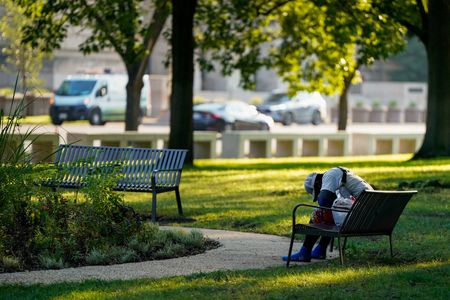
The dispute centers on the Continuum of Care program, which has operated since 1987 to help states, municipalities and nonprofits provide assistance to homeless populations, particularly veterans, families and disabled individuals.
For decades, the program has operated under a “housing-first” philosophy that emphasizes getting people into permanent homes without requiring them to first meet conditions like maintaining sobriety or finding employment. The grants also fund additional services including childcare, job training, mental health support and transportation.
The Trump administration has expressed criticism of the housing-first model. In November, HUD announced plans to restructure the grant program to emphasize temporary housing options that include work requirements and other stipulations.
U.S. District Judge Mary McElroy in Providence, Rhode Island, ruled in December that HUD’s proposed changes violated federal law governing homeless shelter programs. She noted that Congress has consistently prioritized funding for stable, permanent housing solutions.
Following Congress’s passage of a February spending bill requiring HUD to continue existing Continuum of Care projects and distribute new grants, the administration requested that McElroy lift her injunction. This would have allowed some of the approximately $4 billion in program funding to fall under HUD’s revised guidelines.
However, McElroy refused the request, emphasizing the importance of protecting funding recipients from “upheaval and service gaps.” The administration subsequently appealed her decision, pointing to the new legislation, though plaintiffs argue the law never endorsed HUD’s funding approach.