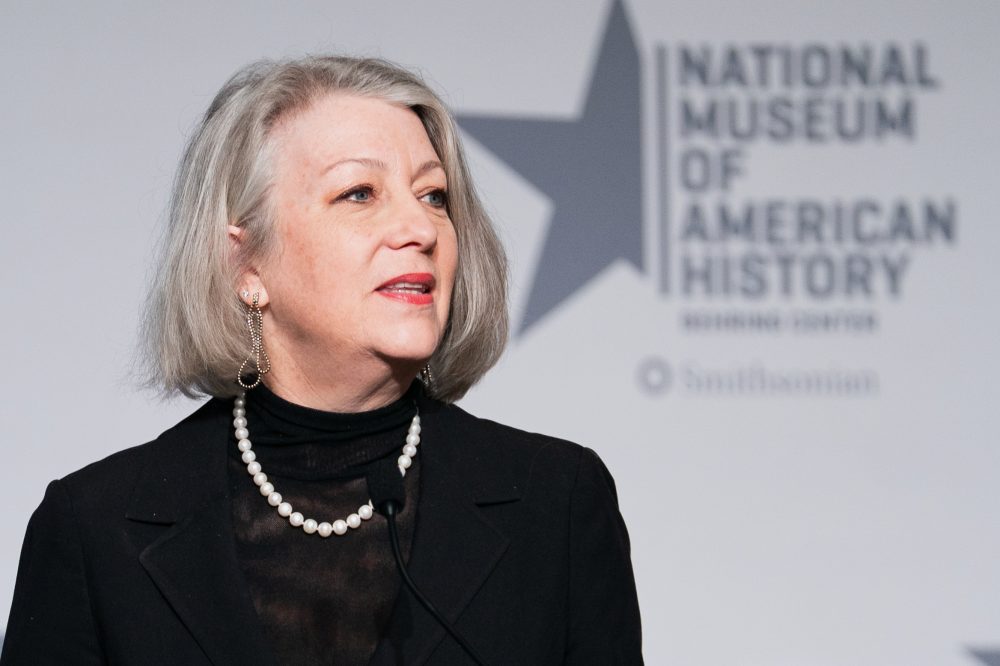

WASHINGTON (AP) — The head of the Smithsonian’s National Museum of American History stood her ground Tuesday before a House Oversight subcommittee, challenging a recent White House report that characterized the institution’s leadership as radical activists who should not be trusted.
“As we continue to fact check the report, we unwaveringly attest that it does not fairly or accurately characterize the full body of work at the museum,” said director Anthea M. Hartig. “There is always room for improvement. But I also know the beauty and the inspiration and the expertise that lies in our collections, our exhibits, and our programming.”
The White House Domestic Policy Council issued the report on July Fourth, timed to coincide with the nation’s 250th anniversary of independence. The report took aim at the museum — a prominent fixture along the National Mall within the larger Smithsonian complex — claiming it fails to present history “in a way that is inspiring, unifying, and worthy of our great republic.” The report is part of a wider effort by President Donald Trump and his allies to use federal authority to influence how American history is presented, with critics noting a tendency to downplay the roles of slavery, racism, and the stories of LGBTQ and other marginalized groups.
Republican members of the subcommittee echoed those concerns during Tuesday’s hearing.
“In the museum’s current telling, history is just an ongoing power struggle between oppressors and the oppressed,” said Rep. Tim Burchett, R-Tenn. “The report makes clear that the museum’s woke exhibits and materials reflect a broader vision held by the museum leadership.”
Hartig, who holds the distinction of being the first woman to lead the National Museum of American History, maintained that the institution “does not take sides in America’s political debates.” She described how the museum’s approach to telling the nation’s story has evolved over time — not to erase history, as some critics claim, but to include more voices and perspectives.
“When historians talk about reframing a traditional narrative, we don’t mean erasing it,” she said. “We mean adding the evidence, the voices, the objects, that earlier tellings left out, so that more Americans can see themselves reflected in the national story.”