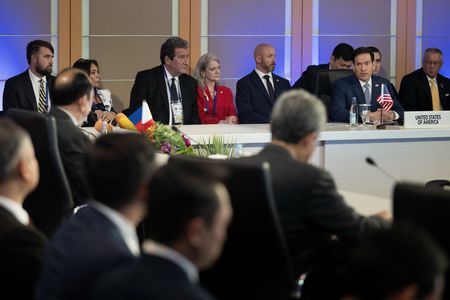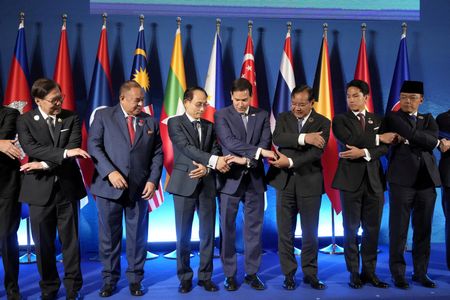

U.S. Secretary of State Marco Rubio held talks Wednesday with Chinese Foreign Minister Wang Yi on the sidelines of a major regional diplomatic gathering in Manila, Philippines, led by the Southeast Asian bloc known as ASEAN.
The meeting, confirmed by a State Department official, took place during a fragile period in U.S.-China relations. Tensions have been further strained after President Donald Trump accused Beijing last week of interfering in American elections — a claim China has denied.
The broader gathering in Manila is unfolding against a backdrop of escalating conflict involving the U.S. and Iran, as well as rising diplomatic friction between China and the Philippines — a close U.S. ally — following a recent incident in the South China Sea that prompted both countries to summon each other’s ambassadors.
ASEAN foreign ministers voiced deep concern on Tuesday about the ongoing war in the Middle East, noting that their economies are heavily vulnerable to any disruption in energy supplies from the region. When Rubio met with those ministers on Wednesday, he pointed to Iran’s lack of seriousness at the negotiating table as the core problem.
“If they’re serious, we’re serious. If they’re not, then we will do what’s necessary to protect our interests, and also the interests of our allies,” Rubio said.
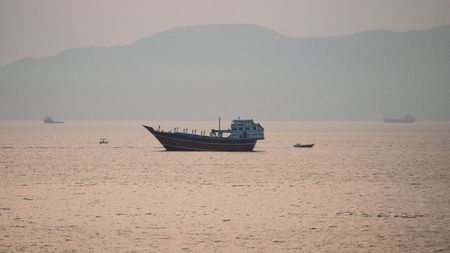
Rubio also argued that Iran must not be permitted to control the Strait of Hormuz, warning that allowing such control could set a dangerous precedent with consequences for other regions around the world, including Southeast Asia.
Before the meetings began, Rubio published an opinion piece in Philippine media upon his arrival Tuesday that took direct aim at China. In it, he said ASEAN nations are facing “new and coercive threats” in the South China Sea and reaffirmed the United States’ commitment to freedom of navigation in those waters.
“That freedom is by no means guaranteed. If those waters fall under the control of a power willing to use commerce as a geopolitical weapon, both the United States and the ASEAN states would face dire new threats to their sovereignty, security, and economic futures,” Rubio wrote.
China claims authority over nearly all of the South China Sea through a boundary line on its maps that overlaps with the exclusive economic zones of the Philippines, Malaysia, Vietnam, Brunei, and Indonesia — fueling long-standing disputes over numerous islands and maritime features in the area.
Wang Yi was also scheduled to meet Wednesday on the sidelines with Philippine Foreign Secretary Maria Theresa Lazaro, who chairs the ASEAN-led gathering. In separate talks Tuesday with ASEAN’s Secretary-General Kao Kim Hourn, Wang accused certain elements within the Philippines’ security establishment of having “deliberately engaged in provocations and created maritime incidents,” according to a readout released by Beijing.
Wang added that such actions served the interests of “external forces” and said the South China Sea issue should not stand in the way of China’s broader relationship with ASEAN. He indicated Beijing was prepared to work with the bloc to “eliminate interfering factors.”
Tensions between China and the Philippines have grown in recent years as Philippine President Ferdinand Marcos has taken a more assertive position in the South China Sea while deepening defense ties with Washington and expanding security partnerships with Australia and Japan.
Representatives from Australia, Russia, Japan, Canada, South Korea, Britain, the European Union, and India are also participating in the Manila meetings.
Analysts suggest the Rubio-Wang meeting likely centered on laying the groundwork for a second face-to-face between Trump and Chinese President Xi, following their initial meeting last May. Trump has indicated Xi will visit the United States at the end of September, and Rubio confirmed as recently as Sunday that the anticipated summit remains on track.