
NEW DELHI — India’s education minister has pledged that Prime Minister Narendra Modi’s government is fully committed to addressing student grievances and reforming the country’s exam system, marking the minister’s first public statement since a wave of youth-led demonstrations swept the nation.
Education Minister Dharmendra Pradhan broke his silence following a month of growing unrest sparked by the leak of medical school entrance exam papers — a scandal that impacted roughly 2 million students and has been connected to multiple student suicides.
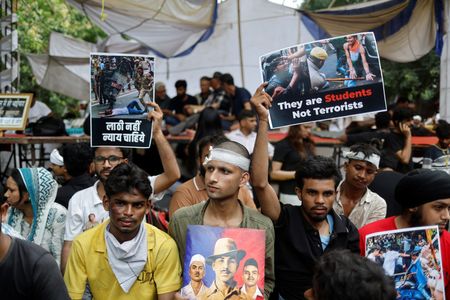
The protest movement, which calls itself the Cockroach Janta Party (CJP), began as an online satire before evolving into a real-world demonstration involving a few hundred young people. By this week, it had transformed into the most significant youth uprising Modi has faced since coming to power in 2014, with tens of thousands flooding the streets of Delhi on Monday. Police responded with tear gas and batons to disperse the crowds.
The movement gained additional political weight on Tuesday when the main opposition Congress party, led by Rahul Gandhi, organized a sit-in outside the gates of Modi’s official residence. Gandhi, his sister Priyanka Gandhi Vadra, and other senior opposition figures were taken into custody by police after refusing to stand down, though all were released by late Tuesday evening.
In a post on X late Tuesday, Pradhan stated: “Our government remains 100% committed to discussing NEET and addressing every genuine concern of our youth on the floor of the house,” referring to the medical school entrance exam at the center of the controversy.
He also pushed back against the opposition’s involvement, saying, “The students of India deserve far better than being treated as props in a political campaign.” He added: “We owe our students more than outrage. We owe them answers, reforms and accountability. That is exactly what our government remains committed to delivering.”
Pradhan’s remarks follow Modi’s own first public comments on the matter, also made Tuesday, in which the prime minister vowed to hold those responsible for the exam leaks accountable and urged lawmakers to help build a more secure testing system.
Health Minister J.P. Nadda also met with CJP leaders on Monday — the first such meeting between government officials and the protest group — and told them the government would take their demands seriously.
While in custody at a Delhi stadium Tuesday night, Gandhi recorded a video message challenging the state of India’s education system. “Why is the Indian education system collapsing? Why are papers leaking? Why is education so expensive in India? Why do families have to destroy themselves financially to educate their children?” he asked. “These are legitimate questions. And there’s absolutely nothing wrong with asking these questions.”
Gandhi called on Modi to apologize to students for Monday’s police response and demanded that Parliament debate the students’ concerns on Wednesday, along with immediate action on education and exam reform.
The CJP movement has drawn broader support from activist Sonam Wangchuk, who launched a hunger strike on June 28 before police forcibly moved him to a hospital last Saturday. On Tuesday, following a court order prompted by a petition from his wife alleging illegal detention, he was transferred to a private medical facility.
The protests have become the most pressing challenge of Modi’s third term, reflecting deep frustration among young Indians over job shortages and a pattern of exam leaks they say has gone on for too long. The unrest has also handed opposition parties a rare opportunity to pressure Modi and his party, which relies heavily on young voters as a key part of its political base.