
HAVANA (AP) — Cuba gathered Sunday for its traditional rally marking one of the revolution’s most significant milestones, but former President Raúl Castro, 95, was nowhere to be seen — a notable absence that went completely unexplained.
According to reports, this marks the first time in a minimum of 30 years that Castro has not been present at the annual event.
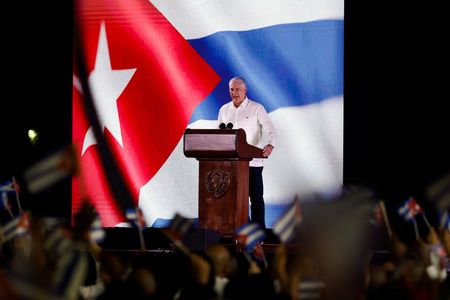
President Miguel Díaz-Canel presided over the ceremony, held in the eastern city of Pinar del Río. During the event, he read aloud a congratulatory message that Castro had sent to his fellow Cubans.
The commemoration marks the July 26, 1953, attack led by brothers Fidel and Raúl Castro on the Moncada and Carlos Manuel de Céspedes military barracks in Cuba’s eastern region. Though the assault on then-dictator Fulgencio Batista’s forces ultimately failed, it is widely regarded as the spark that ignited the revolutionary movement, which succeeded on January 1, 1959.
Castro’s most recent public appearances came in June, when he attended an event marking the establishment of the Ministry of the Interior, and on May 1st for a Labor Day celebration.
While Castro holds no official positions any longer, he remains a powerful symbolic figure. He was recently identified as one of the parties involved in negotiations with the United States following the imposition of a U.S. energy embargo against Cuba.
Standing before hundreds of flag-waving Cubans early Sunday, Díaz-Canel pushed back against a report released last week by the U.S. State Department, which alleged that Cuba has operated a leftist espionage and influence network targeting the United States and Latin America for decades.
“Every day they issue a threat against the revolution, and every week they announce a new punishment for Cuban companies and officials,” the president told the crowd.
In May, Castro was named in a U.S. federal indictment on charges of murder and other crimes, related to his alleged involvement in the 1996 shooting down of two civilian planes operated by Miami-based Cuban exiles off the coast of the island. Cuba’s government strongly rejected those allegations.
The island nation is currently experiencing one of the most strained periods in its long and troubled relationship with the United States. U.S. President Donald Trump has expressed a desire to “take over” Cuba, and following a January military action against Venezuela — a longtime Cuban ally — the U.S. imposed an oil embargo that has brought much of Cuba’s economy to a near standstill, with the stated goal of pushing the country to overhaul its political and economic systems.
“Cuba is the victim of a coldly calculated genocide,” Díaz-Canel declared in his address, accusing the Trump administration of pursuing a strategy of “maximum pressure” and intensified “economic strangulation.”
The effects on everyday Cuban life have been severe. Power outages are stretching beyond 20 hours daily, working hours have been cut back, industrial operations have ground to a halt, and shortages of water and medicine are widespread. The country has been in crisis for the past five years due to a combination of earlier U.S. sanctions and an internal financial reform that triggered runaway inflation.
Adding to the economic pressure, several major international companies have pulled out of Cuba, including the Spanish hotel chain Meliá, payment processors Visa and Mastercard, and airlines Air Canada and Air France.