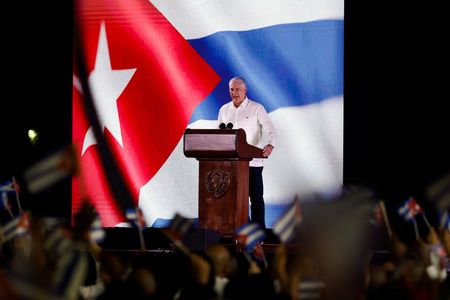

Speaking at dawn on Sunday in Pinar del Rio, Cuba, Cuban President Miguel Diaz-Canel launched a blistering attack on Washington’s oil embargo and tightened sanctions, describing the policies of U.S. President Donald Trump’s administration as “political genocide.”
Diaz-Canel also took aim at a recent U.S. State Department report that accused Cuba of infiltrating the U.S. government and supporting what it called an “unprecedented wave of leftwing terrorism on American soil.”
The Trump administration has ramped up its pressure on left-leaning groups within the United States.
“By accusing Cuba, they are not only looking for a scapegoat, an external agent. They are looking for someone to blame for the protests of the sectors hardest hit by an economy that makes the rich richer and the poor poorer,” Diaz-Canel said.
“They are looking for a new excuse to sustain their political genocide against Cuba,” he added.
The strongly worded remarks reflect deepening hostility between Havana and Washington. The Trump administration’s oil embargo and broadened sanctions have pushed Cuba into its worst economic downturn in decades, causing widespread power outages and severe fuel shortages throughout the country.
The dawn speech was part of official government festivities commemorating the 73rd anniversary of Fidel Castro’s guerrilla forces launching their first attack against the army of U.S.-backed leader Fulgencio Batista in 1953 — an uprising that ultimately toppled Batista more than five years later. Thousands of government supporters attended the celebration, which also included artistic performances.
Cuba’s severe economic troubles have prompted numerous international companies, especially in the tourism and financial industries, to pull out of the country. Beyond the recurring blackouts, dwindling fuel supplies have caused the national power grid to collapse multiple times. Public transportation has been severely disrupted, and the school year was cut short due to fuel shortages.
The U.S. government has attributed Cuba’s economic troubles to poor financial management by its leadership and failure to modernize aging infrastructure.
During his address, Diaz-Canel called on the United States to lift its sanctions and oil blockade, while also expressing gratitude to international organizations that have delivered humanitarian aid and supplies to Cuba.
“Let Cuba live in peace, and also let the noblest of the American people, who have historically fought for the human rights of other peoples, without expecting recognition and often facing persecution, imprisonment, and risks to their lives, live in peace,” he said.
“Cuba is not a threat to the United States or to any other country on earth,” he concluded.