
Russian President Vladimir Putin appears poised to dramatically intensify his military campaign against Ukraine as his forces encounter battlefield setbacks and domestic support for the conflict begins to waver.
Military analysts suggest Putin is preparing to significantly increase aerial bombardments of Ukraine’s capital, hoping such actions will boost his declining popularity at home and convince a increasingly doubtful Russian public that Moscow is prevailing in the conflict, which has now entered its fifth year.
Moscow’s threat to conduct “consistent and systematic” missile attacks on Kyiv, coupled with demands that foreign diplomatic missions evacuate the capital, demonstrates Putin’s plan to expand Russia’s bombardment campaign despite significant costs and potential global condemnation.
Large-scale exercises of Russia’s nuclear arsenal earlier this month and aggressive rhetoric from Moscow warning Ukraine’s European partners about possible retaliation for what the Kremlin describes as their participation in Ukrainian drone operations have highlighted Putin’s determination to raise the stakes.
Following territorial gains last year, Russia’s progress along the more than 1,000-kilometer (600-mile) battle line has recently stalled, while Ukraine’s military has conducted effective counterattacks and regained territory.
“The character of the war is shifting in favor of Ukrainian forces, at least for now,” the Washington-based Institute for the Study of War said in a recent analysis. “Russian forces’ rates of advances are stagnating while Ukrainian forces are employing novel tactics and operational concepts in efforts to break out of positional warfare.”
The military deadlock undermines Putin’s stated objective of rapidly seizing the eastern Donetsk region that remains under Ukrainian authority. Kyiv has refused his demands to retreat from the area as a precondition for ending hostilities.
Meanwhile, Ukraine has substantially increased its long-distance attacks on Russian energy infrastructure and weapons manufacturing facilities, causing growing destruction.
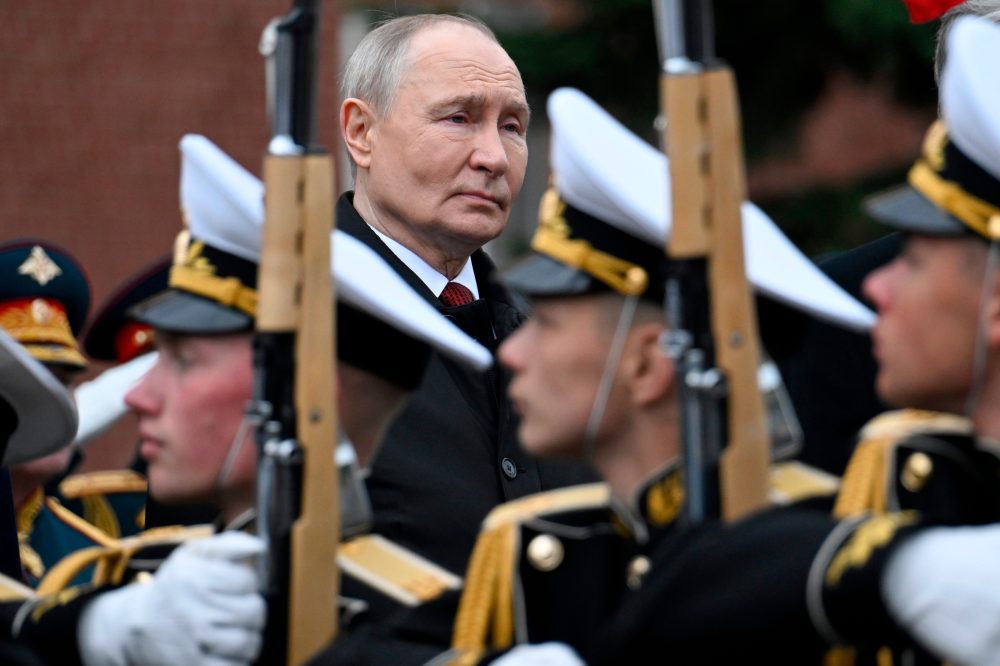
Putin reduced the scope of the annual May 9 Victory Day parade, concerned about Ukrainian drone attacks. Shortly afterward, a large drone assault on Moscow’s outskirts resulted in three deaths and demonstrated that even the heavily defended capital remains vulnerable to strikes, undermining Kremlin attempts to portray the war as a remote conflict that doesn’t impact regular Russians.
Ukrainian President Volodymyr Zelenskyy said the attacks were “significantly changing the situation — and, more broadly, the world’s perception of Russia’s war.”
Recognizing the increasing danger of Ukraine’s deep-strike capabilities, Russian legislators this week passed legislation requiring the country’s financial institutions to fund the installation of drone-jamming equipment at their locations, rather than depending on military protection.
“From Russia’s perspective, these attacks are just going to get worse,” said Thomas Withington of the Royal United Services Institute in London. He added that Ukraine’s increasingly audacious drone attacks were “exacting not only a political but an economic cost in Russia.”
Russia’s economy has stalled as the initial stimulus from enormous military expenditures has diminished. The administration has increased taxes and expanded domestic borrowing to maintain budget balance. Despite windfall oil profits from the U.S. war in Iran, core economic problems persist.
Putin is anticipated to minimize these negative trends at next week’s international economic forum in St. Petersburg, an annual gathering designed to highlight Russia’s accomplishments.
Nigel Gould-Davies of the London-based International Institute for Strategic Studies said in an analysis that “war-fueled high prices of capital, labor and goods, as well as rising taxes, have begun to depress the civilian sectors,” resulting in “a dual economy of overheated military output and civilian stagnation.”
Although Russia has depended on volunteer forces to conduct the war, providing them relatively generous compensation and additional benefits, Gould-Davies contended that “there are signs that this incentive may no longer be working effectively, and that Russia has begun to lose more troops than it can recruit.”
To maintain the war effort, the Kremlin must compel mobilization of human and material resources, requiring it to “curtail the last remaining post-Soviet market freedoms, labor freedom, and freedom of movement,” he said.
Indicating growing dissatisfaction, some social media personalities who previously supported the Kremlin have begun publicly criticizing government actions.
Government moves to limit mobile internet access and block widely-used messaging applications have disrupted daily life for millions, generating public complaints. Natalya Kasperskaya, a prominent IT entrepreneur and strong Kremlin ally, sharply condemned the shutdowns and efforts to block virtual private networks, warning they inflict massive harm on the technology industry.
Tatyana Stanovaya, a Russia expert who founded the R.Politik newsletter focused on Kremlin politics, noted the expanding Ukrainian drone attacks along with mobile internet shutdowns and increasing taxes have weakened Putin’s position. While he faces no immediate challenges to his authority, “the gradual fading of Putin’s credibility is real,” she said.
During early spring, Russian public opinion surveys, including one conducted by a government-operated polling organization, showed a decline in Putin’s approval numbers, though they increased slightly in May in the state-controlled poll after the organization modified its methodology to include in-person interviews. Many experts believe the figures may be exaggerated amid an extensive crackdown on opposition.
“Putin is losing his magic,” Alexander Baunov of the Carnegie Russia Eurasia Center wrote in a commentary. “Power remains undivided in his hands, but its spell is fading. Even loyalists complain about the mounting restrictions and repression, and once-upbeat businesspeople are now despondent.”
Following a May 22 Ukrainian drone strike on a college dormitory in Russian-controlled eastern Ukraine that Moscow claimed killed 21 people, Putin authorized a massive missile attack on Kyiv and surrounding areas. Sunday’s bombardment that included Russia’s new hypersonic Oreshnik missile resulted in two deaths, injured dozens, and destroyed or damaged numerous structures.
On Monday, the Russian Foreign Ministry announced Moscow will conduct “consistent and systematic” attacks on Kyiv to target drone manufacturing sites and “decision-making centers.” It called on foreign diplomats to evacuate the capital — a request Ukraine’s allies rejected.
Russian Foreign Minister Sergey Lavrov contacted U.S. Secretary of State Marco Rubio to alert him of the planned strikes and advocate for the evacuation of American diplomats.
“The danger in all of these wars as they continue and then they go on is that they always have the threat of escalation, of spreading into something new,” Rubio told reporters after the call.
The Iran war has essentially suspended U.S. diplomatic efforts in Ukraine and depleted American missile stockpiles, postponing the shipment of U.S.-manufactured Patriot missiles that Ukraine urgently requires to defend against Russian attacks.
Moscow-based military analyst Sergei Poletaev said Russia views the shortage of air defense systems in Kyiv as an advantage.
“Kyiv’s air defenses have been exhausted enough to make a massive attack efficient,” he said in a recent commentary.
Along with the announced offensive against Kyiv, Russia issued numerous threats directed at Ukraine’s European partners.
The Defense Ministry released a list of European facilities it claimed were participating in producing drones and components for Ukraine. Moscow’s Foreign Intelligence Service warned the Baltic nations that their NATO membership won’t shield them from Moscow’s retaliation if they permit Ukraine to conduct attacks from their territory. Those allies have rejected Moscow’s accusations.
“We are actually very, very close to direct military confrontation,” said Dmitry Polyansky, Russia’s envoy to the Organization for Security and Cooperation in Europe.