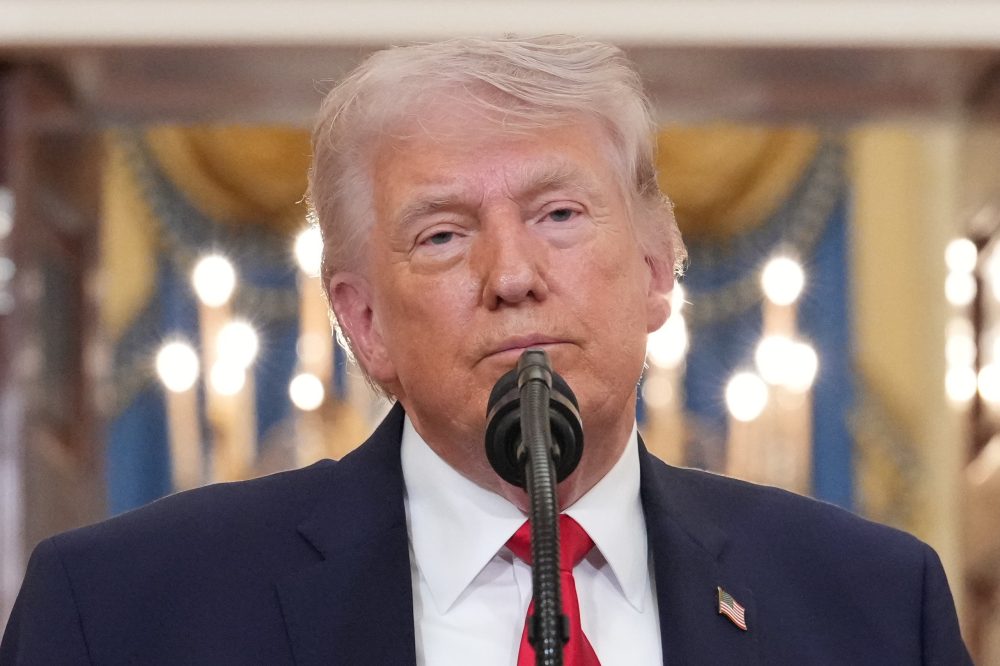

WASHINGTON — During his first major televised address since military operations began in Iran, President Donald Trump asked the American people for patience Wednesday evening, promising that all military goals would be achieved “shortly” as public support for the conflict continues to decline.
The president adopted a more measured tone during his roughly 20-minute speech, stepping back from the aggressive rhetoric that has characterized his recent statements while global markets remain volatile and Iran continues to strike at regional infrastructure and American military installations despite suffering significant damage.
However, Trump’s commitment to “finish the job” failed to calm nervous investors, as oil prices continued climbing and Asian markets dropped following his declaration that American forces would maintain their intense campaign against Iran.
The president provided no specific details regarding ongoing diplomatic efforts with Iran that might lead to the swift resolution he claims could occur within weeks. Notably absent from his remarks were the expected criticisms of NATO partners for their reluctance to assist in reopening the strategically vital Strait of Hormuz shipping lane, which White House officials had indicated would feature prominently in his address.
Trump indicated that intensive military operations would persist for another two to three weeks, though he avoided specifying an overall timeline for ending the war. Instead, he made an appeal for American forbearance.
“We are in this military operation, so powerful, so brilliant, against one of the most powerful countries for 32 days, and the country has been eviscerated and essentially is really no longer a threat,” Trump stated. “This is a true investment in your children and your grandchildren’s future. The whole world is watching, and they can’t believe the power, strength and brilliance.”
The president faces the challenge of negotiating with an adversary that remains defiant while managing growing American war weariness.
A majority of Americans view the recent military campaign against Iran as excessive, with many expressing concern about rising fuel costs, according to an AP-NORC survey conducted in mid-March, approximately two weeks after hostilities began. Despite Trump’s deployment of additional naval vessels and personnel to the Middle East, roughly 59% of Americans consider the military response disproportionate.
Additionally, 45% express significant worry about affording gasoline in the coming months, a substantial increase from the 30% recorded in an AP-NORC poll taken shortly after Trump’s reelection victory, when he pledged economic improvements and reduced living costs.
Trump acknowledged America’s historical endurance during wartime periods.
“American involvement in World War I,” he noted, “lasted one year, seven months and five days. World War II lasted for three years, eight months and 25 days. The Korean War lasted for three years, one month and two days. The Vietnam War lasted for 19 years, five months and 29 days. Iraq went on for eight years, eight months and 28 days.”
Prior to his televised remarks, Trump appeared to acknowledge domestic pressure to conclude the military campaign during a private White House Easter luncheon, suggesting the U.S. could “very easily” seize Iranian oil reserves. He expressed regret that Americans seemed to lack patience for such an undertaking.
“They want to see it end,” he observed, adding, “People in the country sort of say, ‘Just win. You’re winning so big. Just win. Come home.’ And I’m OK with that, too.”
Senator Chris Murphy of Connecticut criticized Trump’s address as being “grounded in a reality that only exists in Donald Trump’s mind.”
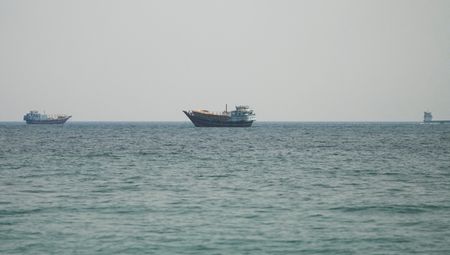
Democratic lawmakers expressed frustration that the president offered no concrete strategy for reopening the Strait of Hormuz, the crucial shipping corridor that Iran has successfully blocked despite Trump’s claims of victory.
Addressing allies concerned about economic disruption from rising energy costs, Trump recommended they “buy oil from the United States of America” and “build up some delayed courage” to assist in securing the waterway. The president made no effort to address European criticism that he initiated the conflict without international consultation but now expects global assistance in managing its consequences.
“We are losing this war,” Murphy continued. “We cannot destroy all their missiles or drones, nor their nuclear program. Iran projects more power in the region than they did before the war, especially if they now permanently control the Strait of Hormuz. We are spending billions we don’t have and losing American lives in a war that is destabilizing the world and making us look feckless.”
Trump expressed cautious hope that Iran’s current leadership, following over a month of American and Israeli attacks that eliminated much of the previous Islamic Republic hierarchy, appears “less radical and much more reasonable.” While he avoided explicitly referencing his Monday ultimatum for Iran to reopen the strait or face strikes on energy facilities, he made clear his willingness to target Iran’s economic foundation.
“If there is no deal, we are going to hit each and every one of their electric generating plants very hard and probably simultaneously,” Trump declared. “We have not hit their oil, even though that’s the easiest target of all, because it would not give them even a small chance of survival or rebuilding. But we could hit it, and it would be gone.”
Significantly, Trump gave no indication of preparing for a ground invasion involving American forces.
He appeared to dismiss the possibility of deploying troops to secure Iran’s approximately 1,000 pounds of highly enriched uranium, explaining it “would take months” for Iran to access the material buried beneath debris from previous American bombing of nuclear facilities.
While Trump has cited various justifications for the military campaign, he has consistently maintained that a primary goal of joining Israel in the operation is ensuring Iran “never have a nuclear weapon.”
Throughout the conflict, however, he has shown increasing caution regarding how far he will go to fulfill his promise of completely dismantling Iran’s weapons program, including securing or destroying the near-weapons-grade nuclear material in Iran’s possession.
“We have it under intense satellite surveillance and control,” Trump said during his prime-time address. “If we see them make a move, even a move for it, we’ll hit them with missiles very hard again. We have all the cards. They have none.”