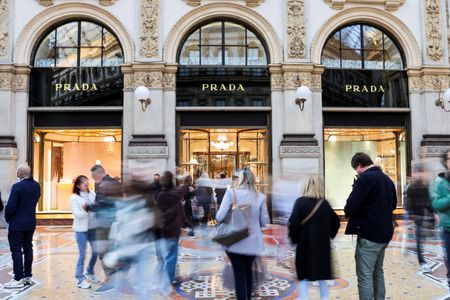

Luxury fashion conglomerate Prada is implementing a major strategic overhaul at Versace following its recent acquisition, with plans to eliminate discount retail channels and discontinue lower-tier product lines.
The Italian fashion house announced that Pieter Mulier, currently with Richemont’s Alaia brand, will become Versace’s new creative director starting in July. His debut collection won’t hit runways until early 2027, marking a significant transition period for the iconic brand.
During this interim phase, Prada’s Finance Chief Andrea Bonini informed analysts that the company will discontinue Versace Jeans and eliminate all other sub-brands within the ready-to-wear category. Instead, the focus will shift to revitalizing the premium Atelier Versace collection, emphasizing haute couture and exclusive projects.
A key component of the restructuring involves dramatically reducing Versace’s reliance on discounted sales channels. The brand currently operates through extensive outlet networks, with recent Morgan Stanley research indicating that outlet sales account for over 30% of Versace’s total revenue – among the highest in the luxury sector.
Versace’s physical outlet presence is substantial, with 62 brick-and-mortar discount locations compared to 52 at Ferragamo and 54 at Burberry, according to Morgan Stanley data. Prada intends to gradually phase out these discount channels while also reducing promotional campaigns across the board.
The acquisition’s financial impact has been significant for Prada, with profit margins taking a hit in 2025 and expected to continue declining at the operational level throughout this year. Financial improvements aren’t anticipated until 2027, coinciding with Mulier’s creative debut.
Versace recorded an operational loss last year, and Prada aims to contain this year’s expected operating deficit to what Bonini described as a “two-digit figure.” Despite the required additional investments, company executives anticipate generating cost savings through the integration of their former competitor.
Versace generated 684 million euros in revenue during 2025, though Prada projects a mid-single-digit decline in sales for 2026 when calculated at constant exchange rates.