
WARSAW – A senior Polish security official has cast doubt on France’s potential leadership role in a European nuclear defense initiative, stating that Warsaw considers only the United States as a trustworthy nuclear ally at this time.
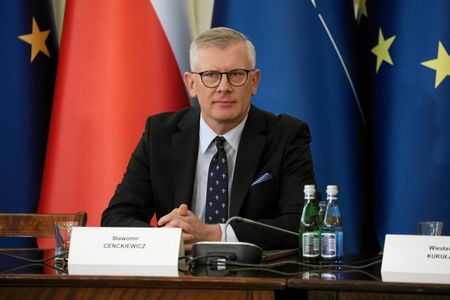
The remarks from Slawomir Cenckiewicz, who heads Poland’s National Security Bureau, come as European nations explore alternatives to U.S. nuclear protection amid uncertainty about American commitments under President Donald Trump.
This month, German Chancellor Friedrich Merz announced that Berlin had initiated conversations with France about creating a European-wide nuclear deterrent. France remains the European Union’s sole nuclear-armed nation following Britain’s departure from the bloc.
While Polish Prime Minister Donald Tusk confirmed that Poland has also started discussions with France, he emphasized the need for concrete details before considering participation in any European nuclear program.
Cenckiewicz recommended that Poland should observe the German-French negotiations while focusing on NATO’s current nuclear-sharing arrangement, which permits non-nuclear member states to host and deploy American nuclear weapons as protection against Russian threats.
The Polish official raised concerns about France’s nuclear doctrine, noting that it would grant complete authority over nuclear weapons to the French president – a point that Emmanuel Macron is expected to address publicly on Monday.
According to Cenckiewicz, decisions about nuclear weapon deployment under NATO’s Article 5 collective defense provision should involve all alliance members, not rest with a single nation’s leader.
He maintained that America remains Poland’s only viable nuclear partner, citing its superior capabilities compared to European nuclear powers like France and Britain.
“The United States has not stopped in this military and intelligence area for a moment, but is simply constantly developing this potential and investing in it,” Cenckiewicz told Reuters.
European nations have historically depended on American nuclear deterrence against potential adversaries. However, Trump’s approach toward Russia regarding the Ukraine conflict and his stance on traditional allies – including recent threats concerning Greenland, which belongs to NATO member Denmark – have created anxiety among European leadership.
French representatives maintain that Paris does not intend to substitute for American nuclear protection or challenge NATO’s role.
Cenckiewicz’s statements also reflect Poland’s internal political tensions: Tusk’s pro-European Union administration favors increased European cooperation, while President Karol Nawrocki, who aligns with Trump, emphasizes Atlantic partnerships and NATO relationships.
The two leaders often disagree on defense matters, and the president’s constitutional role as military commander-in-chief allows him to veto government defense proposals.
Cenckiewicz stressed that Warsaw must develop military capabilities matching the threats it confronts.
“Russia must be treated as an existential threat to Poland,” Cenckiewicz stated. “In this logic, whether participation, entry into nuclear sharing, or in the perspective of building one’s own sovereign nuclear capabilities is a consequence.”