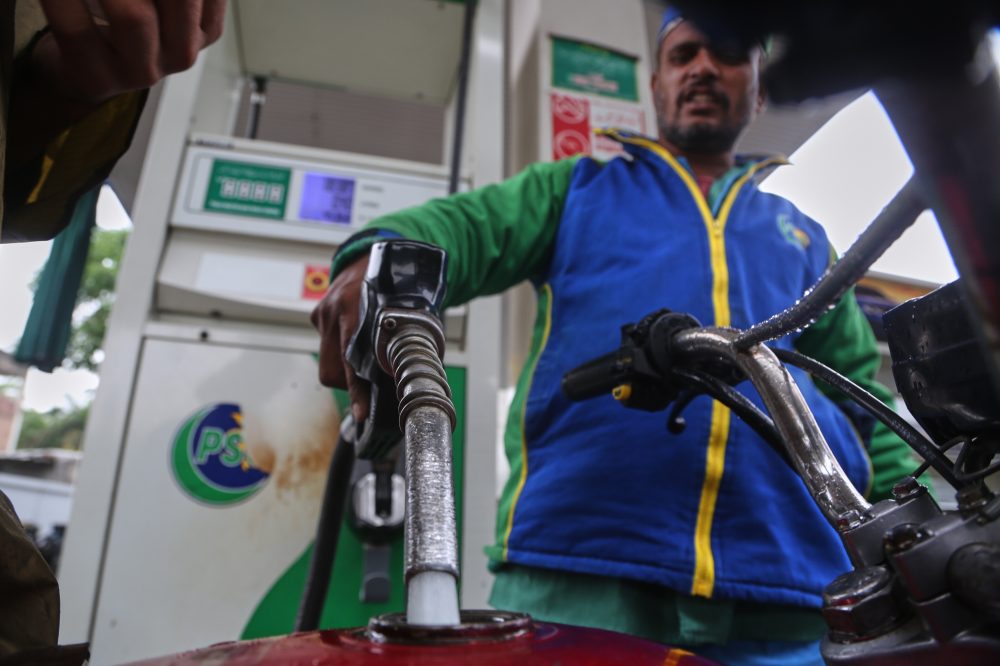

ISLAMABAD (AP) — Citizens across Pakistan confronted historic fuel cost increases on Friday, with gasoline and diesel rates climbing as much as 54% due to Middle Eastern conflicts that have driven worldwide oil prices higher.
The dramatic price surge places additional financial strain on a financially struggling country already battling severe inflation, with economic experts cautioning that the increases will drive up grocery bills and overall living expenses.
According to Petroleum Minister Pervez Malik, who spoke Thursday evening, the price hikes were “unavoidable.” He explained that officials had no choice but to raise gasoline costs by 137 rupees (49 cents) per liter, coming after a 20% jump the previous month.
Overnight, diesel rates jumped by 184.49 rupees (67 cents) per liter, representing approximately a 54.9% increase.
Malik described the price adjustments as “necessary and unavoidable” to match international market conditions, noting that officials are planning fuel subsidies for motorcycle users, though the specific program details remain under development. Motorcycles vastly outnumber automobiles in Pakistan, making up nearly 78% of all road vehicles, since they represent one of the most economical transportation options.
Interior Minister Mohsin Naqvi announced Friday that Islamabad’s public transportation system will operate at no charge for 30 days starting Saturday, following prime ministerial orders, with his department absorbing fuel expenses.
In recent weeks, Pakistan has relied on alternative shipping paths for oil imports due to Strait of Hormuz blockages.
These record-breaking price increases followed Prime Minister Shehbaz Sharif’s statement that regional conflicts have damaged Pakistan’s vulnerable economy. He indicated that government officials are working through diplomatic channels to reduce tensions and promote negotiations among conflicting parties.
Pakistan has extended an offer to facilitate peace negotiations, although no specific dates have been set for potential meetings in Islamabad.
For ordinary citizens, however, the effects of current regional conflicts and recent fuel price spikes were felt immediately, with families and daily commuters preparing for increased transportation and household expenses.
“It’s not just gas,” commented Mohammad Zain Alvi, a commuter waiting for public transport in Islamabad. “Life was already very difficult for us, and now everything will become more expensive.”
Throughout major urban areas Friday, gas stations experienced unusually low activity and roads showed noticeably reduced traffic as many residents remained home, either unable or reluctant to pay the increased costs. At various stations, customers remained silent after learning about the new pricing.
“We have nothing to do with the war,” stated Azhar Ali, a lower-level government worker who rides an aging motorcycle between Rawalpindi and Islamabad. “Why are we being made to pay for it? This will affect everything — transport, food, our entire lives.”
In Peshawar, located in the northwest, motorcycle operator Sher Khan expressed uncertainty about continuing his work following the fuel price surge. He provides food delivery services in the Khyber Pakhtunkhwa provincial capital.
“I earn so little for each ride, and now most of it will go into fuel,” he explained to The Associated Press.
Karachi-based economist Jabran Sarfraz indicated that consumers would bear the immediate financial burden, cautioning that elevated fuel costs would increase prices for essential goods and disproportionately impact lower-income households. He noted that the duration of these effects would depend on how rapidly international prices stabilize.