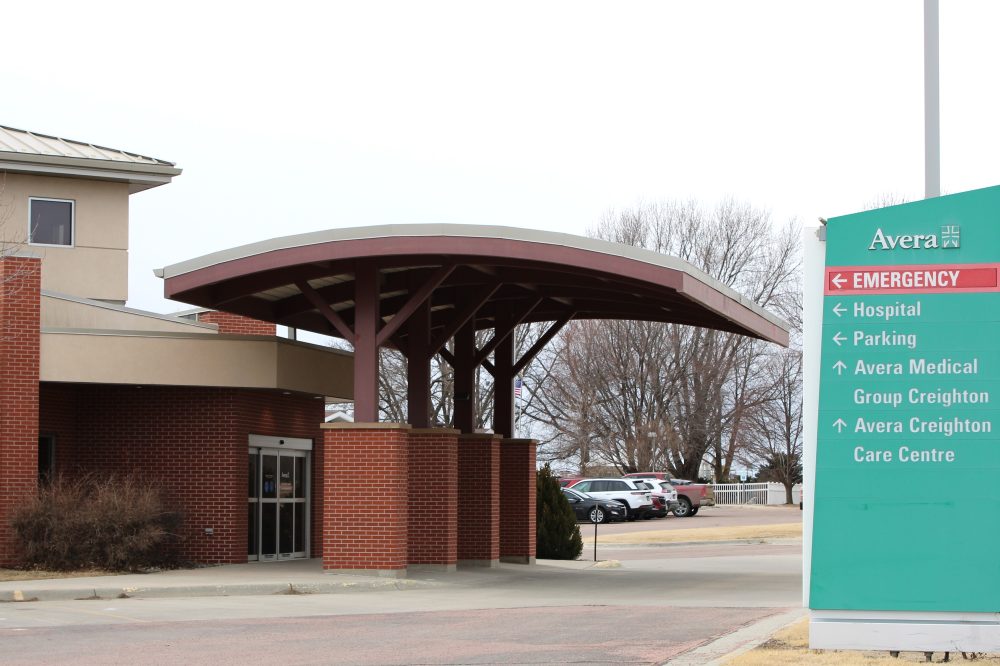

CREIGHTON, Neb. (AP) — The Saint John family settled in Creighton, Nebraska, specifically because of its local medical facility.
Rick and Jane Saint John have a child with nonverbal autism and epilepsy requiring frequent medical visits — sometimes three times weekly. The town’s critical access hospital became essential to their lives when Jane fell critically ill with bacterial pneumonia three years ago. Medical staff told her that delaying treatment by just one more day would have caused organ failure.
“And if we had had to drive the hour to the Yankton (South Dakota) hospital,” Rick Saint John said, his voice breaking with emotion, “it could have cost her her life.”
The family was stunned to learn that Avera Creighton Hospital now confronts serious financial challenges. A massive $50 billion federal program designed to revolutionize rural healthcare appears unlikely to provide meaningful assistance. This reality is dawning on millions of rural Americans who discover no financial rescue is coming for their community hospitals.
Rural medical facilities nationwide face potential shutdowns following years of financial struggles. These difficulties intensified last summer when the Trump administration implemented significant Medicaid reductions, cutting reimbursements that hospitals have traditionally relied upon to balance their budgets.
Public opposition to these funding reductions led Republican legislators to establish $50 billion in new rural health funding, though critics argue this money targets innovative healthcare delivery methods rather than supporting hospitals currently under financial strain.
“It won’t pay to keep the lights on. And it won’t turn the lights back on once they’ve been turned off,” said Dr. Ben Young, an infectious disease specialist and policy expert with public health advocacy group Wellness Equity Alliance.
Healthcare concerns in rural America mirror nationwide anxieties about medical access and escalating treatment costs amid rising living expenses — issues that may influence this year’s midterm elections significantly.
The $50 billion Rural Health Transformation Program, included in President Donald Trump’s tax-and-spending legislation last year, was promoted by Republicans as assistance for rural area hospitals. Health Secretary Robert F. Kennedy Jr. described it last summer as the “biggest infusion in history” for rural hospitals and promised it would “restore and revitalize these communities.”
Medical facilities and healthcare industry analysts warn that while this funding — distributed as $10 billion annually across all states over five years — provides some assistance to struggling rural hospitals, it won’t prevent their closure. The amount falls far short of the $137 billion that rural hospitals anticipate losing over the coming decade, according to health research nonprofit KFF. Millions face losing Medicaid coverage due to new work requirements taking effect in 2027 — changes the Trump administration claims will target fraudsters rather than eliminate eligible participants.
Program administrators explain the new $50 billion fund aims to transform rural healthcare through technology, workforce development, and other innovations rather than simply supporting failing rural hospitals or preserving current operations. Centers for Medicare and Medicaid Services Administrator Dr. Mehmet Oz stated in a December video that it “gives states the tools to design solutions that last, not Band-Aids that fail.”
The White House reinforced this message Wednesday, explaining the fund supports “big ideas” for long-term rural healthcare access improvements.
“Decades of mismanagement by career politicians in Washington have left rural communities with limited care options,” White House spokesman Kush Desai said.
State funding applications reveal diverse proposals. Some applications focus on improving emergency medical services and modernizing rural facilities, while others aim to enhance school lunch nutrition, expand fitness programs, strengthen telehealth services, and implement AI-driven patient monitoring technologies.
Avera Creighton Hospital CEO Theresa Guenther maintains her facility doesn’t face immediate closure but acknowledges that Medicaid reductions will create difficulties — a concern echoed by most rural hospitals.
“Medicaid cuts will have an impact to us, and we — as well as many others — will have to figure out what that looks like moving forward,” she said. Her hospital seeks funding from the $50 billion program to help manage patients’ chronic conditions like diabetes and cover workforce expenses.
Nebraska received $218 million for the rural health grants’ initial phase, planning to allocate approximately $90 million toward healthier school food options, healthcare worker recruitment, and mobile sensors for remote monitoring of chronically ill rural patients, among other initiatives. For rural critical access hospitals at closure risk, the state offers $10 million to “right size” them by eliminating inpatient care where bed occupancy typically remains low.
Republican state Sen. Barry DeKay emphasizes the importance of hospitals like Creighton’s despite low occupancy rates. The hospital serves his district; his own mother received life-extending treatment there after hip replacement surgery. He worries that Medicaid reductions could harm all rural hospitals statewide.
“I’ll try to be working as hard as I can to get as much money to rural hospitals — whether it’s in my district or any other rural district in the state,” he said.
Rick Saint John admits limited knowledge about Nebraska’s federal fund usage but believes the money should help hospitals like Creighton’s maintain full operations.
“The hospital is very important to this community, and for more than just medical care,” he said, noting potential job losses if the hospital reduces services or closes.
The funding program faces criticism from hospital organizations over an issue becoming significant for 2026 voters.
The Colorado Hospital Association sent a December letter to state lawmakers, accusing them of disregarding rural hospital input during the application process.
The Nebraska Hospital Association, which supported Republican U.S. Sen. Deb Fischer’s 2024 reelection campaign based on her rural healthcare advocacy, has criticized both the cuts and the $50 billion fund. Fischer supported last summer’s Medicaid reductions.
These and other state efforts to restrict Medicaid spending communicate “that access to health care is not a priority,” the organization stated.
Some Republican state legislators nationwide have expressed concerns about portions of the fund and sought methods to assist struggling rural hospitals.
Under mounting pressure, several rural states are implementing independent solutions.
Wyoming passed legislation allowing rural hospitals to file Chapter 9 bankruptcy, typically reserved for financially distressed municipalities to reorganize debts and repay creditors while receiving legal protection.
In North Dakota, during a special session to distribute the state’s federal rural health funding, the Republican-controlled Legislature approved an unrelated measure designed to rescue a rural hospital with a low-interest loan up to $5 million through the state-owned bank.
The plan hopes to maintain hospital operations in a vast rural region where it employs 5% of the surrounding county’s population, according to hospital board member Matt Hager.
Young, the Wellness Equity Alliance expert, anticipates difficult times ahead for rural hospitals.
“I am not optimistic in the short term,” he said. “Because these hospitals are facing immediate financial shortfalls, are barely financially operating currently, and they need operating support now.”