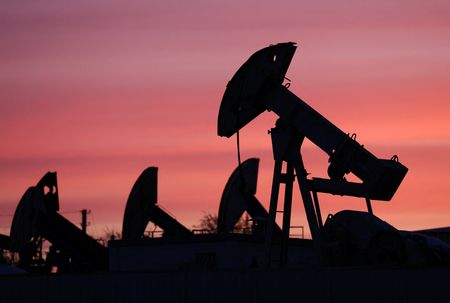

Oil prices were headed toward substantial weekly gains on Friday, driven by growing concerns over attacks on tankers in the Red Sea and a temporary production cutback in Kazakhstan that further tightened global energy supplies.
Brent crude futures dipped 72 cents, or 0.72%, to $99.97 per barrel as of early Friday morning, but remained on pace for a 13.5% increase for the week. West Texas Intermediate futures also slipped 70 cents, or 0.76%, to $91.49 per barrel, still tracking a 10.9% weekly gain.
On Thursday, Brent settled up 7% and WTI climbed 6.2% — marking the first time since May that Brent closed above $100 per barrel. The jump came after Iran-aligned Houthi fighters announced they had struck two Saudi oil tankers operating in the Red Sea.
The attacks fueled concerns that the Bab el-Mandeb shipping corridor could be forced to close. That waterway connects the Red Sea to the Indian Ocean and is considered the second most critical oil transit route in the world, behind only the Strait of Hormuz.
U.S. President Donald Trump responded by vowing to “hold Iran responsible” for any additional attacks.
Earlier in the week, the Houthis declared a naval blockade on Saudi Arabia on Monday. Saudi Arabia had been rerouting its oil shipments through a pipeline to avoid Iran’s closure of the Strait of Hormuz. Iran had been pressing the Houthis to shut down the Bab el-Mandeb gateway if the U.S. continued striking Iranian power infrastructure, following the collapse of a temporary ceasefire between the two nations two weeks ago.
“The noose around global energy supply routes is pulling tighter again,” IG market analyst Tony Sycamore wrote in a research note.
Adding to the pressure on oil markets, Kazakhstan’s energy ministry announced Thursday that oil companies in the country had temporarily scaled back production. The cutbacks came after suspected Ukrainian drone strikes forced Kazakhstan’s primary Black Sea export terminal to halt operations.
The Caspian Pipeline Consortium had already stopped accepting oil from Kazakhstan earlier in the week after suspending tanker loadings due to the attacks. That pipeline route carries roughly 2% of the world’s daily crude oil supply. While Kazakhstan’s energy ministry did not disclose the extent of the production cuts, one source indicated that the country’s largest oil field had reduced output by more than half.