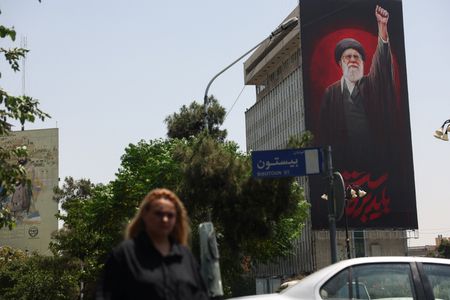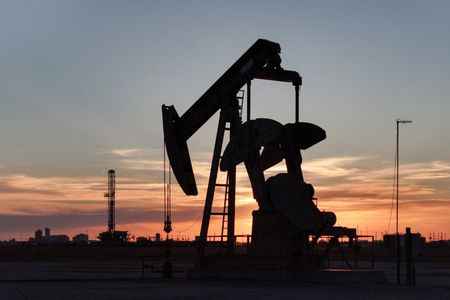

Crude oil markets showed little movement Tuesday as global investors monitored potential supply chain disruptions following Iranian military exercises near a critical shipping corridor, coinciding with upcoming nuclear negotiations between Washington and Tehran scheduled for later in the day.
Former President Donald Trump announced Monday his “indirect” participation in the Geneva discussions, expressing optimism that Iran seeks to reach an agreement. Over the weekend, Trump stated that changing Iran’s government “would be the best thing that could happen.”
Brent crude futures dropped 0.2% to $68.59 per barrel by 0106 GMT, after climbing 1.3% the previous day.
West Texas Intermediate crude reached $63.73 per barrel, gaining 84 cents or 1.34%, though this increase reflected Monday’s trading activity since the contract lacked settlement due to the Presidents Day federal holiday.
Several major markets remained closed Tuesday for Lunar New Year celebrations, including those in mainland China, Hong Kong, Taiwan, South Korea and Singapore.
“The market remains unsettled amid ongoing geopolitical uncertainties,” stated Daniel Hynes, an ANZ analyst, in a research publication.
“Should tensions in the Middle East ease, or meaningful progress be made in the Ukraine situation, the risk premium currently built into oil prices could swiftly unwind. However, any negative outcome or further escalation could prove to be bullish for oil.”
Iranian forces launched military exercises Monday in the Strait of Hormuz, a crucial international shipping lane and petroleum export channel for Gulf Arab nations, who continue advocating for diplomatic solutions to resolve the ongoing dispute.
Iran, alongside OPEC partners Saudi Arabia, the United Arab Emirates, Kuwait, and Iraq, ships the majority of their petroleum through this waterway, primarily destined for Asian markets.
Financial firm Citi indicated that if Russian supply interruptions maintain Brent prices between $65 and $70 per barrel over the coming months, OPEC+ will likely respond by boosting production using available capacity.
OPEC+ appears inclined toward resuming oil production increases beginning in April, according to three alliance sources, as the organization prepares for peak summer consumption while price stability benefits from US-Iran diplomatic tensions.
“It is our base case that both Iran and Russia-Ukraine deals happen by or during the summer of this year, contributing to a decline in prices to $60-62/bbl Brent,” Citi reported.