
A groundbreaking scientific study has revealed that exceptionally hot areas of ocean water are dramatically increasing the destructive power of hurricanes and tropical storms worldwide.
Scientists examined more than 1,600 tropical cyclones that struck coastlines since 1981, discovering that storms passing through these marine hot zones were far more prone to rapid strengthening. The research, published Friday in Science Advances, showed these conditions led to 60% more catastrophic events causing damages of $1 billion or greater after adjusting for inflation.
Understanding how these oceanic heat zones amplify storm intensity could prove invaluable for weather forecasters, emergency management officials, and community planners preparing for future hurricanes.
The research team characterized marine heat waves as extensive, persistent areas of ocean water ranking in the hottest 10% historically recorded. Climate change and increasingly warm seas are making these dangerous conditions more common, researchers explained. Elevated water temperatures serve as the primary energy source for hurricane development.
“These marine heat waves affect more than half of landfalling tropical cyclones,” explained Gregory Foltz, study co-author and oceanographer with the National Oceanic and Atmospheric Administration. “They’re happening closer to land and more frequently, so I think people need to pay attention and know that these are more likely to result in extreme damages when they make landfall.”
Foltz emphasized the importance for meteorologists tracking storm paths to monitor whether hurricanes encounter these marine heat zones, as rapid intensification becomes much more probable, “can potentially have a bigger impact on landfall.”
Study co-author Hamed Moftakhari, a coastal engineering professor specializing in compound hazards at the University of Alabama, pointed to devastating 2023 hurricanes that struck the United States as prime examples.
“The story of Helene and Milton is that if you’ve got a warmer ocean, you’ve got the fuel to supercharge tropical cyclones even in a cascade. So within a few weeks you could get two rapidly intensified hurricanes making landfall in the west coast of Florida,” Moftakhari explained. “This is shocking but should also be alarming for people.”
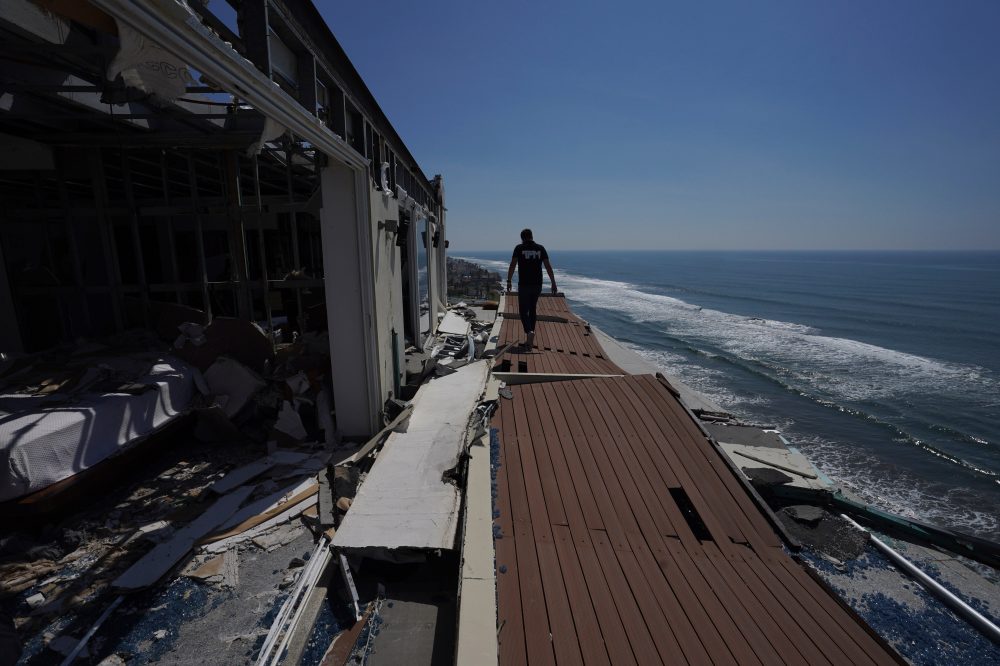
The study also highlighted October 2023’s Hurricane Otis, which underwent explosive strengthening from tropical storm status to a maximum-intensity Category 5 hurricane within 24 hours. The storm subsequently devastated Acapulco, Mexico, with 165 mph winds, resulting in approximately $16 billion in damages and claiming 52 lives.
The increased destruction wasn’t simply due to expanded coastal development, researchers clarified. Lead author Soheil Radfar, a hurricane hazard modeling scientist at Princeton University, noted that storms crossing hot water zones were compared against other hurricanes striking similarly developed coastal areas without encountering these heated ocean regions.
While scientists have long understood that warm water energizes and strengthens tropical cyclones, this research provides clearer evidence of the causal relationship.
The implications suggest an increasingly perilous future, according to Radfar.
“All these pieces of the puzzle are going to be really challenging for the coastal environment in the next four decades when you have more rapid intensification, more marine heat waves,” Radfar warned. This “is going to be really costly and frightening for the coastline environment, and it’s going to cause more billion-dollar disasters in the future.”
Moftakhari noted that “from a coastal engineering and risk management perspective, this has important implications for how governments plan, design, and respond to these hazards.”
Emergency evacuation strategies must consider that storms crossing ocean hot zones carry higher risks of rapid intensification and greater threats, Moftakhari stressed. Earlier warning systems and evacuation triggers may become necessary when marine heat waves are present. Infrastructure including flood barriers, drainage networks, and seawalls requires updating to address this evolving storm threat, he added.
Independent scientists praised the study for aligning with established hurricane physics and climate science while providing specific data on mega-damage probabilities during marine heat wave conditions.
“Climate change is causing stronger and longer-duration marine heat waves. Tropical cyclones draw their energy and produce heavy rain via evaporation from warm ocean waters,” said Brian Tang, an atmospheric sciences professor at University at Albany who wasn’t involved in the research. “It’s reasonable that marine heat waves are turbocharging hurricanes, provided other environmental conditions are favorable for hurricanes to intensify. In effect, the dice is being loaded.”