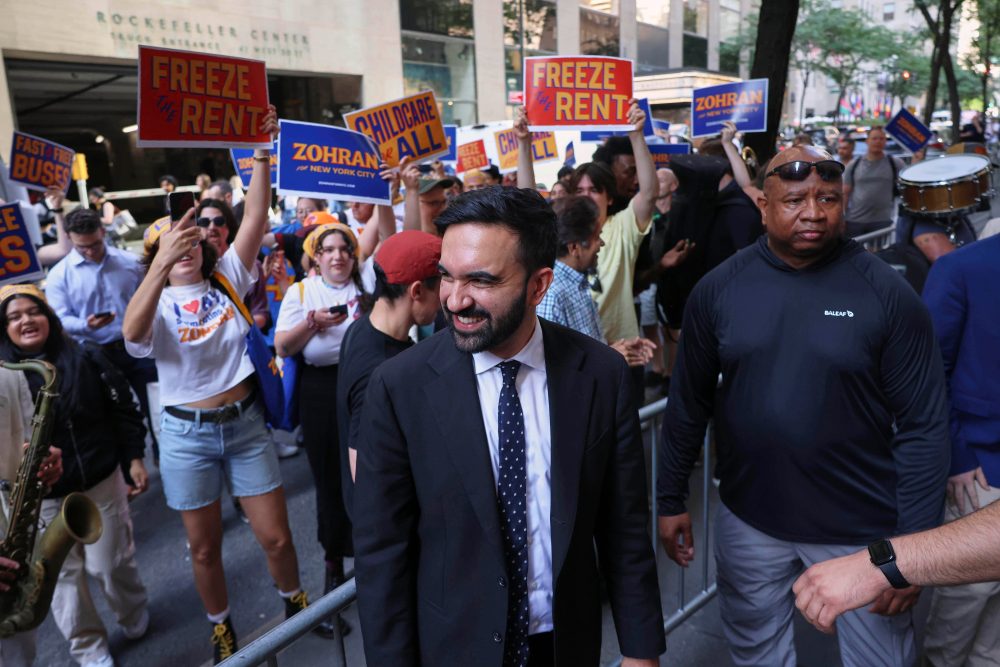

NEW YORK (AP) — From the moment Zohran Mamdani launched his campaign for New York City mayor, one promise stood above all others. In social media ads, speeches, and rallies, he repeated the same line over and over: “As your next mayor, I will freeze your rent.” On Thursday evening, that pledge became reality.
The city’s Rent Guidelines Board, an independent panel made up of mayoral appointees, voted to approve a rent freeze on both one-year and two-year leases for tenants living in roughly 1 million rent-stabilized apartments across New York City.
The outcome was widely anticipated, but it still marks a significant early victory for Mayor Mamdani, who has made addressing the city’s sky-high cost of living a top priority. The vote came just two days after three congressional candidates he endorsed pulled off stunning upsets, defeating two Democratic incumbents and defying the party establishment — further boosting his profile as a rising progressive force.
In a statement, Mamdani, a Democrat, described the board’s decision as “a historic victory for New York City tenants.” He added, “This is the relief that working people across our city deserve.”
Not everyone is celebrating. Real estate organizations argue that a rent freeze will squeeze landlords financially, making it harder to keep up with routine maintenance and repairs at a time when costs and inflation are already climbing. Opponents of rent regulation also contend that such policies tend to push up prices in the non-stabilized rental market.
Kenny Burgos, CEO of the New York Apartment Association, a lobbying group representing landlords, warned of serious consequences. “This will only result in more dilapidated housing and potentially more foreclosures and bankruptcies, which the city is wholly unprepared for,” he said.
The board’s vote is also expected to face a legal challenge. One board member who represented landlord interests resigned in protest, alleging that the panel’s independence had been undermined.
In her resignation letter, which she shared with The Associated Press, former board member Christina Smyth wrote, “The Rent Guidelines Board has stopped being a fact-finding body. It has become a body that starts with an answer and vibe codes its way backward to justify it.”
Mamdani appointed a majority of the board’s members just over a month after taking office, a move widely seen as laying the groundwork for the freeze. Before relocating to Gracie Mansion — the official mayoral residence — earlier this year, he and his wife had lived in a rent-stabilized apartment in Queens.
About 2 million New Yorkers live in rent-stabilized units, which account for roughly 40% of the city’s total housing supply. Although these apartments are privately owned, the Rent Guidelines Board sets a cap each year on how much landlords can raise rents.
The board has issued rent freezes before, most recently during the tenure of former Mayor Bill de Blasio. Under Mamdani’s predecessor, former Mayor Eric Adams, the board approved modest increases instead. Most recently, the board had approved raises of up to 3% on one-year leases and up to 4.5% on two-year leases.
Thursday’s vote drew a large crowd of tenant advocates who packed an auditorium at a museum along Central Park, erupting in cheers when the freeze was approved.
Rent-stabilized apartments come with no income requirements, meaning higher-earning residents are not barred from occupying them — a point of ongoing criticism. During last year’s mayoral race, former Gov. Andrew Cuomo called on Mamdani — who was then a state Assembly member earning just under $150,000 annually — to give up his rent-stabilized unit. Cuomo called the arrangement “disgusting,” arguing the apartment should be available to someone with a lower income.