
WASHINGTON — The leader of the National Transportation Safety Board is calling on Congress to stop stalling and take meaningful action on aviation safety, months after a deadly midair collision shocked the nation.
NTSB Chair Jennifer Homendy said the board had “provided a clear roadmap to improve aviation safety and reduce the risk of another catastrophic midair collision. Now it’s time for action that was promised months ago.”
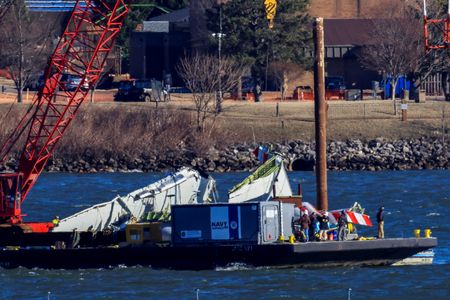
The push comes after two competing pieces of legislation have been unable to move forward together. In April, the U.S. House of Representatives overwhelmingly approved a sweeping aviation safety reform bill by a vote of 396-10. The measure was crafted in response to dozens of recommendations that followed a January 2025 collision between an American Airlines regional jet and a U.S. Army helicopter near the nation’s capital, which killed 67 people. Meanwhile, a separate bill called the ROTOR Act passed the U.S. Senate unanimously in December, but it fell just one vote short of the two-thirds majority required for fast-track passage in the House.
The NTSB has stated that ADS-B tracking technology could have prevented the 2025 collision in the busy airspace near Washington. In January, the board concluded that systemic failures by the Federal Aviation Administration caused the crash, which was the deadliest U.S. aviation disaster since 2001.
The House bill would require collision-prevention technology to be installed on all military aircraft — excluding fighter jets, bombers, and drones — by 2031. It also sets requirements for collision-mitigation systems on civilian planes and helicopters.
Negotiations between the House and Senate to reconcile the two bills have been ongoing.
The FAA’s top official, Bryan Bedford, told Reuters earlier this month that his agency had been providing technical assistance to Congress as lawmakers work through the differences. He said faster improvements are preferable to waiting for a perfect solution. “More situational awareness faster is better than waiting for the perfect solution that might not happen for six or seven years,” Bedford said, adding that the FAA has the ability to move ahead on ADS-B without congressional direction but would prefer lawmakers to act.
Investigators determined the 2025 crash resulted from the FAA allowing helicopters to fly close to the airport without adequate safeguards to keep them separated from fixed-wing aircraft, and from the agency’s failure to review data and act on earlier recommendations to reroute helicopter traffic away from the airport.