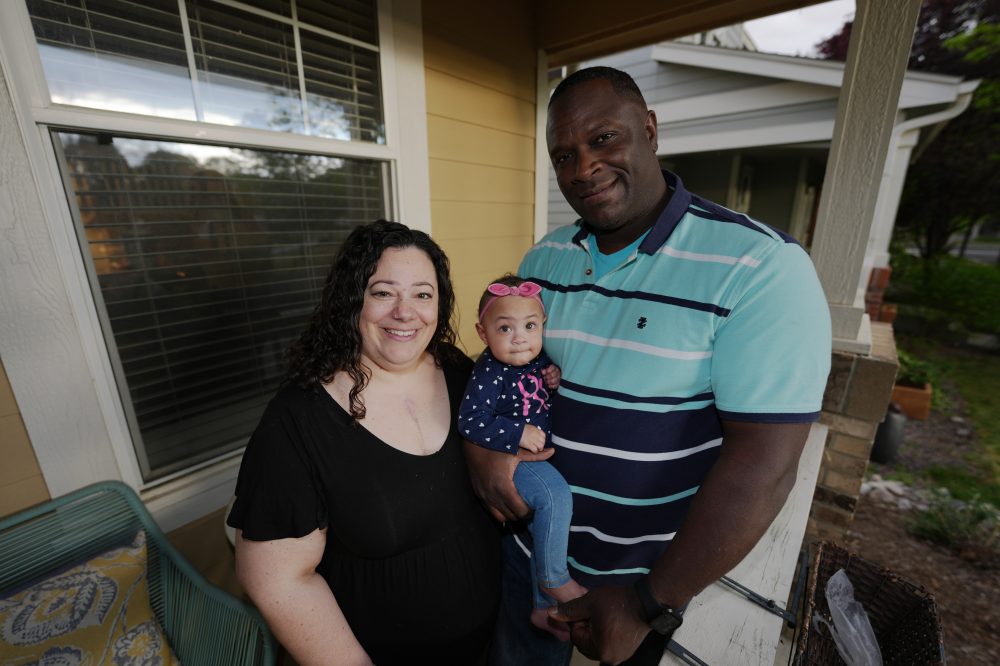

When Marlon White’s daughter Olivia arrived at just 29 weeks and weighing around 2 pounds, his world turned upside down. His wife collapsed after delivery, and their silent newborn was whisked away to intensive care while he stood helplessly in the corridor as medical staff worked to save both his wife and child.
Despite this traumatic beginning, White returned to his welding job the following day. His wife, Farra Lanzer-White, went back to work just two days later, managing emails and attending meetings from a Denver hospital while alarms sounded each time Olivia struggled to breathe and while she herself faced heart surgery for complications discovered during her pregnancy.
This Fort Collins, Colorado family made the same difficult decision countless NICU parents face: continue working while their baby fights for life in order to preserve any available leave for when their child finally comes home. Their experience has made them advocates in a growing campaign to establish specialized NICU leave within the nation’s complex web of family leave policies that vary dramatically across states, municipalities and employers.
Colorado made history in January by becoming the nation’s first state to provide paid NICU leave, granting up to 12 weeks for parents of intensive care newborns in addition to the existing 12 weeks of parental leave under state family and medical leave programs. Illinois will implement a smaller program next month, providing between 10 and 20 days of unpaid leave for NICU families.
Advocates are working to expand these policies to additional states while building momentum for federal legislation that would incorporate NICU leave into the Family and Medical Leave Act, the 1993 federal law providing eligible workers with unpaid leave for family and medical emergencies, according to Inimai Chettiar, president of A Better Balance, a nonprofit promoting paid leave and family-supportive workplace policies.
“We think it’s promising in terms of bipartisan support, because as we’ve approached people, it seems that they intuitively understand it,” Chettiar explained.
A Colorado Democrat in the U.S. House, Brittany Pettersen, is developing federal legislation that would provide up to 12 weeks of NICU leave beyond the 12 weeks of parental leave currently available under FMLA.
While the United States lacks any federal mandate for paid family or parental leave—a longstanding point of division between Democrats and Republicans—Pettersen believes the goal is building bipartisan consensus around NICU leave and elevating it within broader parental leave discussions, even though FMLA excludes many workers who cannot afford unpaid time off.
The legislative outcomes in Colorado and Illinois send conflicting messages about bipartisan possibilities. Colorado’s paid leave legislation passed primarily along party lines, while Illinois’s shorter, unpaid leave measure received strong bipartisan backing.
Illinois state Rep. Laura Faver Dias, a Democrat who sponsored the bill after her twin boys spent three months in intensive care following their birth at 27 weeks in 2014, noted that unlike Colorado, Illinois lacks an existing paid family leave framework to build upon.
Multiple Republican legislators signed on as co-sponsors, including state Rep. Nicole La Ha, whose daughter required 45 days of NICU care in 2017 after early labor complications at nearly 30 weeks.
“Unless you have had this experience, you can’t fully understand why something like this is so meaningful,” La Ha said. “You have an infant who is struggling to eat and breathe. The last thing you want to think about is work but unfortunately you have bills to pay.”
Although Colorado’s legislation lacked bipartisan support, Colorado State Sen. Jeff Bridges described “it was the quietest opposition you could hear,” with minimal public resistance from Republicans or business organizations. Bridges introduced the measure following his son Kit’s birth two months premature at just 2 pounds.
“I wanted to share stories that were so moving that the lobbyists would look like monsters if they opposed it,” Bridges explained.
According to the most recent Centers for Disease Control and Prevention data, approximately one in every 10 babies born in the United States requires NICU admission.
During their NICU stay, newborns are developing basic survival skills like swallowing, independent breathing and temperature regulation, said Dr. Karen Puopolo, section chief for Newborn Medicine at Pennsylvania Hospital and chair of the Committee on Fetus and Newborns of the American Academy of Pediatrics. Parental presence provides “multitude of advantages both ways,” Puopolo noted. Direct skin contact stabilizes the baby’s heart rate, enhances breathing patterns and supports maternal milk production.
Some companies have recently implemented dedicated paid NICU leave, including Morgan Stanley, Pinterest and organic baby formula company Bobbie, while others have expanded parental leave duration or added caregiving leave policies that could benefit NICU families.
However, the challenges facing NICU parents have largely remained overlooked, said Sahra Cahoon, executive director of Love for Lily, a Colorado-based organization supporting NICU families that championed Colorado’s new legislation.
Cahoon established the organization following the death of her daughter Lily, who was born at 24 weeks and five days and died after spending three-and-a-half months in intensive care. Cahoon, who operated a jewelry business then, continued working while believing her daughter would survive.
“It’s probably one of my biggest regrets,” Cahoon reflected, though she felt fortunate to work remotely from the hospital and couldn’t afford to lose her income at the time. “We did not know that our story was going to end that way.”
Learning about Colorado’s NICU leave law last year transported Rebecca Herrera-Moreno back to her son’s intensive care experience six years earlier, prompting her to begin advocating for similar legislation in her home state of California.
When her son Nico arrived at 32 weeks in 2020, Herrera-Moreno was already on disability leave after experiencing preterm labor weeks earlier. Her husband, Martin Moreno, qualified for six weeks of paid parental leave under California law then, but they chose to reserve that time for Nico’s homecoming, which occurred three weeks later.
She found it difficult to cherish moments with her tiny son while holding him amid machines, monitors and medical staff. She expressed love to him daily before departing while battling guilt that those feelings hadn’t fully developed yet. Weeks afterward at home, she confided in her husband, Martin Moreno, who admitted experiencing similar emotions.
Moreno, a health director for a labor union, said work consumed him during that period as his responsibilities intensified with the COVID-19 pandemic’s arrival. His clearest memory from that time isn’t of his son in the NICU, but of producing a video demonstrating proper handwashing techniques for workers.
When he finally came home, he felt unprepared to care for Nico, who required side feeding to prevent choking. He had been unaware of his wife’s emotional struggles.
“I wish I would have had more preparation with the medical staff to really feel like I had everything set. And that’s speaking to the medical piece of it — not even addressing being absent for Becky during so much of this,” Moreno said.
According to Tracy Marshall, director of Colorado’s Family and Medical Leave Insurance Division, nearly 800 people have requested neonatal care leave since Colorado’s policy launched in January.
Chris and Stevie Madden were among the first recipients when their son arrived almost eight weeks early on January 11.
Stevie Madden, a mental health professional who was hospitalized after experiencing high blood pressure and bleeding, said she panicked about managing the crisis and work responsibilities when she realized her planned maternity leave was still weeks away.
A hospital nurse informed Chris Madden about the new NICU leave option, which both parents utilized.
Madden, an oil field mechanic, said he couldn’t have maintained focus on his dangerous job while his son fought for survival. He learned proper techniques for handling his baby’s fragile skin—gentle pressure rather than rubbing—and developed confidence that proved crucial when Roczen stopped breathing after coming home and required emergency hospitalization.
He shared information about NICU leave with every parent he encountered at the hospital.
“It was life changing not to have to think about money and stress and just be present with your baby,” Madden said.