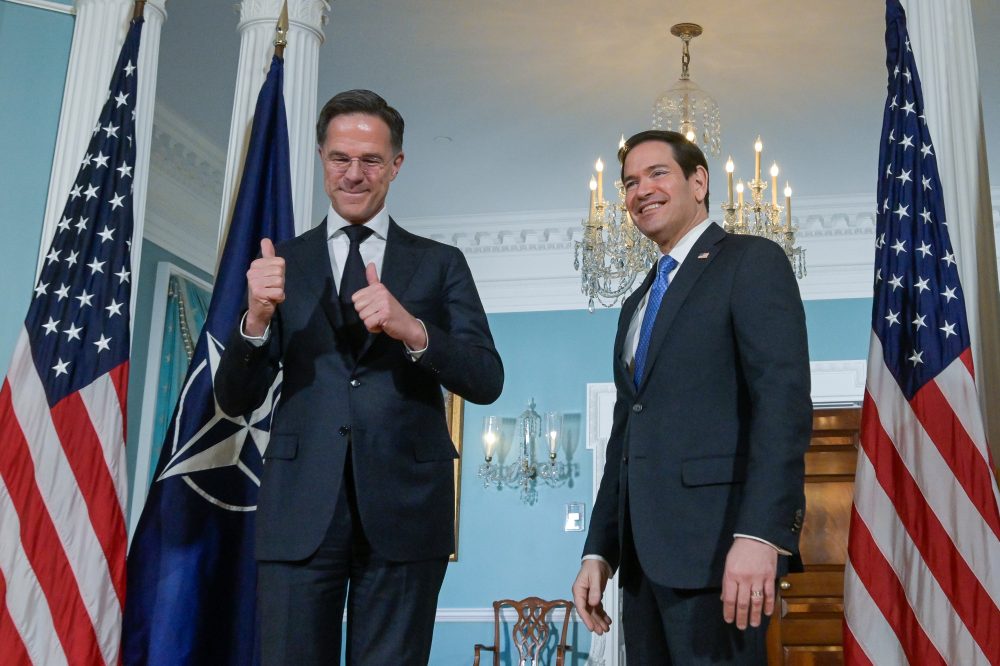

BRUSSELS — NATO’s top official Mark Rutte is navigating another challenging period with President Donald Trump, as tensions escalate over the military alliance’s response to the ongoing U.S.-Israel conflict with Iran — a war that doesn’t directly involve NATO and wasn’t discussed with the organization beforehand.
Following the conflict’s launch, Trump has criticized American allies as “cowards,” labeled NATO as “a paper tiger,” and drew comparisons between U.K. Prime Minister Keir Starmer and Neville Chamberlain, the British leader known for his appeasement policies toward Nazi Germany.
These criticisms add to existing tensions from Trump’s ongoing threats regarding Greenland, which have created significant strain among NATO partners and sparked concerns that forceful action could destroy the alliance entirely.
Recently, Trump — who essentially serves as NATO’s board chairman — hinted that America might exit the Atlantic partnership. This echoes his 2018 withdrawal threats during his initial presidency. His current grievance centers on allies failing to respond to his request for assistance when Iran effectively blocked the Strait of Hormuz, a crucial shipping corridor.
Following Wednesday’s discussions with Rutte, Trump expressed his frustration on social media, writing: “NATO WASN’T THERE WHEN WE NEEDED THEM, AND THEY WON’T BE THERE IF WE NEED THEM AGAIN.”
When CNN reporters pressed Rutte about Trump’s potential NATO exit plans, he responded: “He is clearly disappointed with many NATO allies, and I can see his point.”
Rutte has built a reputation as someone who can effectively communicate with Trump, particularly through developing strategies that encouraged European partners and Canada to purchase American military equipment for Ukraine while maintaining U.S. involvement in Europe’s largest conflict in recent decades.
Since assuming his position in 2024, one of Rutte’s primary challenges has been maintaining Trump’s engagement with NATO, especially as America focuses on security concerns in other regions including the Indo-Pacific, Venezuela, and now Iran.
Rutte’s approach includes using praise, commending Trump for pushing allies toward increased defense spending. He has also supported the U.S. leader regarding the war while avoiding criticism of Trump’s warning that “a whole civilization will die” if Iran doesn’t reopen the strait.
“This was a very frank, very open discussion but also a discussion between two good friends,” Rutte explained to CNN. He wouldn’t confirm reports suggesting Trump might relocate American forces from European nations that oppose the conflict.
When asked if global security has improved due to the U.S.-Israel war, Rutte responded: “Absolutely.”
What makes this Iran conflict particularly notable is NATO’s absence from any official role. While the defensive alliance has protected member Turkey when Iranian missiles targeted its territory in retaliation, the war was initiated by a NATO member rather than against one.
Rutte has stated that NATO won’t participate in the war, and no public evidence suggests the U.S. formally approached the Brussels headquarters about involvement, though Wednesday’s administration request for participation remains possible.
NATO officials declined to confirm whether strait security has been formally discussed, directing inquiries to the United Kingdom, which leads efforts outside the alliance to secure the trade route once ceasefire agreements take effect.
Estonian Foreign Minister Margus Tsahkna stated Thursday that his nation stands ready to consider providing NATO support to requesting partners in the region.
“If the U.S. or any other NATO ally is asking (for) our support, we are always read to discuss it,” he told CNBC. “But for that, we need of course the official ask to discuss then what is the mission, what is the goal?”
He emphasized that if allies “need our support, then we need to plan together.”
Rutte maintains that the alliance will focus solely on self-defense rather than engaging in conflicts beyond NATO boundaries, which encompass most of Europe and North America.
“This is Iran, this is the Gulf, this is outside NATO territory,” he explained.
While NATO has previously operated beyond Euro-Atlantic regions in Libya and Afghanistan, there’s little interest in repeating such missions following the chaotic 2021 Afghanistan withdrawal, which former NATO leader Jens Stoltenberg called a “defeat.”
Trump’s criticism appears primarily targeted at Spain and France rather than NATO itself. Spain has banned U.S. aircraft involved in the Iran conflict from its airspace and denied American forces access to jointly operated military facilities.
After the two-week ceasefire announcement, Spanish Prime Minister Pedro Sánchez posted on social media that his government “will not applaud those who set the world on fire just because they show up with a bucket.”
“What’s needed now: diplomacy, international legality, and PEACE,” he added.
France has expressed criticism, arguing the war began without proper international legal procedures and that Paris received no consultation. While France hasn’t imposed comprehensive restrictions on joint base usage or airspace access, French officials indicate they’re evaluating such decisions individually.