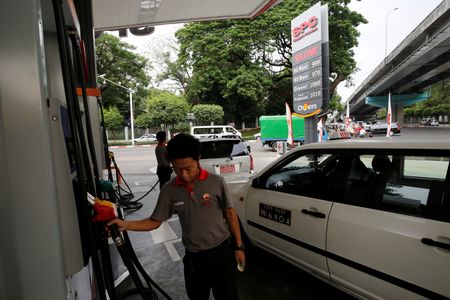

Myanmar’s military government declared Wednesday it will implement strict fuel rationing measures for private cars, citing Middle East conflicts that have disrupted global oil supply chains.
The National Defence and Security Council announced the new restrictions will take effect March 7, 2026, as a direct result of what they termed “global political situations” and armed conflicts in the Middle East that have blocked oil transport routes.
The rationing system will operate on an “even-odd” basis, where vehicles with even-numbered license plates can only operate on even calendar dates, while odd-numbered plates are restricted to odd dates. Electric cars and motorcycles will not be subject to these limitations.
Officials warned against fuel hoarding and price gouging, stating that anyone caught stockpiling gasoline for resale at higher prices will face criminal charges.
International shipping expenses have skyrocketed due to the continuing U.S. and Israeli conflict with Iran and the practical shutdown of the Strait of Hormuz, which has severely impacted oil tankers heading to Asian destinations.
The Southeast Asian nation depends heavily on processed fuel imports from Singapore and Malaysia, both major refining centers for Middle Eastern oil.
While these supply chain problems have already created shortages, alternative fuel sources remain accessible through Russia and neighboring Thailand.
Citizens in Yangon, the nation’s economic center, worry the rationing measures will increase living expenses and add more complications to daily routines in a city already struggling with electrical blackouts.
“Operating vehicles on alternating even and odd days based on license plate numbers is an incredibly frustrating system for people in a city like Yangon, where we depend so heavily on cars,” said one Yangon resident.
Rising fuel costs have already made meeting demand challenging, which raises concerns about the nation’s emergency fuel stockpiles, the resident noted.
In the border community of Myawaddy, gas stations completely ran out of fuel by March 3 evening, forcing temporary closures and prompting locals to travel to gas stations across the border in Thailand’s Mae Sot.
“Since yesterday, many people have been crossing over to the Mae Sot side to fill up their tanks. I went to stand in line myself and saw a massive number of vehicles queuing up at Thai gas stations,” the resident said.
The country has remained unstable since 2021, when military forces removed the democratically elected administration of Nobel Prize winner Aung San Suu Kyi, triggering widespread resistance movements that have developed into a countrywide armed conflict.