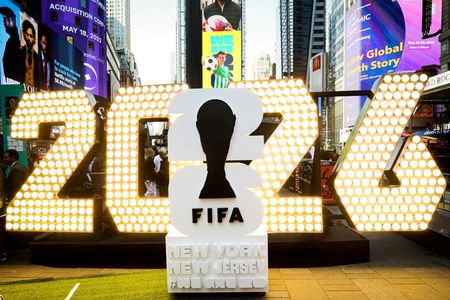

Soccer fans will see major rule modifications when the 2026 World Cup begins on June 11, as the International Football Association Board has approved sweeping changes to how the game is played and officiated.
The tournament, set to take place across the United States, Mexico and Canada, will be the first major competition to implement these new regulations, which will also apply to the 2026-27 season.
“The IFAB approved a set of landmark changes to the Laws of the Game and the FIFA World Cup 2026 will be the first major tournament to use them,” FIFA’s Chief Refereeing Officer Pierluigi Collina told reporters.
“These amendments aim to tackle discrimination, cut time-wasting, enhance match tempo and improve both the player and fan experience,” Collina explained.
MOUTH COVERING PENALTIES
Players who use their hands, arms, or jerseys to cover their mouths during confrontational moments will face immediate ejection with a red card. This regulation was introduced following an incident where Benfica’s Gianluca Prestianni allegedly made discriminatory comments toward Vinicius Jr while concealing his mouth. UEFA suspended Prestianni for six games, with the penalty extended globally.
The rule will not apply to players having casual conversations with teammates from opposing clubs, officials clarified.
FIELD DEPARTURE PROTESTS
Any player who exits the playing surface to dispute a referee’s call will receive a red card. The same penalty applies to coaching staff who encourage players to leave in protest. Teams that cause match abandonment will automatically lose the contest.
This change follows an incident during the Africa Cup of Nations final when Senegal walked off to protest a penalty decision against them before returning to defeat Morocco 1-0 in extra time.
TIMING RESTRICTIONS
Referees will implement visible five-second countdowns using raised hands for throw-ins and goal kicks. If players fail to put the ball back in play within this timeframe, possession switches to the opposing team through either a throw-in or corner kick.
SUBSTITUTION UPDATES
Players being replaced have just 10 seconds to exit the field once the substitution board appears, and must leave at the closest boundary point. Those who exceed this limit will delay their replacement’s entry until the next stoppage after one minute has passed. Exceptions include injuries and safety concerns.
MEDICAL TREATMENT RULES
Field players who receive on-field medical attention must remain off the pitch for one minute after play resumes. Goalkeepers, collision victims, players with severe injuries, and penalty takers are exempt from this requirement.
VIDEO REVIEW EXPANSION
“We started (using) VAR in FIFA competitions in 2017, at the Confederations Cup before the World Cup in Russia in 2018,” Collina noted. “So, we (think it is) the time to reconsider the protocol which was written when there was very limited experience.”
Video Assistant Referee technology will now cover additional situations including incorrect yellow cards that should be red, mistaken player identity for cards, wrongly awarded corner kicks, and fouls committed before set pieces.
“VAR will recommend an on-field review, following which, if the referee determines that an offence occurred before the ball was in play, the appropriate disciplinary action will be taken and the corner kick or free kick will be retaken,” IFAB stated.
HYDRATION PERIODS
Every match will feature mandatory three-minute water breaks in each half, typically occurring around the 22nd minute. Referees can adjust timing based on game circumstances, such as injury treatments.
GOALKEEPER TREATMENT PROTOCOL
When goalkeepers receive medical care on the field, players from both teams must remain on the pitch and cannot consult with their coaches during this timeout period.