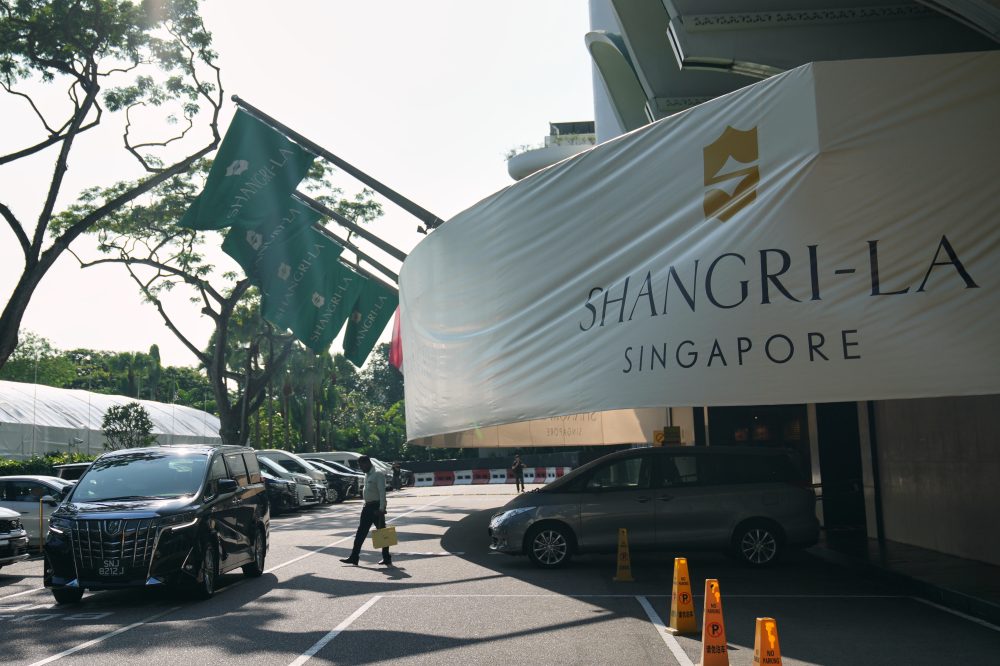

SINGAPORE (AP) — Asia’s most significant defense conference begins this weekend with Beijing’s accelerating military buildup and questions surrounding America’s regional commitments taking center stage as world leaders and security officials gather in Singapore.
The International Institute for Strategic Studies is hosting the Shangri-La Dialogue as tensions mount across multiple global hotspots, including escalating Middle East conflicts that have disrupted a fragile ceasefire in the Iran war and Russia’s continued assault on Ukraine.
Vietnamese leader To Lam will deliver Friday’s opening keynote speech, followed by U.S. Defense Secretary Pete Hegseth on Saturday, who plans to outline the Trump administration’s approach to the Indo-Pacific region.
This year, Lam has strengthened his position within Vietnam by assuming dual roles as both Communist Party general secretary and president, breaking from the Southeast Asian country’s historical practice of distributing leadership responsibilities.
Vietnam finds itself in a complex position, facing territorial disputes with Beijing in contested waters while maintaining China as its largest trading partner. Simultaneously, the United States serves as Vietnam’s primary export market and has been working to expand diplomatic ties and defense agreements to compete with Hanoi’s longtime partner, Russia.
However, recently disclosed documents revealed that despite upgrading diplomatic relations with Washington to their highest level, Vietnam’s military leadership continues to question American motives and has prepared defensive measures against potential American military action.
Given Hanoi’s careful diplomatic maneuvering between Washington and Beijing, observers anticipate Lam will emphasize building consensus to address disagreements and promoting collaborative efforts for regional peace and growth.
Lam is scheduled to hold private discussions with Hegseth during the conference. This marks Hegseth’s second participation in the summit, where he previously sparked Beijing’s anger by declaring that “the threat China poses is real, and it could be imminent,” while describing Chinese military exercises as “rehearsing for the real deal.”
Hegseth previously stated that Washington would strengthen its defensive capabilities against what the Pentagon views as rapidly emerging threats, especially regarding China’s hostile position toward Taiwan.
However, this year’s address follows closely after U.S. President Donald Trump’s recent visit with Chinese leader Xi Jinping in Beijing, where Xi cautioned that the two nations could face conflict over Taiwan without proper handling of the situation.
After their discussions, Trump praised Xi as a “great leader” and expressed optimism about having a “fantastic future together.” Trump also questioned Washington’s commitment to defending Taiwan, describing a pending $14 billion weapons package as “a very good negotiating chip for us” with China.
China maintains its claim over the independently governed democratic island, with Xi refusing to eliminate the possibility of military action to seize control.
Meanwhile, the U.S. continues providing Taiwan with advanced aircraft, missiles and defensive weapons while maintaining “strategic ambiguity” regarding potential military intervention should China attack the island.
Trump has demonstrated less certainty about Taiwan compared to previous presidents, raising doubts about whether he might reduce American support for the island.
According to Pentagon officials, Hegseth’s address will emphasize the military’s “common-sense approach to safeguarding U.S. vital national interests in the Indo-Pacific.”
Given the recent Beijing meeting between the two leaders, Hegseth appears unlikely to make statements that would overshadow Trump’s own comments.
China plans to present its perspective during Sunday’s session, though Beijing is reportedly sending a lower-ranking delegation this year, with the specific speaker yet to be announced.
Chinese Defense Minister Dong Jun was also absent from last year’s gathering.
Although the annual summit primarily addresses Asian security matters, discussions will inevitably include Russia’s continuing war against Ukraine and the Iran conflict, which has resulted in closing the Strait of Hormuz.
During normal conditions, twenty percent of global oil shipments pass through the strait, and Iran’s effective blockade has driven up worldwide oil prices, creating economic challenges internationally. Qatar’s defense minister is among this weekend’s scheduled speakers.
Prior to the conference opening, Ukrainian President Volodymyr Zelenskyy contacted Trump and U.S. Congress requesting additional American-manufactured air defense supplies to counter escalating Russian missile strikes.
While Zelenskyy, who made an unexpected personal appearance two years ago at Shangri-La, is not anticipated to attend this year, the speaker lineup includes numerous senior European defense leaders from countries including Lithuania and Poland.