
BEIRUT (AP) — Lebanon’s president is scheduled to sit down with U.S. President Donald Trump on Tuesday, wrapping up a four-day trip to Washington as the war-torn nation seeks a path to lasting stability following a prolonged conflict between Israel and the Iran-backed Hezbollah militant group.
The high-profile meeting between Joseph Aoun and Trump comes while Lebanon and Israel are engaged in an unusual round of direct negotiations facilitated by Washington. Lebanon is hoping those talks will lead to Israeli forces pulling back from large portions of southern Lebanon they currently hold, while also securing support for the Lebanese military to establish full authority in areas previously dominated by Hezbollah fighters.
On June 26, Lebanon and Israel announced what they called a “framework agreement,” outlining a plan for Israeli forces to exit southern Lebanon alongside the disarmament of Hezbollah, which has maintained a powerful presence in the region for decades. The agreement also charts a course toward an eventual peace deal between the two nations — countries that have never had formal diplomatic relations and have technically been at war for nearly 80 years since Israel’s founding.
On Monday, the U.S. State Department announced that operations had begun in three villages designated as part of a “pilot zone” — Froun, Srifa, and Zawtar al-Gharbieh — though officials did not elaborate on what those operations involved. All three villages remain outside Israeli military control. Neither Lebanon nor Israel’s military or political leaders immediately responded to the announcement.
Aoun also met with Secretary of State Marco Rubio on Sunday. Rubio said the United States would continue to back the Lebanese agreement and push for its full implementation, calling the meeting “very positive.” He cautioned that Lebanon would “never be fully at peace” until the Hezbollah situation is addressed.
“How do you replace Hezbollah? You defeat and replace them with a government that is strong enough to be the sole force of arms in the country,” Rubio said following the meeting. Some in Lebanon worry that a direct military confrontation with Hezbollah could spark a civil war, and Lebanese officials have also called for investment in the country’s deteriorating infrastructure to strengthen the weakened state — a concern Rubio said he shares.
“This is not just about military stuff,” Rubio added. “This is about how can we attract more U.S. and international investment into Lebanon.”
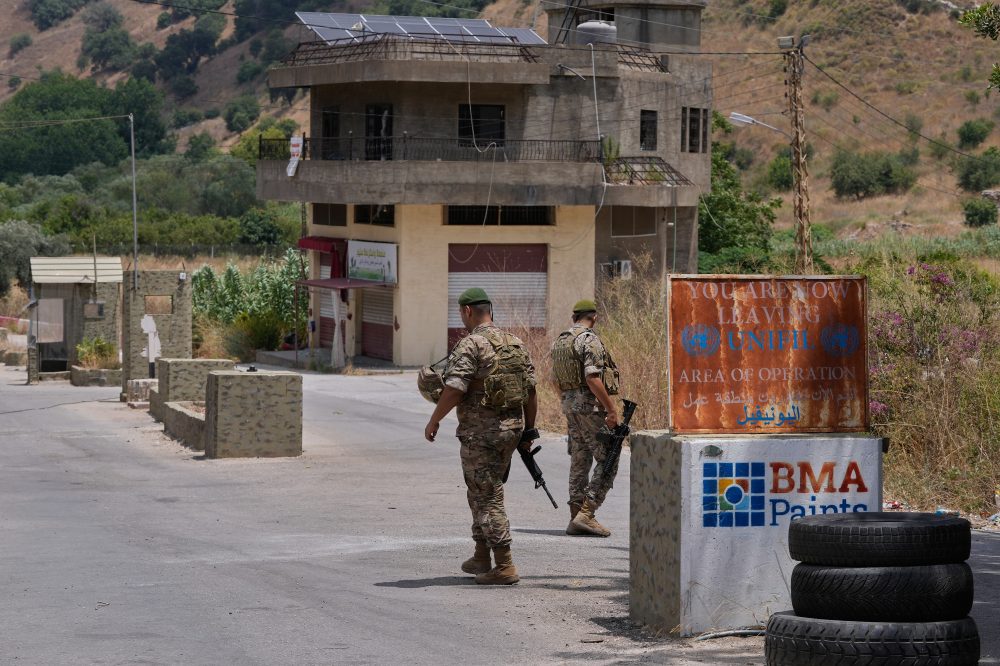
Last week, the Lebanese military expanded its presence in several areas expected to fall within the pilot zone, including the three named villages, with soldiers conducting patrols and manning checkpoints. Although recent discussions held in Rome have suggested the agreement’s implementation is drawing near, Israeli troops have yet to withdraw from the areas they control.
Israeli officials have indicated they intend to maintain a long-term military presence in what they describe as a “security zone” in southern Lebanon.
Hezbollah has rejected the U.S.-brokered direct talks, instead throwing its support behind separate Washington negotiations with its key backer Iran — talks that include ending the conflict in Lebanon as part of any broader deal.
Lebanon’s current government, which came to power early in 2025 on a reform-focused platform, has pledged to disarm all non-state armed groups, including Hezbollah. It holds Hezbollah responsible for dragging the country into renewed conflict with Israel in March, when the militant group launched rockets into northern Israel following U.S. and Israeli strikes on Iran.
At the same time, Lebanon’s leadership has strongly criticized Israel’s subsequent ground invasion and sweeping air campaign, which claimed more than 4,000 lives and forced 1.2 million people from their homes. While navigating fierce political opposition from Hezbollah and its allies within Lebanon’s deeply divided political landscape, the government maintains that Israeli withdrawal and international financial backing for Lebanon’s cash-strapped military are essential to achieving a durable security solution.