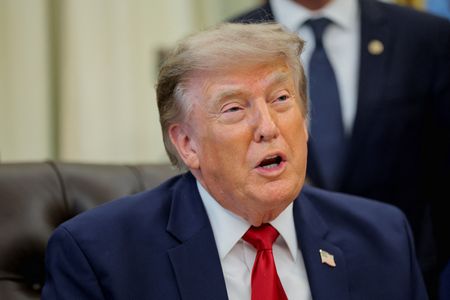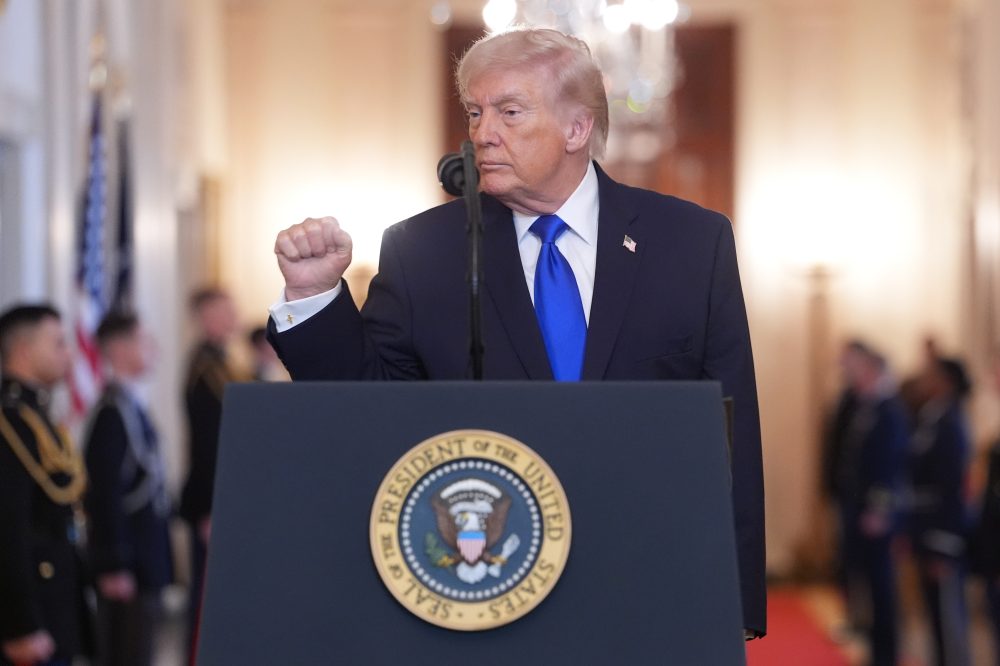

WASHINGTON — President Donald Trump indicates he has substantial material to cover during tonight’s address.
The president returns to Capitol Hill to present his State of the Union speech during a pivotal period of his administration, facing approval numbers near historic lows while supporters await more concrete solutions to their economic hardships.
Additionally, the Supreme Court recently ruled against the tariff measures that formed a cornerstone of his current term. Meanwhile, the international policy issues he pledged to resolve effortlessly now appear more complex, with another possible military action against Iran on the horizon.
The slim Republican control in Congress that has offered minimal resistance to Trump’s broad interpretation of executive authority faces potential elimination following this year’s midterm contests, where competing interests may clash.
Several key issues emerge as the speech approaches.
Trump made no effort to conceal his anger following the Supreme Court’s rejection of his comprehensive tariff program last week. Beyond questioning the legal logic of the justices who opposed one of his primary initiatives — including two of his own appointees — he called them an “embarrassment to their families.”
Tonight, many of these same justices will likely occupy front-row seats in the House chamber during Trump’s remarks.
The question remains whether Trump will confront the justices directly or demonstrate restraint by limiting his criticism to the ruling itself.
Presidential criticism of the court during State of the Union addresses has precedent. In 2010, President Barack Obama condemned the Court’s Citizens United ruling — which enabled millions in anonymous political contributions — saying it would “open the floodgates for special interests,” causing Justice Samuel Alito to visibly disagree by mouthing “not true.”
Supreme Court justice attendance has become increasingly irregular since that incident. Alito stopped attending after 2010, joining conservative Justice Clarence Thomas, who has long viewed these speeches as overly political. Last year, during Trump’s special congressional address, only four justices attended — Chief Justice John Roberts and Justices Elena Kagan, Brett Kavanaugh, and Amy Coney Barrett.
Trump welcomed the justices cordially then, even telling Roberts “thank you again, I won’t forget it.” Many interpreted this as gratitude for the Court’s presidential immunity decision, though Trump claimed on social media he was simply thanking the chief justice for administering his oath.
Nevertheless, justices seeking to avoid televised presidential criticism may choose to stay away Tuesday.
Democrats were still adapting to Trump’s return when he last spoke to Congress — and it was evident.
During his 2025 joint session speech, Democrats brought signs with messages from “Save Medicaid” and “Musk Steals” to simply “False.” Rep. Al Green of Texas interrupted Trump, resulting in his removal from the chamber.
The signage drew widespread criticism as artificial, while Green’s outburst proved distracting. For voters angered by Trump’s assertive power use in his early months, the display offered little assurance that Democrats could effectively counterbalance the White House.
Democrats seek to prevent a repeat of last year’s chaos. Expect fewer signs and possibly reduced Democratic attendance overall. Numerous lawmakers have announced they will skip the speech, with some planning alternative Washington events.
This approach may reduce theatrical moments but might not convince frustrated voters that Democrats possess a unified, effective message after a decade of Trump’s political presence.
Following Democratic governors’ boycott of a weekend White House dinner with Trump, avoiding the State of the Union may further emphasize the fundamental divide between America’s major political parties.
Virginia’s recently sworn-in Governor Abigail Spanberger will deliver the Democratic response to Trump.
Trump speaks at the beginning of a difficult election year for fellow Republicans, who maintain a precarious congressional majority. Much of the GOP’s difficulty stems from voter perception that the party hasn’t adequately addressed rising costs.
The White House acknowledges voter economic concerns and claims to be addressing them. However, Trump frequently struggles with message discipline. During a Georgia visit last week intended to emphasize economic issues, the president instead promoted disputed election fraud claims and voter identification proposals. When discussing affordability, he described it as a Democratic-created problem he has now “solved.”
Trump’s immigration rhetoric may also draw attention. Republicans faced criticism after two American citizens died in Minneapolis last month during an aggressive federal immigration operation. While Trump maintains tough language regarding undocumented immigrants, his administration has reduced Minneapolis operations. The president told New York Governor Kathy Hochul last week he would direct future immigration enforcement to welcoming locations.
Trump campaigned on quickly ending global conflicts. A year later, Russia’s Ukrainian war continues, Gaza maintains a fragile ceasefire, and Trump threatens major Iranian military action just eight months after claiming the U.S. had “obliterated” Iran’s nuclear capabilities.
His military intervention in Venezuela less than two months ago, which captured leader Nicolas Maduro, demonstrates his continued international involvement despite America First messaging.
Trump supporters may applaud his nationalist rhetoric, but the Republican president displays increasingly globalist actions in his second term’s first year.
Iranian conflict remains a real possibility. Trump has established the largest Middle Eastern U.S. military presence in decades. Last week he warned Iran’s leadership that “bad things will happen” soon without a nuclear agreement.
Trump rarely practices self-editing. Last year’s speech — technically a joint address rather than a State of the Union — lasted nearly one hour and 40 minutes, setting a congressional address record that Trump may seek to surpass.
“It’s going to be a long speech because we have so much to talk about,” he stated Monday.