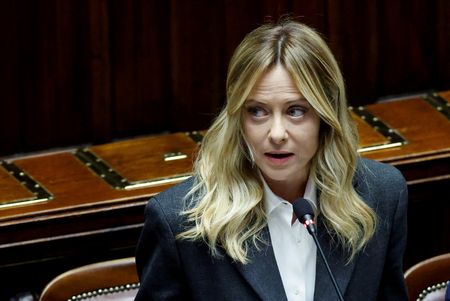

ROME, April 9 – Italy’s Prime Minister Giorgia Meloni addressed parliament Thursday, calling on European Union leadership to contemplate temporarily halting budget deficit restrictions should conflicts involving the United States, Israel, and Iran intensify.
During her parliamentary address, Meloni also indicated her administration stands prepared to implement measures aimed at preventing energy price manipulation, potentially including additional windfall taxes targeting energy sector companies.
“We believe that discussing a possible temporary suspension of the Stability and Growth Pact should not be taboo. Not a waiver for individual Member States, but a general measure,” Meloni stated during her speech.
The Prime Minister’s statements arrive as Italy prepares to reduce its economic growth projections for 2026 and subsequent years later this month. These revised estimates will complicate Italy’s efforts to reduce its deficit below the European Union’s mandated 3% of GDP threshold within the current timeframe.
Between 2020 and 2023, European Union officials implemented what they termed a ‘general escape clause’ that suspended standard budget requirements, enabling member nations to address the COVID-19 pandemic’s economic impact, which resulted in widespread lockdowns, economic decline, and border closures across Europe.
However, this emergency provision can only be utilized during significant economic downturns affecting the eurozone or the entire European Union – conditions that major economic forecasters do not currently anticipate.
Italy maintains the option to invoke a national emergency clause that would permit deviation from EU-agreed budget targets during extraordinary circumstances beyond the country’s control. However, the government has dismissed this possibility while Rome remains subject to the excessive deficit procedure.
“Italy remains ready to take every possible measure to prevent potential speculative behaviour (on energy prices), including, if necessary, further action regarding the profits of energy companies,” Meloni added during her address.
Both Meloni and her predecessor Mario Draghi have previously implemented windfall taxes targeting the energy industry, resulting in legal challenges from affected corporations.