
Yemen’s Iranian-backed Houthi rebels announced Monday that they are placing an immediate maritime embargo on Saudi Arabia, citing retaliation for an ongoing blockade against Yemen and a recent strike on Sanaa International Airport. The declaration threatens yet another critical waterway for worldwide commerce and has raised alarms about a return to open conflict.
Houthi military spokesperson Yahya Saree delivered the announcement via video, calling the maritime ban effective immediately and framing it as an “equation of ‘an eye for an eye.’”
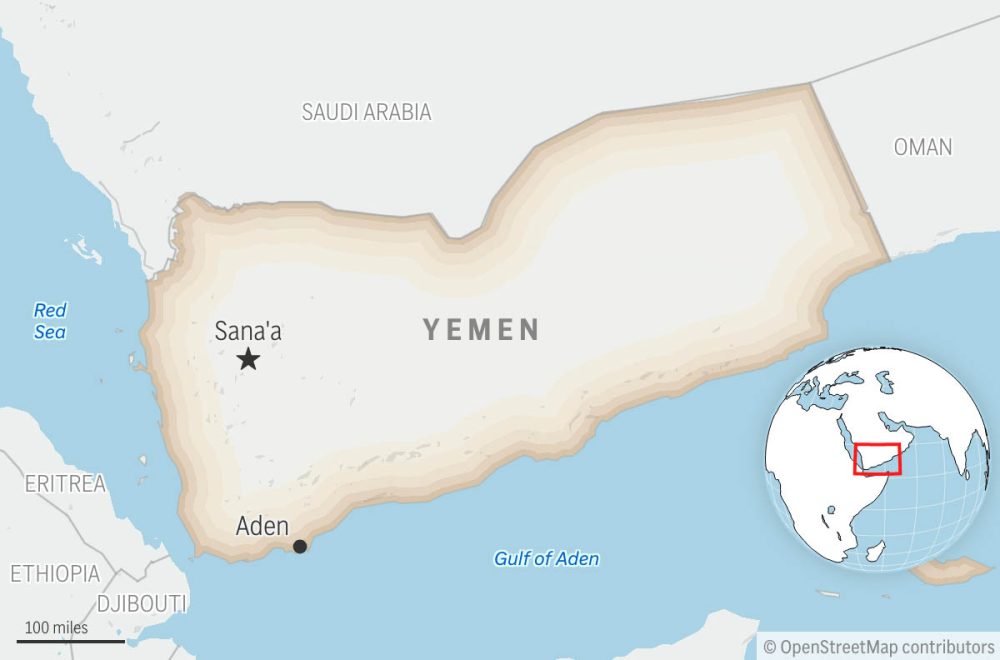
While the rebels offered limited specifics, Nasruddin Amer, the deputy head of the Houthi media office, posted on X that the Bab al-Mandeb strait would be shut down in response to what he described as Saudi Arabia’s “unjust blockade on Yemenis for over 10 years.”
The Bab al-Mandeb strait sits at the southern end of the Arabian Peninsula and serves as the entrance to the Red Sea. Approximately 12% of all global trade typically moves through the passage, and roughly a quarter of the world’s container shipping travels through the 20-mile-wide waterway on its way to or from the Suez Canal.
The Houthis previously demonstrated their capacity to disrupt traffic in the strait when they spent months attacking vessels during the Israel-Hamas conflict in Gaza, striking more than 100 ships. Whether they will carry out a similar scale of attacks against Saudi Arabia remains uncertain.
Saudi Arabia had not issued any immediate response. The kingdom is already under pressure, as it has been routing crude oil exports through its East-West Pipeline to the Red Sea as an alternative to the Strait of Hormuz — a route that Iran has controlled since the U.S. and Israel struck Iran on February 28. Saudi Arabia has been moving millions of barrels of oil per day through that pipeline.
Saudi Arabia heads a coalition that has been fighting the Houthis and imposed an air and sea blockade on Yemen starting in 2015. The conflict traces back to 2014, when the Houthi rebels captured the capital city of Sanaa and large portions of northern Yemen, driving the government out of the country. A ceasefire was established in 2022.
That truce has come under strain in recent days after the Houthis accused Saudi forces of attacking Sanaa airport in an attempt to intercept a flight carrying Houthi leaders returning from Iran, where they had attended the funeral of Supreme Leader Ayatollah Ali Khamenei. The plane diverted and landed safely at a different airport.
In response, the Houthis launched missiles and drones at Saudi Arabia’s Abha International Airport, marking the most significant clash between the two sides in years.
By permitting a direct international flight to land without clearance from the Saudi-led coalition, the Houthis were attempting to establish a new precedent giving them independent authority over Yemen’s airspace, according to experts who spoke with the AP.
Saree reinforced the group’s position Monday, stating: “We affirm the right of our great people to respond to the blockade with a blockade,” and warning that the Houthis are ready to meet “any foolish act committed by the reckless Saudi enemy … with a comprehensive and decisive escalation.”
The Houthis are considered a key component of Iran’s so-called “Axis of Resistance,” a network that also includes armed factions in Lebanon, Iraq, and the Palestinian territories.
Although the rebels have maintained a large arsenal of drones, several Houthi members previously told the AP — speaking anonymously because they were not authorized to speak to media — that supplies have been running low following the months of attacks during the Israel-Hamas war. The conflict involving Iran has further disrupted the flow of weapons to the group.
Earlier, the United States and Israel responded to Houthi attacks on shipping with an extensive air campaign targeting Houthi-controlled areas in Yemen, which ultimately led to a deal in which the rebels halted their assaults.
Any closure of the Bab al-Mandeb strait would force shipping companies to redirect vessels around the Cape of Good Hope at the southern tip of Africa, significantly driving up transportation costs worldwide.