
While driving home from work Tuesday evening with her two young children, Zainab Haider found herself consumed with worry about President Donald Trump’s deadline for Iran to accept American demands. The question weighing on her mind was whether her family members still living in Iran would survive or face destruction.
Haider experienced a flood of intense feelings – from worry and terror to isolation – as she watched others continue their daily routines despite the potential catastrophe looming. In the end, Trump chose not to follow through on his warning that “a whole civilization will die tonight,” instead reaching a two-week ceasefire agreement in the conflict.
This represented yet another jarring shift for Haider and the hundreds of thousands of Iranian residents in America who find themselves in a perpetual state of worry about Iran’s destiny and the wellbeing of loved ones who remain in their homeland.
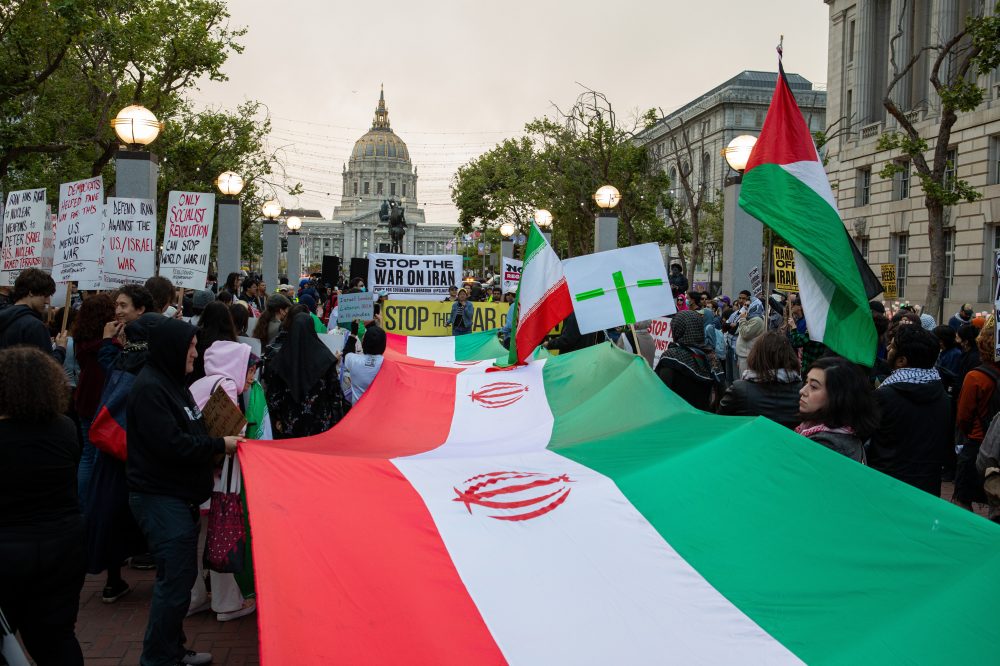
Many find that the recent heated rhetoric surrounding the conflict has dominated their thinking, making it difficult to complete work tasks or concentrate on other matters. While some are demonstrating against the war, others keep their views about their native country private, nervously observing developments and wondering about what lies ahead.
On Wednesday, Haider joined protesters in Austin, Texas, demanding an end to the conflict. Similar demonstrations took place in New York, Boston, Chicago, Los Angeles and additional cities.
Beyond voicing opposition to the war, Haider believes that organizing will generate “the kind of pressure that makes it harder for Trump to swing back to this aggressive posturing.”
“It’s a huge country,” she said of Iran. “Trump is not going to ever be able to defeat it or wipe it out, but it is possible to do damage. It is possible to do something that affects millions of people, millions of lives.”
Haider, who works as a municipal planner and organizes with the Austin for Palestine Coalition, described Trump’s ultimatum as terrifying.
She opposes regime change, believing this should be decided by Iranian citizens rather than the United States. Despite arriving in America from Pakistan with her parents during childhood, she felt compelled to speak out. She still recalls the local bakeries and juice stands she would visit with her mother and their neighbors.
Iranian-American Sheila Amir explained that Trump’s social media messages caused her alarm on several fronts.
Her primary worry centered on her Iranian family members. She has been unable to verify their safety over the past week due to an internet shutdown affecting the entire country.
However, the North Carolina writer also expressed concern that war escalation could endanger her American relatives serving in the military. Their obligation, she noted, is to “serve and protect the United States of America,” not to harm Iranian people.
Even individuals who support American actions targeting the Iranian government directly are having difficulty accepting the recent threats against civilians.
Roya Rastegar has engaged in numerous challenging family discussions about the conflict in recent weeks. Both Rastegar and her spouse are Iranian-American. Rastegar revealed that Iranian government forces have killed family members over the decades since the Islamic Republic gained control, while most of her wife’s relatives continue living in the country.
Rastegar, who works as a filmmaker and co-established a pro-democracy organization called the Iranian Diaspora Collective, said the constant policy reversals have complicated explaining the situation to their children.
“It’s very hard to hold on to the idea that we do not know what’s going to happen,” she said.
According to Rastegar, the war has created an impossible ethical dilemma. She worries deeply that increased attacks on Iran could inflict greater harm on civilians. However, she also thinks that reducing war tensions without eliminating the Islamic Republic will create the biggest danger for Iranians living in the country, who would continue experiencing brutal and fatal oppression.
“It’s really nauseating to just think about my people as being stuck between a regime that’s still killing them and an administration — the U.S. — that is issuing these kinds of threats,” Rastegar said.