
GUATEMALA CITY — Manuel Botom Uz was only four years old when soldiers attacked him and his siblings in their Indigenous community in Quiche, in northwestern Guatemala, in 1982 — one of the darkest periods of the nation’s decades-long armed conflict.
His siblings were eventually found and returned to relatives, but he became one of more than 100 children who vanished during the conflict, which lasted from 1960 to 1996. In total, more than 200,000 people lost their lives and approximately 45,000 others disappeared during fighting between the army and guerrilla forces. A United Nations truth commission determined that the Guatemalan military bore responsibility for the majority of the atrocities and that the Guatemalan state committed acts of genocide against Indigenous communities.
What little information exists about Botom Uz comes from a government initiative called the National Reparations Program, which gathered survivor and witness testimonies. Now, officials are in a desperate race to secure all 60,000 case files before progressive President Bernardo Arévalo’s term concludes in January 2028.
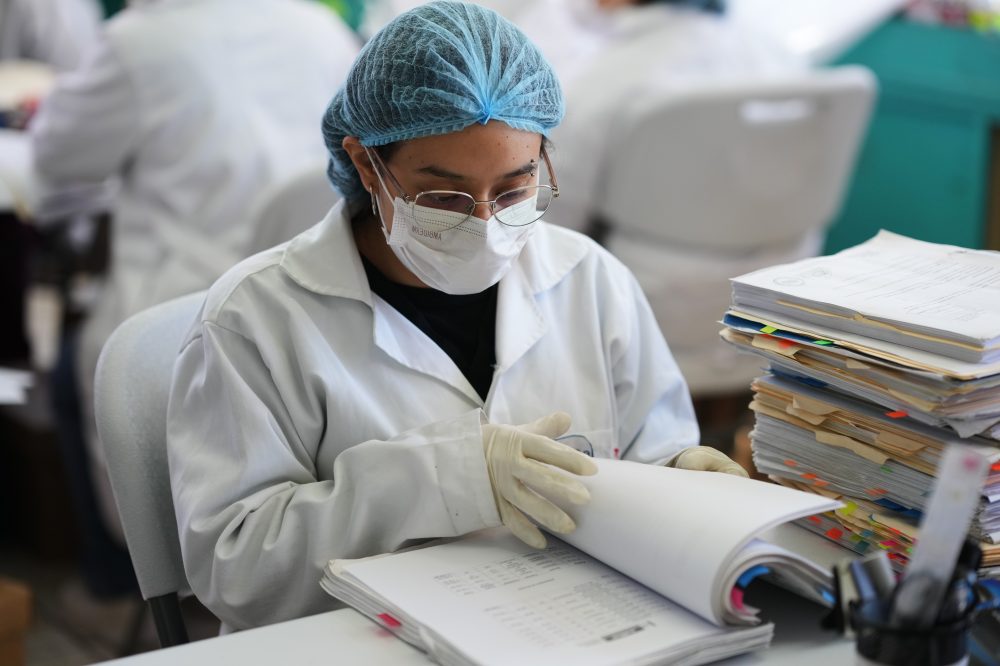
Stored in hundreds of large blue plastic boxes sorted by region, the files contain harrowing accounts of extrajudicial executions, killings, sexual violence, forced disappearances, and the forced recruitment of men, women, and children during the conflict era.
Workers tasked with rescuing the archive discovered troubling conditions. Archive assistant Erick Briones described finding “damp, piled-up boxes, incomplete, torn files” when the preservation effort began.
The project is funded by UNESCO and aims to restore the archive while eventually seeking its designation as part of the Memory of the World Program — a status that would ensure its protection and make it freely accessible to anyone wishing to understand Guatemala’s history.
Although Guatemala has prosecuted some individuals responsible for abuses during the conflict, ongoing influence wielded by military figures and elites connected to that era has slowed accountability efforts. President Arévalo has made reparations a central priority, but human rights organizations are concerned that whoever succeeds him may not continue the work.
During the administrations of the previous two presidents, Jimmy Morales and Alejandro Giammattei, the reparations program was largely neglected. Giammattei went further, ordering the program shut down with no plan in place to preserve the testimonies it had collected.
Arévalo has moved to reverse that course, working to preserve evidence of past abuses and restore reparations efforts. Among his initiatives is the launch of the country’s first national registry of individuals who disappeared during the armed conflict.
Elvin Díaz, the presidential commissioner for human rights who now oversees the archives, spoke bluntly about what he believes the previous governments intended. “There was an intention, on the part of the Morales and Giammattei governments, to erase collective memory, to destroy a legacy built over many years based on the testimonies of the victims,” he said.
“That is why it is important to recover that memory and the testimonies of the victims, to safeguard them, and for them to become part of the living memory of this country,” Díaz added.
A United Nations Working Group on Enforced or Involuntary Disappearances, which recently visited Guatemala, stated in its initial report that the Morales and Giammattei administrations pursued a “systematic policy of dismantling institutions for peace and justice.”
Díaz noted that while the national reparations program was primarily designed to provide humanitarian assistance and compensation to victims, the information gathered could also support future criminal investigations.
As part of the restoration effort, officials also plan to digitize the entire archive to allow for broader public access.
The files are set to become part of the Reparation and Dignity Plan for the Victims of the Armed Conflict, which President Arévalo announced last month. The plan aims to consolidate information from government agencies and civil society groups to advance reparations, and those still listed as missing will be entered into a government database.
As for Manuel Botom Uz, his case was ultimately resolved — though not in the way his family had hoped. Twenty-two years after he disappeared, his remains were recovered from a clandestine burial site and returned to his family for a proper burial.