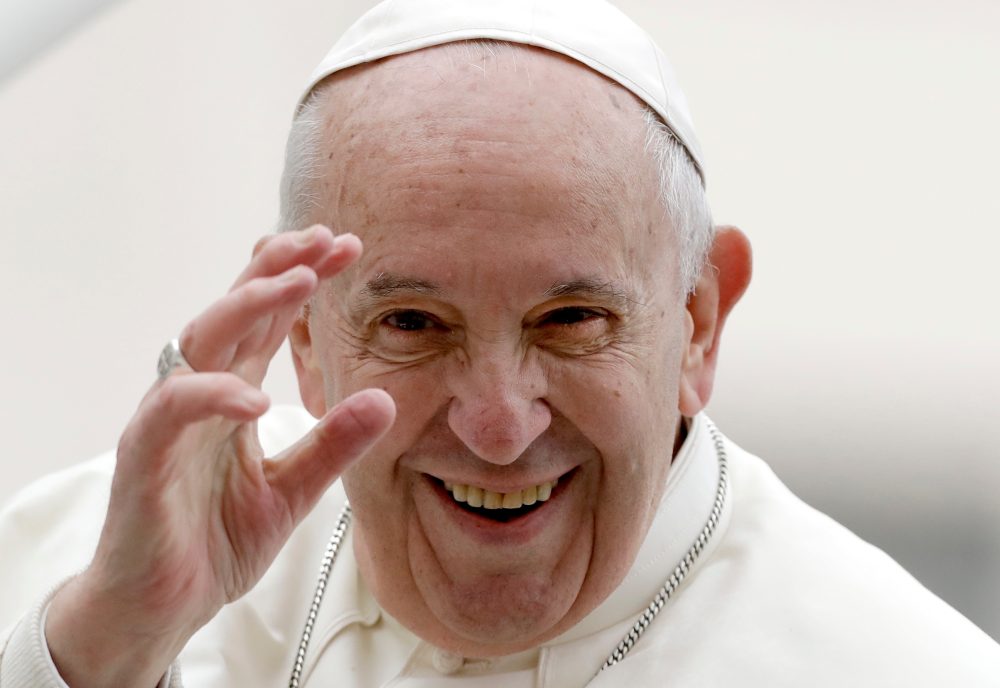

ROME (AP) — Pope Leo XIV has called Catholic bishops worldwide to gather in Rome for an extraordinary session focused on family ministry, building upon his firm support for one of Pope Francis’ most contentious marriage policies.
In a special statement commemorating the decade milestone of Francis’ 2016 publication “The Joy of Love,” Leo described the document as a “luminous message of hope” with greater significance and urgency now than when first issued.
“The Joy of Love” created immediate upheaval upon its release because it provided a pathway for Catholics in civil second marriages to participate in Communion.
Traditional Catholic doctrine states that these individuals cannot partake in the sacraments without securing an annulment — an official church ruling declaring their initial marriage invalid — as they are considered to be living in adultery and sin.
Rather than establishing a universal exception for these Catholics, Francis offered — through ambiguous language and a carefully positioned footnote — that clergy could make individual determinations following a process of spiritual guidance and reflection. Later statements and writings confirmed Francis’ intention to provide such flexibility, reflecting his conviction that divine mercy particularly reaches sinners and that the Eucharist serves as sustenance for the spiritually struggling rather than a reward for the righteous.
This publication became among the most polarizing of Francis’ papal tenure and served as a rallying point for traditional Catholics opposing his leadership. It generated significant backlash from conservative Catholics who argued it created confusion regarding church doctrine on marriage permanence.
However, in Thursday’s anniversary statement, Leo gave his strong backing to Francis’ document. He referenced Chapter VIII, which contained Francis’ approach to the divorce issue, though he avoided direct mention of sacramental access or Francis’ footnote No. 351.
Within the document, Francis instructed clergy that they cannot simply impose moral regulations on individuals in “irregular” circumstances. Instead, he advocated that the church should assist people technically in sin, particularly when extenuating circumstances exist.
In the corresponding footnote No. 351, Francis explained that “in certain cases, this can include the help of the sacraments.” He advised priests that “the confessional must not be a torture chamber, but rather an encounter with the Lord’s mercy” and emphasized that the Eucharist “is not a prize for the perfect, but a powerful medicine and nourishment for the weak.”
“On this tenth anniversary, we give thanks to the Lord for the stimulus that has encouraged reflection and pastoral conversion in the Church, and ask God for the courage to persevere on this path,” Leo stated.
He has summoned bishops conference leaders to Rome for an October gathering to determine future approaches for family ministry “in light of ‘The Joy of Love’ and taking into account what is currently being done in the local churches.”
Francis’ publication created deep divisions within the church.
During the first year following publication, four traditional cardinals formally requested Francis address specific concerns, or “dubia,” generated by the document. They maintained that church teaching prohibited Catholics in second marriages without annulments from receiving sacraments due to their sinful status.
Francis never responded to their inquiry.
While annulments often remain unattainable for various reasons, Francis implemented separate reforms to streamline and expedite the annulment procedure.
The subsequent year brought a petition from conservative Catholic scholars accusing Francis of heretical teaching.
Conversely, others welcomed the document. Bishops from Francis’ home region of Buenos Aires developed implementation guidelines for Chapter VIII that explicitly permitted civilly remarried Catholics to receive Communion, particularly when the individual bore no responsibility for the first marriage’s failure, while emphasizing this wasn’t universal permission “as if any situation were to sufficiently justify it.”
Francis directed the Argentine guidelines be published as official Vatican documentation and sent the bishops a letter declaring their understanding definitive. “The document is excellent and clearly sets out the meaning of Chapter VIII,” he stated. “There are no other interpretations.”
The Maltese church developed separate guidelines published in Vatican newspaper L’Osservatore Romano, signaling additional Holy See endorsement.
The Maltese recommendations state that if a Catholic in a new civil relationship determines, following spiritual discernment seeking divine guidance, that peace with God is possible, “he or she cannot be precluded from participating in the sacraments of Reconciliation and the Eucharist.”