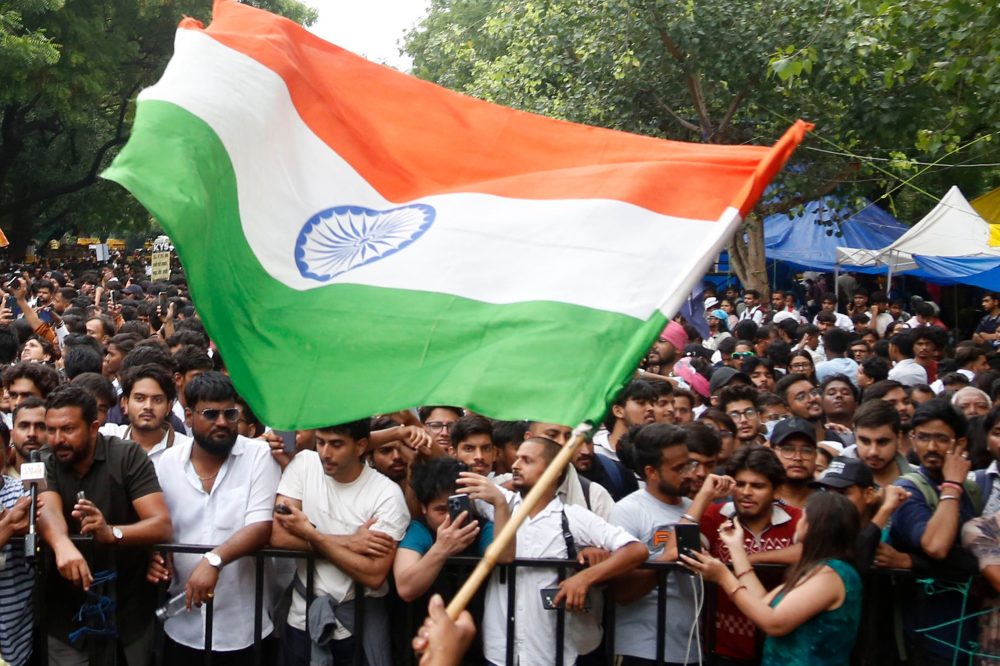

NEW DELHI (AP) — Members of India’s youth-driven Cockroach movement declared Tuesday that their protest in New Delhi will press on, refusing to abandon their sit-in one day after police deployed tear gas and batons to scatter thousands of demonstrators who attempted to march on Parliament.
Hundreds of protesters remained gathered at Jantar Mantar, an area designated for demonstrations, under a heavy police presence. They say they will not leave until Education Minister Dharmendra Pradhan steps down over what they describe as serious failures in India’s national examination system.
“We are going to continue our protest,” said Abhijeet Dipke, the founder of the Cockroach Janta Party.
The clash between police and protesters on Monday has become one of the defining moments in the CJP’s two-month campaign. What started as a satirical form of protest has grown into a nationwide, youth-led movement centered on exam leaks, unemployment, and holding the government accountable.
Video footage showing officers striking protesters with batons and pulling demonstrators away spread rapidly across social media, sparking widespread public anger. Some clips showed young protesters in tears, begging officers to stop hitting them, while other recordings captured defiant moments of young people holding their ground despite being struck.
Delhi Police reported that close to 180 people were hurt in the confrontation, including 118 security personnel and 60 protesters.
Sona Bisht, a 20-year-old student who participated in the protest, said the police response only hardened her determination.
“If the government thinks that doing this with Gen Z, they can stop us, then that won’t happen. We are here talking about education, talking about securing our future. And till the time our demands are not met, we will not move from here,” she said.
After roughly a month of no engagement, the government appeared to make its first move toward dialogue on Monday, when a senior minister sat down with movement representatives. Those talks did not defuse the situation, however, as protest leaders said they wanted concrete action — not promises. Their demands include Pradhan’s resignation, reforms to the examination system, and financial compensation for families of students who died by suicide following alleged irregularities in exams.
Dipke accused authorities of acting in bad faith, saying police launched a baton charge even after protesters had been invited to participate in talks.
Human rights organization Amnesty International released a statement late Monday condemning the police response, saying it demonstrated “how peaceful dissent is being suppressed in India.”
“The role of the authorities is to protect and facilitate peaceful protests, not to suppress them. The right to freedom of peaceful assembly is recognized under international human rights law and the Indian constitution,” the organization stated.
The movement has drawn students, working professionals, and families, representing an uncommon public challenge to Prime Minister Narendra Modi’s government during its third term in office. It has reignited criticism over how the administration handles dissent and its willingness to use force against protesters. The movement gained further momentum over the weekend after prominent activist Sonam Wangchuk, whose three-week hunger strike had come to symbolize the protests, was taken to a hospital by police against his will.
Rabina Kashyap, a 26-year-old working professional, said she joined the protest on Tuesday after watching video of police using tear gas and batons on students.
“I have nothing to do with this protest,” she said. “But this is India, this is my country, and these are my people. So I will stand by them.”