
BUENOS AIRES — The International Monetary Fund’s managing director is set to arrive in Argentina on Monday, touching down as investor enthusiasm for President Javier Milei’s economic overhaul continues to build — even as a looming debt repayment deadline and a critical election cycle cast a shadow over the country’s financial future.
Argentina has been posting encouraging economic numbers. Exports are climbing, foreign currency reserves are growing, and inflation — which once surged at a breakneck pace — has been steadily cooling. Last week, Moody’s raised the country’s sovereign credit rating, following similar upgrades from S&P Global and Fitch, all of which have added fuel to investor optimism surrounding Milei’s push to stabilize an economy long defined by repeated boom-and-bust cycles.
Still, investors are watching carefully what comes next. An IMF report had placed Argentina’s 2027 foreign-currency debt obligations at $32.3 billion, including interest payments, before the central bank moved $6 billion in repo financing into 2028 earlier this month.
Argentine officials say they plan to handle those obligations through a mix of multilateral financing, privatizations, and domestic debt issuance — all while steering clear of a return to international capital markets.
The timing carries added weight because those debt payments will come due precisely when Milei is widely anticipated to pursue a second term in office. Any doubt about his reelection prospects — or concern that a future leader might abandon his economic direction — could shake investor confidence and make financing more difficult to secure.
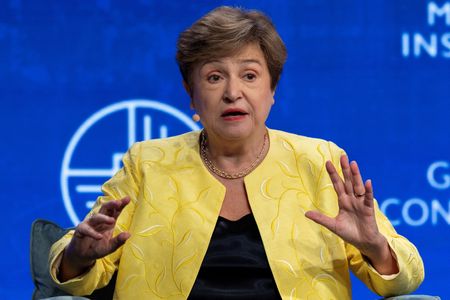
Kristalina Georgieva’s visit, her first trip to Argentina since taking the helm of the IMF, is scheduled to include meetings with Milei and Economy Minister Luis Caputo. She is also expected to tour the Vaca Muerta shale formation in Patagonia, which sits at the center of the government’s strategy to expand energy exports and generate the foreign currency needed to shore up the nation’s finances.
The two-day visit comes in advance of a third review of Argentina’s $20 billion IMF program. Since Milei entered office in late 2023, the Fund has consistently expressed support for the government’s fiscal discipline, legal reforms, and efforts to bring down monthly inflation — which fell from 25.5% in December 2023 to just 1.9% in June.
Despite that backing, the IMF’s most recent staff report flagged what it called “exceptional risks,” cautioning that while Argentina’s debt is currently considered sustainable, the probability that it will remain so is not high.
Next year shapes up as a defining moment not only for Milei’s ability to advance his legislative agenda, but also for the IMF itself, which has staked considerable credibility on Argentina’s economic turnaround. The country remains the Fund’s single largest debtor, and the relationship between the two has been complicated by a string of past programs that failed to prevent recurring economic crises.
Analysts say investor attention is now moving beyond whether Milei has succeeded in stabilizing the economy and toward whether that stability can last. The real test, they say, is whether Argentina can generate enough dollars, attract enough investment, and build enough voter support to sustain his austerity-driven reforms after the initial recovery phase.
Even strong export figures and improving financial metrics may not be enough to secure electoral success if large numbers of Argentine citizens are still struggling with high household debt and unstable employment, analysts cautioned.
“Milei’s problem is no longer whether the macro story is believable abroad. It is whether voters can feel it at home,” said Mariano Machado of risk consultancy Verisk Maplecroft.
Aldo Abram, director of the Fundación Libertad y Progreso, noted that government policies loosening import restrictions have contributed to significant job losses in less competitive manufacturing sectors.
Moody’s, even while raising Argentina’s credit rating this month, cautioned that political risks remain a significant constraint and that any rollback of current reforms could erode the progress the country has made.
That reality makes the 2027 election nearly as consequential as the debt payments themselves.
“The great challenge is that this reorganization process, which in the eyes of investors and the macroeconomy is very satisfactory, has to be validated electorally,” said economist Gustavo Ber.