
The chief executive of Hyundai Motor Company announced Monday that the automaker will be unable to completely compensate for declining sales in the Middle East, as production limitations prevent the company from swiftly redirecting vehicles to alternative markets.
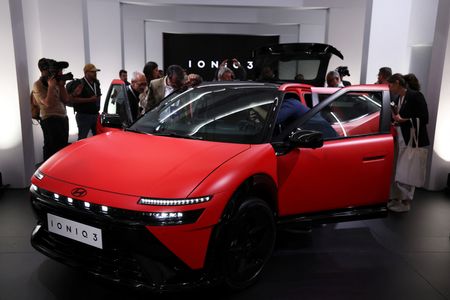
Speaking at Milan Design Week in Italy while presenting Hyundai’s latest Ioniq 3 electric vehicle, CEO Jose Munoz explained that the Middle East represents the South Korean manufacturer’s most profitable market, despite not generating substantial volume sales.
The Spanish-born executive emphasized that the regional conflict significantly affects the company because automobiles manufactured for Middle Eastern customers cannot be easily sent to different destinations.
“You cannot just simply derive cars that are meant to go from one market to another,” Munoz explained, pointing to varying technical specifications and government regulations between different regions.
While Hyundai attempts to compensate for some Middle Eastern sales losses by redirecting vehicles to alternative markets, production capacity limitations restrict the company’s short-term options.
“I can tell you that there are many volunteers now that try to get those cars,” the CEO noted. “One of the regions that can accommodate is the North America region. But there are more as well.”
The global automotive giant, ranked third worldwide, had been steadily expanding throughout the region before the current crisis began, with strategies to increase sales across Gulf nations and portions of North Africa. Munoz said supply chain disruptions have worsened the demand decline, making recovery timelines dependent on conflict duration.
“It needs some time to do that. It’s not as immediate as reroute the ships from one place to another,” he stated.
The automaker, currently introducing new electric and hybrid vehicles worldwide, continues major investments in European and American manufacturing and supply networks, initiatives designed to support sustained growth through localized production rather than addressing temporary disruptions.
Hyundai’s Middle Eastern expansion includes constructing a production facility in Saudi Arabia, initially scheduled to begin operations in the fourth quarter of 2024.
“Hopefully we will still be able to open,” Munoz said, noting that the opening schedule now depends on regional developments.