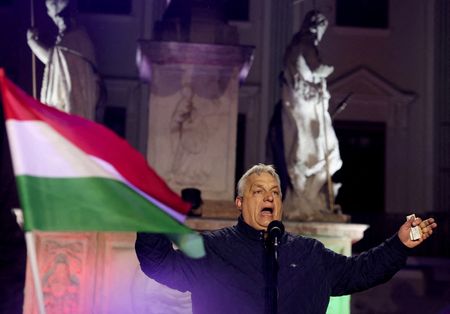

Viktor Orban’s decade-and-a-half stronghold on Hungarian politics faces its most serious threat this Sunday, as polling data suggests the longtime leader could be ousted in what many consider a pivotal moment for Hungary’s position within Europe.
The current prime minister, who has maintained power since 2010 and holds the distinction of being the EU’s most tenured leader, has constructed what he terms an “illiberal democracy” by restricting press freedoms and limiting democratic institutions. His approach has garnered support from far-right European factions and former President Trump’s political movement.
Yet three years of economic decline, rising inflation, and allegations that government-connected business figures have enriched themselves have sparked widespread voter frustration. Additional controversy has emerged from media accounts suggesting the administration has worked closely with Russian officials.
Peter Magyar, a former insider within Orban’s circle, has effectively channeled public dissatisfaction through his center-right Tisza party, which currently holds commanding leads in most surveys.
Political experts warn that several factors create electoral uncertainty, including uncommitted voters, redistricted boundaries that benefit Orban’s Fidesz party, and substantial overseas Hungarian populations who typically support the incumbent government. They note outcomes could range from a Tisza supermajority capable of constitutional amendments to continued Fidesz control.
The election carries enormous implications for Hungary’s 9.6 million citizens and the broader European continent.
“This is one of the most momentous elections in Europe and for Europe in many years,” said Gregoire Roos, director of the Europe, Russia and Eurasia Programmes at Chatham House.
“In Moscow, Hungary has been seen as a precious trouble-making interlocutor within the EU — maintaining energy ties… and adopting, by far, the toughest tone vis-a-vis Ukraine than any other EU country. In the United States, Hungary has drawn attention as a laboratory of sovereigntist politics.”
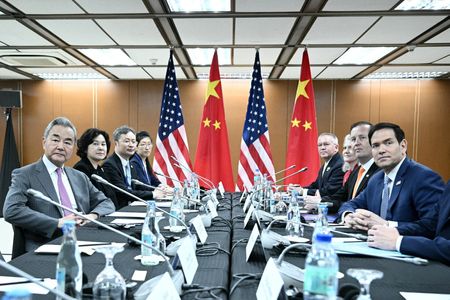
The Trump administration demonstrated its backing for Orban through a visit this week by Vice President JD Vance, who criticized what he termed “disgraceful” EU meddling in the electoral process. A European Commission representative responded that voting decisions belong “the sole choice of the citizens.”
Russian officials quickly echoed similar sentiments. Kremlin spokesperson Dmitry Peskov stated Wednesday that “many forces in Europe, many forces in Brussels, would not like Orban to win the elections again.”
Hungary has opposed EU sanctions against Moscow and continues depending heavily on Russian energy supplies. The 62-year-old Orban recently prevented an EU loan package to Ukraine that was approved in December, citing disagreements with Kyiv over a war-damaged petroleum pipeline, marking another clash with Brussels leadership.
Magyar, age 45, has committed to fighting government corruption, securing billions in withheld EU funding, implementing wealth taxes, and overhauling Hungary’s deteriorating medical system.
Speaking with Reuters, he characterized the election as determining whether Hungary will solidify its European identity and economic recovery, or continue moving toward authoritarianism.
“Just a few days and we will see a change of regime,” Magyar declared at a Wednesday campaign event in Baja, vowing to heal political rifts among Hungarians.
“This is a very last chance… to prevent our country being a Russian puppet state… Let’s not allow Fidesz… to lead Hungary out of the EU.”
Orban maintains he seeks EU reform from within rather than departure from the alliance. He has characterized this contest as a fundamental decision between “war or peace,” claiming his political rivals would involve Hungary in the ongoing Ukrainian conflict. Tisza representatives reject this characterization.
“This election is about Hungary’s future. The choice is clear: dependence and decline — or sovereignty, strength, and peace,” Orban stated Tuesday.
The far-right Our Homeland party aims to secure sufficient votes to become a potential “kingmaker,” which might enable Orban to retain power through coalition arrangements.
Should Tisza prevail, reversing the legal and structural modifications Orban enacted with constitutional authority would present significant challenges for any new administration operating with only a simple majority in the 199-member parliament, according to Mario Bikarski, Senior Europe Analyst at Verisk Maplecroft.
This scenario could create “an environment of persistent legislative blockade and policy uncertainty,” he explained.
Financial markets, however, are concentrating on potential benefits from a Tisza victory.
“An end to the Orban regime would provide a major boost to the Hungarian economy,” noted Berenberg chief economist Holger Schmieding.
“It would remove a key obstacle to closer European cooperation… and pave the way for tougher sanctions against Russia.”