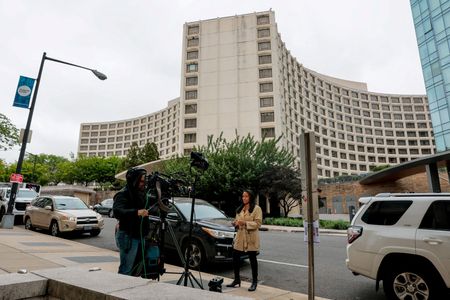

A security incident at the Washington Hilton during the White House Correspondents’ Association dinner has brought renewed attention to the hospitality industry’s ongoing struggle with security vulnerabilities.
Cole Allen, 31, has been charged with breaching security and discharging a shotgun near the event where President Donald Trump was present. In writings discovered by authorities, Allen expressed surprise at the lack of security measures he encountered.
“I expected security cameras at every bend, bugged hotel rooms, armed agents every 10 feet, metal detectors out the wazoo,” Allen wrote before the incident. “What I got,” he added, “is nothing.”
The breach underscores a longstanding challenge for hotels: implementing robust security while preserving the welcoming atmosphere that guests expect. Although some companies are developing AI-based surveillance technologies, hotels have been hesitant to invest in systems that could increase expenses and compromise guest privacy.
Nicolas Graf, who teaches hospitality management at New York University, explained the delicate balance hotels must maintain. “Security is going to continue to improve with technology in identifying strange behavior. But at the end of the day, it’s a hospitality business where customers have to feel welcome,” Graf said.
Allen managed to navigate through the hotel before rushing a security checkpoint located above the dining area where Trump was eating with 2,600 attendees including journalists and government officials. While Trump was evacuated safely and no guests were injured, the incident demonstrated how threats can emerge from within hotel properties.
Security experts point to recurring weaknesses that attackers exploit: numerous entry points, around-the-clock guest arrivals, inconsistent screening procedures, and unclear boundaries between public areas and secure zones.
Morgan Stevens, who oversees global security operations at Crisis24, emphasized the importance of controlled access. “Not every guest in the building is screened the same way, which is why zoning and access control become critical,” Stevens noted.
The hospitality sector faces pressure to enhance security measures while managing costs. The nine largest hotel, casino and resort companies generated approximately $102 billion in revenue in 2025, though they’ve experienced profit margin challenges recently.
Following the incident, the Washington Hilton stated it had been following “stringent” Secret Service procedures. Hilton Worldwide Holdings chose not to provide additional comments, but the response followed a predictable sequence of events.
Authorities cordoned off the property, investigators reconstructed the suspect’s movements, and security professionals analyzed what could have been handled differently.
Allen faces charges including attempted assassination, firing a weapon during a violent crime, and illegally transporting firearms and ammunition across state boundaries after traveling by train from California. He has not yet entered a plea.
Hotels typically remain operational during major events but implement access restrictions such as dedicated elevators or off-limits floors. Security preparation for significant events usually requires several days to a week, during which teams survey the location, establish credential protocols, and create controlled security zones.
However, regular guests continue to access lobbies, dining areas and guest floors alongside screened event attendees, creating unavoidable security vulnerabilities.
The American Hotel and Lodging Association described their approach: “Hotels employ a layered approach to safety and security.” These measures include staff training, monitoring systems, access restrictions and collaboration with law enforcement officials.
Robert McDonald, a University of New Haven professor and former Secret Service supervisory agent, explained that the agency typically collaborates with hotel security, local police and White House staff to create security protocols rather than shutting down properties completely.
This recent breach has shaken confidence in existing security models. Trump later criticized the venue, saying the hotel was “not a particularly secure building.” Law enforcement sources told Reuters they are reevaluating security procedures at the Washington Hilton, which gained notoriety after President Ronald Reagan was shot outside the building in 1981, earning it the nickname “Hinckley Hilton.”
Following Reagan’s shooting, the Hilton installed a protected garage enabling presidential motorcades to enter the building directly, expanded use of metal detectors and implemented stricter media access controls, according to McDonald.
International hotel attacks have also driven security improvements. The 2008 assault on Mumbai’s Taj Mahal Palace Hotel, which killed 31 people inside the property, marked a significant turning point for the industry.
“The industry has improved quite significantly since” the Mumbai attack, NYU’s Graf observed.
In 2017, a gunman firing from a 32nd-floor room at Las Vegas’s Mandalay Bay hotel killed 58 people at a nearby concert in what became the deadliest mass shooting in American history, with hundreds more wounded.
Hotels are beginning to explore AI-powered weapons detection technology, though experts warn that meaningful security improvements would be expensive and complicated to implement.
Before the December 2024 murder of UnitedHealthcare CEO Brian Thompson outside a Manhattan Hilton, AI security company Xtract One reported receiving interest from a major hotel chain’s security chief about their weapons detection technology. However, no deployment has occurred yet.
Xtract One CEO Peter Evans described the complexity of the challenge. “This is a complex problem to solve, not simply addressed by putting in a single screening device,” Evans said, citing the high volume of people, multiple entrances, and diverse luggage that move through large hotels.
International markets have shown greater interest in such technologies, Evans noted, particularly in Mexico where cartel violence has deterred travelers and reduced revenues.
Anthony Varchetto, who co-founded Blue Star Security, observed that hotels frequently focus resources on external threats while underestimating dangers from registered guests.
“That’s a common oversight,” Varchetto said. “People get complacent, they understaff, and a lot of it comes down to budget.”