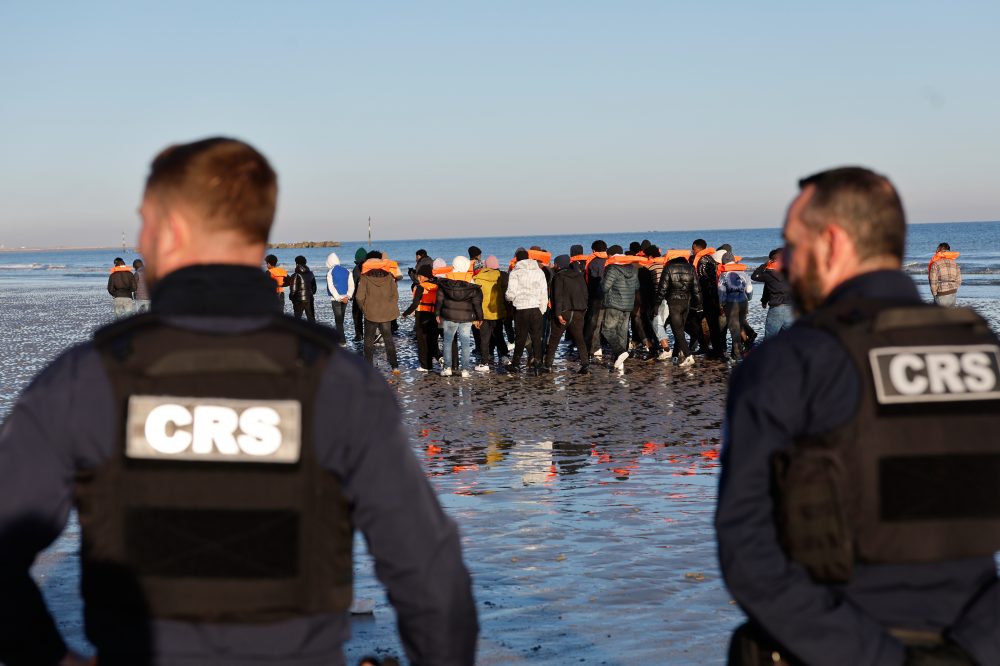

EQUIHEN BEACH, France — Tragedy struck the northern French coastline Thursday as four migrants—two men and two women—lost their lives while attempting to board an inflatable vessel for the dangerous journey across the English Channel to Britain.
Regional prefect François-Xavier Lauch of the Pas-de-Calais area confirmed that rescue teams pulled 38 survivors from the waters, with one person requiring emergency medical treatment. Lauch provided the update while search and rescue efforts were still underway at Equihen Beach Thursday morning.
According to Lauch, the victims were swept away by treacherous ocean currents while trying to board what officials call a “taxi-boat”—small motorized inflatable vessels that smugglers use to collect passengers along France’s northern coastline.
The deadly incident occurred on a vast sandy shoreline bordered by sand dunes and woodland where migrants often hide for days, waiting for boats and favorable weather conditions. Despite police patrols on beach buggies and surveillance from old World War II bunker positions, authorities cannot monitor every departure along the extensive coastline.
Recent days have seen a dramatic increase in crossing attempts and fatalities. French maritime officials reported Wednesday that 102 individuals were saved in two separate rescue missions while attempting channel crossings. Just last week, two people perished in a comparable incident off the coast near Calais.
The “taxi boat” method differs from traditional crossings where migrants carry their own inflatable boats into the water. Instead, these vessels depart nearly empty from hidden coastal locations and collect passengers at predetermined beach meeting points.
An Associated Press journalist witnessed such operations Wednesday at Malo-les-Bains, close to Dunkirk.
Migrants enter the ocean waters, with adults carrying children in their arms or on their backs, then climb aboard the waiting inflatable boats positioned offshore. After loading passengers, the vessels begin their cross-channel voyage, sometimes collecting additional people during the journey.
Weather conditions, tidal patterns, and police presence often force migrants to wade deep into the water—sometimes up to their chests—to reach the boats, significantly increasing dangers of losing balance, getting caught in currents, or venturing too far from shore.
Migrant advocacy organizations have repeatedly cautioned that intensified French police efforts to stop boat departures from beaches, including using knives to slash and destroy inflatable boats, are pushing smugglers toward “taxi boat” operations that create greater drowning risks, injuries, and rescue situations.