
Four men wrongly implicated in a notorious 1991 Texas murder case are seeking official recognition of their innocence from a judge on Thursday, including one individual who was originally sentenced to death for the brutal slayings of four teenage girls at an Austin yogurt shop.
State District Judge Dayna Blazey will hear arguments for a formal innocence declaration that would bring closure to the men, their families, and a community that remained haunted by the unsolved crime for more than three decades.
Last year, investigators working cold cases revealed they had identified the actual perpetrator as someone who died during a police confrontation in Missouri back in 1999.
Two of the four original defendants, Michael Scott and Forrest Welborn, plan to attend Thursday’s proceedings. Robert Springsteen, who faced execution after his initial conviction and remained on death row for years, will not be present. Maurice Pierce passed away in 2010.
Travis County District Attorney José Garza emphasized the significance of the moment when announcing the hearing, stating: “It has been over twenty-five years since the four men wrongfully accused have been waiting for the criminal justice system to clear their names.”
An official “actual innocence” determination would enable the men and their relatives to pursue monetary compensation for the time they spent incarcerated.
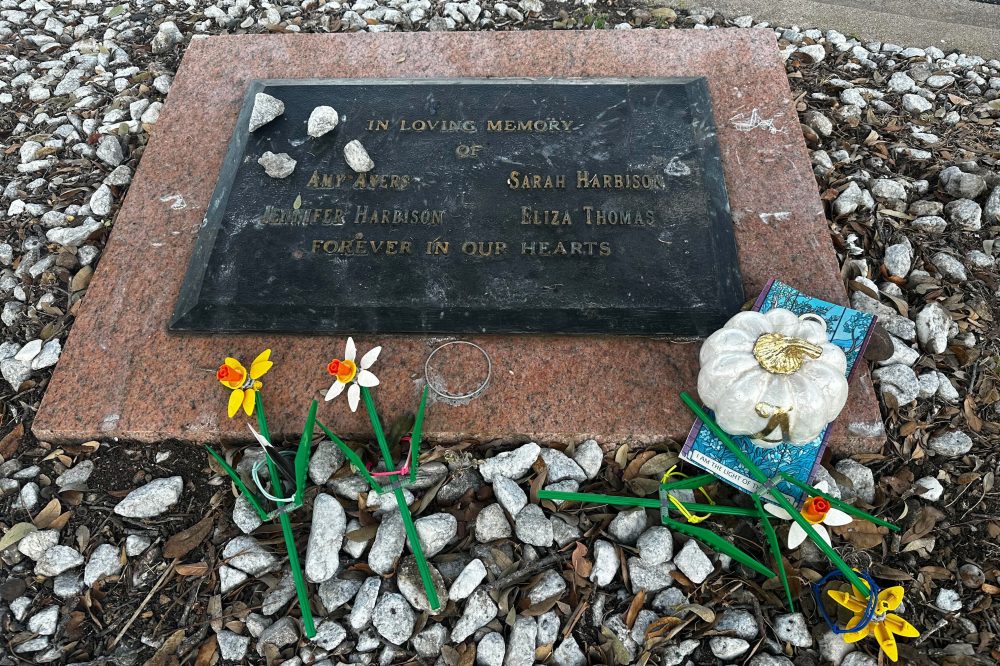
The victims were Amy Ayers, 13; Eliza Thomas, 17; and sisters Jennifer and Sarah Harbison, ages 17 and 15. All four were restrained, silenced with gags, and executed with gunshots to their heads at the “I Can’t Believe It’s Yogurt” shop where two held jobs. The perpetrator then ignited the building.
Law enforcement pursued countless tips and investigated multiple bogus admissions of guilt before taking the four men into custody in late 1999.
Courts convicted Springsteen and Scott primarily on confessions both men claimed police had forced from them through coercion. Appeals courts reversed both verdicts during the mid-2000s.
Authorities charged Welborn but never brought him to trial after two separate grand juries declined to issue indictments. Pierce remained behind bars for three years until prosecutors dropped the charges and freed him.
Officials planned to retry Springsteen and Scott, but a judge dismissed all charges in 2009 after advanced DNA testing unavailable in 1991 identified genetic material from an unknown male suspect.
The investigation stalled until 2025, when an HBO documentary series examining the unsolved murders brought renewed public interest to the case.
Authorities announced in September that fresh evidence analysis and reexamination of existing materials identified Robert Eugene Brashers as the killer.
Beginning in 2018, law enforcement had used sophisticated DNA technology to connect Brashers to the strangulation murder of a South Carolina woman in 1990, the sexual assault of a 14-year-old Tennessee girl in 1997, and the shooting deaths of a mother and daughter in Missouri in 1998.
The Austin connection emerged when DNA material collected from beneath Ayers’ fingernail matched Brashers’ genetic profile from the 1990 South Carolina homicide.
Austin detectives also discovered that officers had arrested Brashers at a border checkpoint near El Paso just two days following the yogurt shop killings. His stolen vehicle contained a handgun matching the same caliber used to kill one of the Austin victims.
Investigators noted striking parallels between the yogurt shop crime and Brashers’ other offenses: victims were restrained using their own garments, subjected to sexual assault, and several crime scenes were deliberately set ablaze.
Brashers took his own life in 1999 during an extended police standoff at a motel in Kennett, Missouri.