
HONOLULU (AP) — Mason Aiona’s day begins with unwelcome sounds long before dawn breaks over his Hawaiian residence.
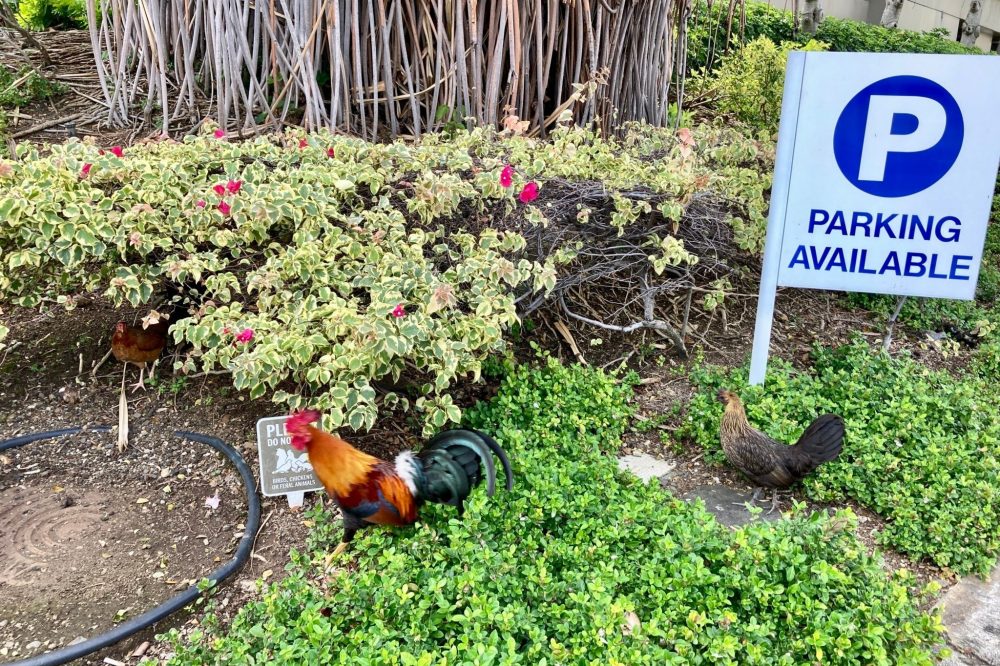
However, the 74-year-old retiree says the 3 a.m. rooster calls aren’t his biggest concern. Instead, he spends his days constantly chasing off feral chickens that create holes throughout his property, enduring nonstop noise and wing-beating, and confronting individuals who provide food to these wild birds at a nearby park.
“It’s a big problem,” he said of the roosters, hens and chicks waddling around on the narrow road between his Honolulu house and the city park. “And they’re multiplying.”
Municipalities throughout Hawaii have struggled with widespread fowl populations for numerous years. Honolulu has invested thousands in trapping efforts with minimal success. State legislators are now evaluating potential remedies — including proposals allowing citizens to eliminate wild chickens, classify them as a “controllable pest” on Honolulu public property, and impose penalties on those feeding or abandoning them in parks.
However, what troubles some residents serves as a cultural emblem for others, a tension that has emerged in Miami and additional cities hosting wild chicken populations.
Kealoha Pisciotta, who practices Hawaiian culture and advocates for animals, opposes eliminating feral chickens merely due to inconvenience. Many current chickens trace their lineage to those transported to the islands by original Polynesian travelers, she explained.
“The moa is very significant,” she said, using the Hawaiian word for chicken. “They were on our voyaging, came with us.”
The Hawaiian Humane Society opposes letting residents kill the chickens “as a means of population control unless all other strategies have been exhausted.”
Democratic Representative Scot Matayoshi, who serves the Honolulu suburb of Kaneohe, explained he began developing chicken management legislation after learning from a local elementary educator that the birds were intimidating students.
“The children were afraid of them, and they would kind of more aggressively go after the children for food,” Matayoshi said.
Representative Jackson Sayama explained he proposed the chicken elimination legislation due to currently restricted removal options. The lethal approach would remain up to individual property owners.
“If you want to go old-school, just break the chicken’s neck, that’s perfectly fine,” said the Democrat who represents part of Honolulu. “There’s many different ways you can do it.”
Previous chicken elimination proposals have been unsuccessful over the years, Matayoshi noted. Chicken reproductive control was one concept considered during his neighborhood board tenure.
“I think there are people who are taking it more seriously now,” he said.
Aiona has resided for over three decades in a valley close to downtown Honolulu in his wife Leona’s childhood home. Wild chickens didn’t appear in their area until approximately ten years ago, the couple reported. The bird population expanded significantly throughout the COVID-19 pandemic.
He witnessed someone remove a chicken from their vehicle, abandon it in the park, and depart, he recalled.
When chickens initially appeared near his residence, he captured one manually and placed it in a plastic garbage container, then transported it to a park close to the airport. “I took off the cover, tipped it over and the chicken ran right out,” he said. “I said … ‘Don’t come back again.’”
However, he soon recognized the labor-intensive approach was pointless.
He personally has no interest in eliminating chickens, preferring someone collect them for relocation to a countryside farm. A municipal trapping initiative costs too much, he noted.
The city employs a pest management company for chicken trapping services. Property owners pay $375 for week-long service, plus $50 for cage rental and $10 per chicken for disposal.
The program captured over 1,300 chickens during the previous year, according to Honolulu Department of Customer Services spokesperson Harold Nedd, who noted the department experienced a 51% rise in feral chicken complaints in 2025.
Wild chickens don’t provide an economical meal option. The meat is more difficult to chew than commercially raised poultry, and these feral birds may carry diseases.
One of Aiona’s neighbors uses a leaf blower to drive them away. “I have a blower, too, but mine is electric,” Aiona said. “It can only go so far with the cord.”
Aiona has grown weary of spending his retirement years instructing park visitors to stop providing food to the chickens. While he doesn’t suggest anyone consume them, he welcomes anyone interested in taking one.
“No charge,” he said.