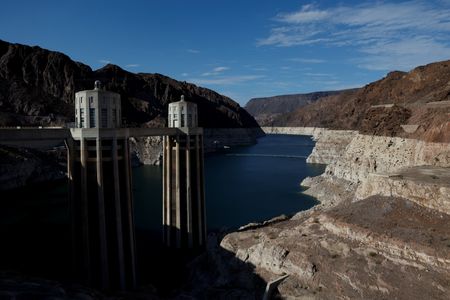

A proposed federal plan for the drought-stricken Colorado River would require three southwestern states to slash their water consumption by 21% over the next two years — and potentially cut even deeper in the years that follow, according to a senior water official from one of the affected states.
The official, who spoke anonymously Monday due to the sensitive nature of the discussions, said the plan calls for Arizona, California, and Nevada — known collectively as the Lower Basin states — to reduce their water use by 1.6 million acre feet in both 2027 and 2028, totaling 3.2 million acre feet across those two years.
The official added that the plan should also include reductions for Colorado, New Mexico, Utah, and Wyoming — the four Upper Basin states that have been at an impasse with the Lower Basin over the river’s future. The Colorado River provides drinking water to one in ten Americans, supports irrigation for land that produces roughly 15% of the nation’s food supply, and powers reservoirs that serve more than 6 million people across the region.
Looking further ahead, the cuts for the Lower Basin states could nearly double between 2029 and 2036, reaching as much as 3 million acre feet annually in order to keep reservoir levels from falling to critical lows. The proposed 10-year framework would be reviewed every two years based on current water conditions.
The U.S. Bureau of Reclamation is expected this week to adopt the Lower Basin states’ short-term proposal. The agency did not immediately respond to a request for comment.
While the Lower Basin states have already agreed to the 21% reduction and are urging the federal government to impose mandatory cuts on the Upper Basin as well, a Reclamation draft plan had previously only called for voluntary conservation measures from those northern states — not binding requirements.
The Upper Basin states have pushed back against mandatory reductions, arguing that decades of drought have already strained their water supplies and that the Lower Basin states — which use the majority of the river’s water — need to make larger sacrifices to stabilize the Colorado.
The seven states have spent three years trying to negotiate a replacement for the current 20-year water-sharing agreement, which expires at the end of 2026. If the federal government moves forward with mandatory cuts, it could trigger lawsuits from states that object, potentially adding years of legal uncertainty to an already fragile situation.
Reclamation is expected to release a final environmental impact statement this week, followed by a binding record of decision on Friday.