
Along Louisiana’s industrial corridor, where approximately 170 fossil fuel and petrochemical facilities operate, early death has become commonplace for nearby residents. The region’s severe air contamination and elevated cancer rates have earned it the grim nickname “Cancer Alley.”
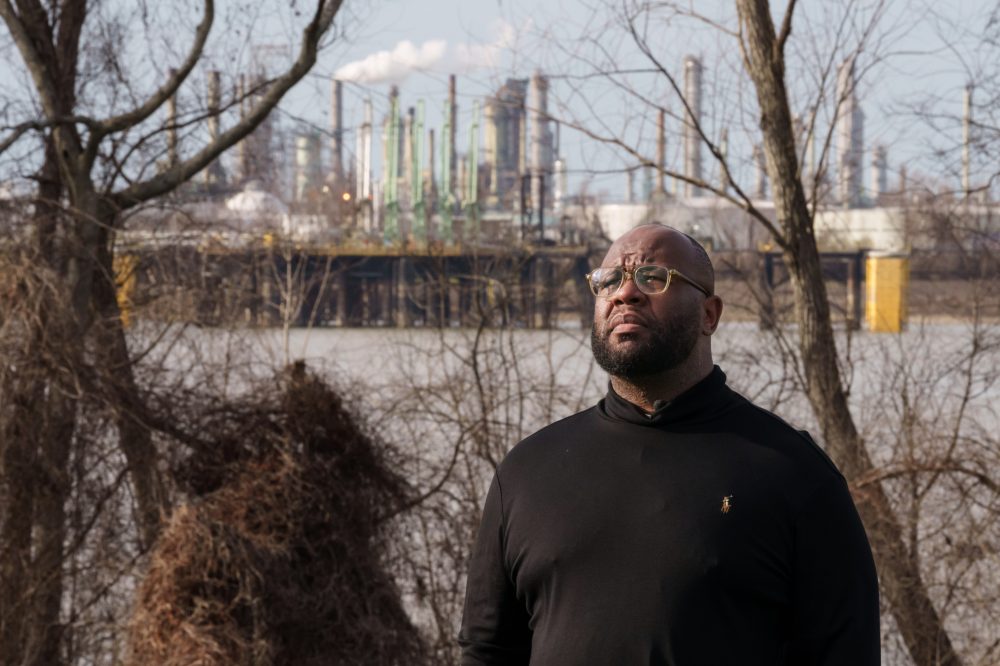
“The majority of adults in our area find themselves going to two or three funerals every month,” explained Gary C. Watson Jr., a lifelong resident of St. John the Baptist Parish, a predominantly Black neighborhood in Cancer Alley located roughly 30 miles from New Orleans. While his father beat cancer, Watson has lost at least five family members to the disease in recent years.
Cancer Alley represents just one of numerous areas across America — predominantly inhabited by minorities and economically disadvantaged residents — that endure elevated air pollution from fossil fuel operations releasing microscopic particles linked to increased mortality rates. Federal authorities designated carbon dioxide and other greenhouse gases as public health threats due to climate change in 2009, resulting in stricter pollution controls and improved air quality in certain areas. However, this month the Trump administration’s Environmental Protection Agency reversed that “endangerment finding.”
Health professionals predict this policy shift will likely result in increased sickness and fatalities among Americans, with neighborhoods like Watson’s bearing the greatest burden. On Wednesday, a group of health and environmental organizations filed a lawsuit against the EPA challenging the revocation as illegal and dangerous.
“Without these safeguards in place, conditions will only deteriorate further,” Watson stated, representing the environmental justice organization Rise St. James Louisiana. He expressed additional concern that eliminating the endangerment finding will boost emissions that could intensify Louisiana’s hurricane activity.
The Trump administration defended its position, arguing the finding — which served as the foundation for numerous climate change regulations — damages industry and economic growth. President Donald Trump has dismissed climate science as “a scam” despite extensive research proving otherwise.
Mounting research demonstrates that impoverished and Black, Latino, and other minority populations face greater vulnerability to pollution and climate-related disasters including floods, hurricanes, and extreme temperatures compared to white populations, largely due to having fewer resources for protection and recovery. The EPA reached identical conclusions in a 2021 study no longer available on its website.
While the finding’s elimination will impact all Americans, “overburdened communities, which are typically communities of color, Indigenous communities and low-income communities, they will, again, suffer most from these actions,” explained Matthew Tejada, senior vice president for environmental health at the Natural Resources Defense Council and former EPA environmental justice deputy.
Hilda Berganza, climate program manager with the Hispanic Access Foundation, stated: “Communities that are the front lines are going to feel it the most. And we can see that the Latino population is one of those communities that is going feel it even more than others because of where we live, where we work.”
Research published in November revealed that over 46 million Americans reside within one mile of energy infrastructure such as oil wells, power plants, or refineries. The study determined that “persistently marginalized” racial and ethnic populations were more frequently located near multiple such facilities, with Latinos experiencing the highest exposure levels.
The EPA’s 2021 analysis projected that with global temperatures rising 2 degrees Celsius (3.6 Fahrenheit), Black Americans would be 40% more likely to inhabit areas with the steepest projected increases in heat-related deaths. Latinos, who are heavily represented in outdoor sectors like farming and construction, faced 43% higher likelihood of living where heat-related work hour losses would peak.
Julia Silver, a senior research analyst at UCLA’s Latino Policy and Politics Institute, discovered through her research that California Latino communities experienced 23 additional extreme heat days annually compared to non-Latino white areas. Her team also documented that these regions suffer poor air quality at approximately twice the rate, with double the asthma-related emergency department visits. Additional studies show Latino children face 40% higher asthma mortality rates than white children, partly due to inconsistent healthcare access.
“What we’re risking with a rollback like this at the federal level is really human health and well-being in these marginalized groups,” Silver warned.
Armando Carpio, a veteran Los Angeles pastor, has witnessed his predominantly Latino congregation’s vulnerability firsthand. Many work as construction laborers and landscapers in outdoor conditions, frequently during extreme heat. Others live and work adjacent to polluting highways. He observes children suffering from asthma and elderly parishioners with dementia, both conditions connected to air pollution exposure.
“We’re regressing,” he observed. “I don’t know how many years back, but all of this really affects us.”
While quantifying the exact additional impact on communities of color from the finding’s revocation proves challenging, experts interviewed by The Associated Press unanimously agreed it would be substantial.
“You will see statistically significant increases in excess morbidity and mortality when it comes to climate impacts and health impacts associated with co-pollutants” in communities of color, predicted Sacoby Wilson, a University of Maryland professor and executive director of the nonprofit Center for Engagement, Environmental Justice and Health INpowering Communities.
Beverly Wright, founding director of the Deep South Center for Environmental Justice in New Orleans, noted that at least four Black communities in Cancer Alley have vanished due to industrial facility expansion. The repeal will generate additional pollution, elevated cancer rates, more severe weather events, and the elimination of additional historic neighborhoods, she warned.
“It has us going in the wrong direction, and our communities are now at greater risk,” she concluded.