
A former Harvard University researcher who was found guilty of concealing financial ties to China has now established a new brain-computer interface laboratory in that country, with access to resources that surpass what he had in the United States.
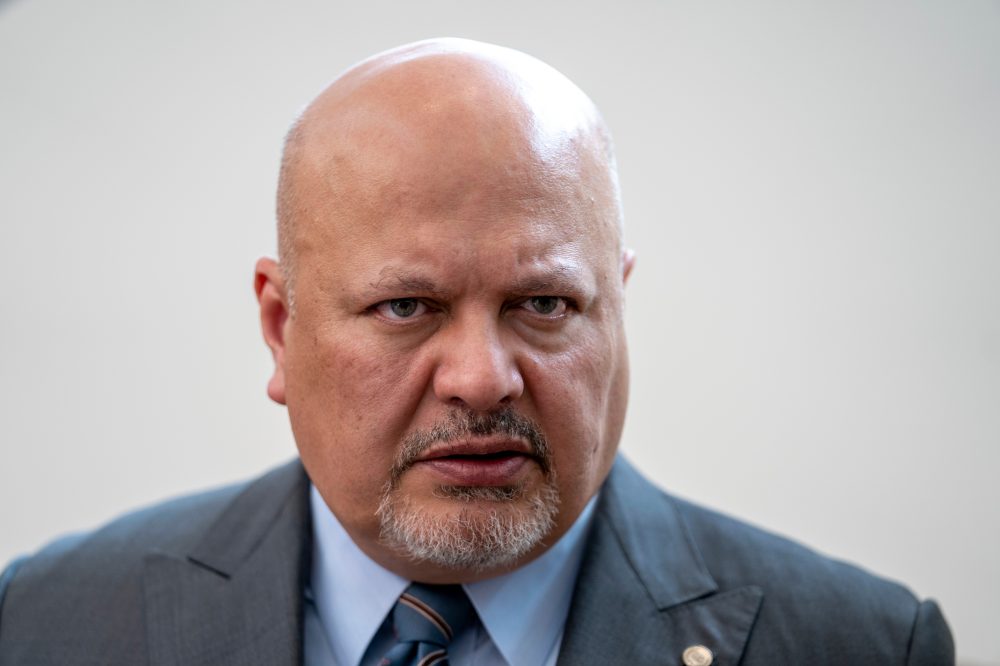
Charles Lieber, 67, who ranks among the world’s top experts in brain-computer interface technology, is currently directing China’s government-funded Institute for Brain Research, Advanced Interfaces and Neurotechnologies (i-BRAIN) in Shenzhen. This technology holds promise for treating diseases like ALS and helping paralyzed individuals regain movement, but it also carries potential military uses.
According to the U.S. Defense Department, researchers with China’s People’s Liberation Army have explored brain interfaces as a method to create enhanced soldiers with improved mental capabilities and battlefield awareness.
In December 2021, a jury found Lieber guilty of providing false information to federal investigators regarding his connections to a Chinese government program designed to recruit international talent, along with tax violations related to Chinese university payments. His punishment included two days in jail, six months of home confinement, a $50,000 fine, and $33,600 in restitution to the IRS. His legal team noted during proceedings that he was battling lymphoma, which was in remission at the time.
Now, three years following his sentencing, Lieber oversees the state-supported i-BRAIN facility, which provides him with specialized nanofabrication tools and primate research capabilities that weren’t available during his Harvard tenure. The laboratory operates under the Shenzhen Medical Academy of Research and Translation (SMART).
Speaking at a Shenzhen government gathering in December, Lieber reflected on his transition to China: “I arrived on April 28, 2025 with a dream and not much more, maybe a couple bags of clothes. Personally, my own goals are to make Shenzhen a world leader.”
When contacted through an assistant, Lieber declined to participate in an interview, citing “current commitments.” He also did not respond to written inquiries.
According to a May 1, 2025 post on i-BRAIN’s website, SMART named Lieber as an investigator last year. The same announcement revealed his appointment as the institute’s founding director, which received less media attention initially.
In 2011, Thomson Reuters recognized Lieber as the world’s leading chemist of the previous decade in their scientific rankings. The company, which later sold this ranking business in 2016, chose not to comment on the matter.
Security experts argue that Lieber’s ability to rebuild his research operation following a federal criminal conviction for concealing Chinese connections demonstrates how American technology safeguards haven’t matched China’s efforts to obtain sensitive research. This concern grows more significant given Beijing’s military-civil fusion approach, which allows civilian scientific work to be shared with military forces.
Glenn Gerstell, who served as general counsel for the U.S. National Security Agency from 2015 to 2020 and currently advises the Center for Strategic and International Studies, explained: “China has weaponized against us our own openness and our own efforts for innovation. They’ve flipped that and turned it around against us, and they’re taking advantage of it.”
Neither China’s Ministry of Science and Technology nor its defense ministry responded to questions about brain-computer interface development. SMART and i-BRAIN also remained silent regarding their research activities and Lieber’s recruitment.
Lieber’s current position appears to offer superior resources compared to his previous American setup. In February, i-BRAIN acquired a deep ultraviolet lithography system manufactured by semiconductor equipment company ASML, according to the lab’s website. These Dutch-made machines create the microscopic circuits necessary for advanced computer chips. During his Harvard years, Lieber relied on shared lithography equipment through the university’s Center for Nanoscale Systems, which serves over 1,600 users each year.
While i-BRAIN’s equipment model trails restricted machines by two generations, semiconductor research firm SemiAnalysis estimates its cost at approximately $2 million. ASML declined to discuss its customers publicly.
The same campus provides Lieber access to Brain Science Infrastructure (BSI) Shenzhen, a research facility containing 2,000 primate enclosures and designated space for i-BRAIN projects. Many field researchers view primate testing as essential preparation for human trials of invasive brain-computer interfaces. The BSI facility belongs to the Chinese Academy of Sciences and receives funding from Shenzhen’s government, though none of these organizations answered questions about brain-computer interface technology or primate research’s role.
A September 2025 website post indicates that i-BRAIN seeks domestic and international researchers for electrophysiology studies using rhesus monkeys as human brain-computer interface models, with interested candidates directed to contact Lieber.
No evidence suggests Lieber conducted primate research at Harvard. The prestigious Massachusetts institution shuttered its New England Primate Research Center in 2015 following persistent animal welfare concerns and funding difficulties.
Jung Min Lee, a researcher who collaborated with Lieber on nanofabrication studies at Harvard, has joined him at i-BRAIN as research associate professor. Lee, who specializes in integrating flexible electronics into brain tissue, could not be reached for comment. Harvard did not respond to questions about either Lieber or Lee.
Brown University professor and neuroscientist John Donoghue, who developed the BrainGate brain-computer interface system, emphasized that primate research is “absolutely critical” for advancing neural interface technology to human applications, despite facing regulatory and funding obstacles in America.
“With so many hassles with non-human primate research here, to have somebody give you all this support, access to technology, a concentrated center, a national initiative – those are things that are very attractive,” Donoghue told reporters.
SMART’s 2026 budget, entirely funded by Shenzhen’s government, increased nearly 18% to roughly $153 million. However, budget documents don’t specify how much funding goes to i-BRAIN specifically.
SMART launched in 2023 under founding president Nieng Yan, a structural biologist whose 2022 return to China after five years at Princeton University was celebrated in local media as a “goddess scientist” homecoming. Neither Yan nor Princeton responded to questions about her Shenzhen role and Lieber’s recruitment.
Adjacent to SMART sits the legally distinct but functionally connected Shenzhen Bay Laboratory, established in 2019 with approximately $2 billion in five-year government funding. Both institutions share leadership and offices within Guangming Science City, a national science center featuring landscaped parks and waterways. They will eventually occupy a dedicated 750,000-square-meter site currently under construction at an estimated $1.25 billion cost.
Visitor signs at SMART’s location display the motto: “Innovate with the Party.” A reporter was refused access to i-BRAIN’s offices while attempting to deliver correspondence to Lieber.
Lieber joins at least six others who have transferred to SMART from American institutions, though the others are Chinese-born researchers returning to their homeland.
In March 2026, China designated brain-computer interface technology as a national development priority in its latest five-year plan. Zheng Shanjie, who leads China’s National Development and Reform Commission, stated in October that brain-computer interfaces and related technologies “will be equivalent to creating another Chinese high-tech sector in the next 10 years.”
The U.S. Defense Advanced Research Projects Agency also funds brain-computer interfaces for drone and cyber defense applications. Court records show Lieber’s Harvard research projects received over $8 million in Defense Department funding since 2009. The Pentagon did not respond to questions about the technology’s military applications or Lieber’s Shenzhen activities.
Lieber’s 2021 conviction represented one of the few successful prosecutions under the U.S. Justice Department’s China Initiative, created during the first Trump administration to combat Chinese economic espionage and intellectual property theft. The Biden administration discontinued the initiative following numerous failures and accusations of racial profiling.
While under supervised release, Lieber obtained court permission for at least three China trips in 2024, including one that U.S. District Judge Denise Casper approved for “employment networking.” Judge Casper did not respond to comment requests.
In a 2023 pre-sentencing document, Lieber’s defense team described how the scientist had been battling lymphoma and was mostly homebound, leaving only for medical visits, short walks, and occasional farm trips. During his 30-year Harvard career, he worked over 80 hours weekly in the laboratory, and in his free time enjoyed “coaching wrestling, and growing giant pumpkins in the back yard.”
Lieber admitted to being “young and stupid” for participating in China’s Thousand Talents Program, the government initiative to recruit overseas experts, his attorney told the court in 2021. When arrested in 2020, Lieber informed FBI agents he “wanted to win a Nobel Prize” and gain recognition for his work, prosecutors revealed.
Both the FBI and Justice Department declined to comment on the case.
Some analysts view the Lieber situation as evidence of broader American policy shortcomings.
“If you think of him as a vector for tech acquisition that runs contrary to U.S. interests, we identified that, punished him, and that did nothing to stop the big-picture trend,” said Emily de La Bruyère, who co-founded China-focused consultancy Horizon Advisory and serves as a senior fellow at the Foundation for Defense of Democracies.
Gerstell, the former U.S. official, called Lieber “Exhibit A” in demonstrating inadequate American legal mechanisms.
“This is a guy who was convicted of precisely the thing that we want him to be convicted of in this context, and yet the minute he’s released from house arrest, he’s off in China,” he said.