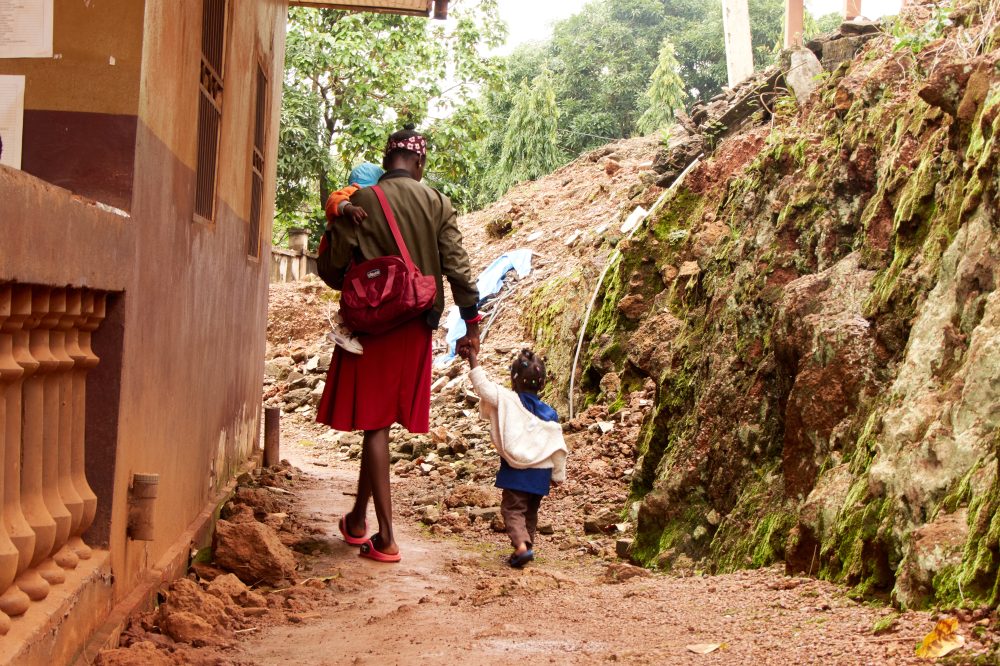

YAOUNDE, Cameroon — Despite muddy, rain-soaked roads, Mabel Djoumessi pressed on with her 9-month-old son Kenfack secured to her back, determined not to miss his malaria vaccination appointment at a clinic in central Cameroon. For her, the trip was non-negotiable.
For generations, malaria has been one of the most devastating diseases facing young children across Africa. But Kenfack has never contracted the illness — something his mother credits entirely to the newly available malaria vaccine.
“My other children who have never taken the vaccine frequently fall ill,” Djoumessi said while seated with other mothers at Soa District Hospital, each cradling their young children.
Cameroon was the first country in the world to add the RTS,S malaria vaccine to its standard immunization schedule, a milestone reached more than two years ago. Health workers on the ground say they are witnessing a clear reduction in severe illness as a result.
Even so, a serious concern has emerged: not enough children are returning for the fourth and final booster shot. The World Health Organization considers that final dose essential to extend immunity, but because it comes months after the first three, many families don’t follow through.
This challenge is part of a broader pattern seen with multi-dose vaccines across the African continent. According to the WHO and the United Nations children’s agency, malaria kills nearly one child under the age of 5 every minute worldwide, with the overwhelming majority of those deaths occurring in Africa.
A study published last year in the peer-reviewed Malaria Journal examined a malaria vaccine pilot program spanning 158 districts across Ghana, Kenya, and Malawi. It found that roughly 80% of eligible children received the first dose at around six months of age. By the time the fourth dose was due — between 22 and 24 months — that figure had dropped to just 46%.
Djoumessi said she intends to be different. “When my son turns 2, I will make sure I come for the fourth dose,” she said. “I don’t want him to suffer like the others.”
Malaria is still the number one reason children are admitted to hospitals in Cameroon, which is among 11 countries that together account for roughly 70% of the world’s malaria burden, according to the WHO. In 2024 alone, Cameroon recorded an estimated 7.6 million malaria cases and 11,700 deaths.
Early data from Cameroon’s National Malaria Control Program offers some hope: health facilities logged 33,000 fewer cases in 2025 compared to the year before. But officials caution against giving the vaccine sole credit for the decline.
“Isolating the specific impact of malaria interventions requires modeling, and we do not yet have a model to quantify the vaccine’s sole contribution,” said Dr. Bomba Amougou, head of prevention at the National Malaria Control Program. “Therefore, it is accurate to say that the vaccine has contributed to the reduction in cases and deaths, rather than being the exclusive cause.”
The WHO formally recommended the RTS,S vaccine for broader use in 2021, after pilot studies in Ghana, Kenya, and Malawi showed it reduced deaths among eligible children by 13%. Separate clinical trials conducted across several African countries found that both RTS,S and the newer R21 vaccine cut clinical malaria cases by more than 50% during the first year following three doses.
To date, more than 52 million doses have been delivered to 25 high-risk African countries with support from Gavi, the Vaccine Alliance. However, Gavi has acknowledged a “stark constraint” in the rollout, largely due to sweeping foreign aid cuts by the Trump administration and other donors. The organization says it is working to guarantee vaccine supply for up to 70% of eligible children in the lowest-income countries.
At Soa District Hospital, nursing staff say the difference is visible. “Our pediatric wards have become empty,” said Alice Tchuenmegne, a senior nurse overseeing vaccinations at the facility.
After rolling out the vaccine across 42 high-burden districts, Cameroon has seen gradual improvements in coverage for the first three doses — given at six, seven, and nine months of age. First-dose coverage climbed from 66% to 68% between 2024 and 2025, second-dose coverage rose from 53% to 58%, and third-dose coverage jumped from 48% to 59%, according to Amougou.
Despite that progress, coverage for the fourth dose — given around a child’s second birthday — stood at only 25% as of 2025.
“Parents and even health workers sometimes forget the fourth dose, particularly as it is administered long after the third, and because this is a relatively new vaccine,” Amougou said. He emphasized that completing all four doses “makes the protection more potent” and that the vaccine must be used alongside bed nets, timely treatment, and proper sanitation.
Research from the early rollout in Ghana, Kenya, and Malawi found that parents broadly accepted the malaria vaccine. The main reasons children missed later doses were transportation costs, a lack of reminder systems, poor follow-up from health facilities, and competing demands from work and childcare.
Gavi’s Chief Executive Officer, Dr. Sania Nishtar, acknowledged the lower completion rates but pushed back on the idea that they overshadow the vaccine’s value. “The lower vaccination rates are initial teething problems that I don’t think should take the spotlight away from the value of this vaccine,” she said in an interview.
Nishtar also noted that the malaria vaccine faces less hesitancy from parents than almost any other vaccine, which she attributed to how desperate families are to protect their children. That desperation has created “huge demand” from both governments and communities, she said.
Cameroon and other African nations have since launched “Big Catch-up” campaigns aimed at encouraging both parents and health workers to prioritize getting children fully vaccinated. Nishtar added that researchers are continuing to work toward a single-dose malaria vaccine. “The fewer the doses of a vaccine to be administered, the higher the uptake and the easier the administration,” she said.
For many families, the stakes go beyond health — malaria also brings crushing financial strain. Georgette Caroline Mengbwa, a mother of three waiting at the hospital for her youngest daughter’s third dose, said her two older children were born before the vaccine was available.
“They fall ill every two or three months, and I have to spend between $53 and $107 each time one or all of them fall ill,” she said. “It’s a lot of money.”
Those costs are especially burdensome in Cameroon, where the monthly minimum wage is approximately $76 and nearly 40% of the population lives in poverty, according to official figures.