
A confidential European intelligence report is warning that Russia could be headed toward a full-blown banking crisis, with the country’s ongoing war against Ukraine placing enormous financial strain on its lenders.
The two-page document, recently prepared to brief European officials on the condition of Russia’s financial sector, outlines how vulnerable Russian banks have become to additional Western penalties. Reuters obtained a copy of the report.
Although Russian banks have largely managed to survive the wave of sanctions that followed Moscow’s full-scale invasion of Ukraine in 2022, the June report cautions that worsening loan quality and rising household debt levels have created an “explosive” risk. The warning comes just as the European Union is finalizing a 21st round of sanctions — expected to be completed in July — that would target banks and cryptocurrency networks.
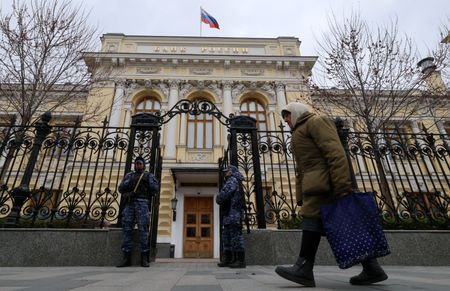
Russia’s central bank did not respond to requests for comment on the report’s findings, though officials there have recently downplayed the likelihood of a major financial collapse.
With the financial toll of a four-year conflict steadily draining government funds, Russia has leaned more heavily on its banks to prop up businesses and borrowers. According to the report, this has loaded those banks with significant risk at a time when the broader economy is showing signs of strain.
Russia’s Economy Ministry has already lowered its growth projections, cutting its gross domestic product forecast to 0.4% for 2026 — down from an earlier estimate of 1.3% — and to 1.4% for 2027, compared to a previous forecast of 2.8%.
The intelligence document, officially titled “Note on the probability of a banking crisis in Russia in 2026,” describes how banks have been pressured into offering discounted loans to defense contractors, homebuyers, and other borrowers. The report’s authors noted that government-backed lending programs, loan restructuring arrangements, and state support have obscured just how fragile the banks really are.
“The situation creates the illusion of a dynamic economy that, in reality, conceals an explosive situation which an economic shock, such as an ambitious package of sanctions against banks … could trigger,” the report stated.
Loans extended to defense firms, government-backed regional projects, and homeowners have swelled the volume of credit that may go unpaid, the report’s authors said. They estimate that roughly 10% of corporate loans are now considered doubtful — a significant jump from 2024 — while some major banks reported retail non-performing loan ratios as high as 15% in 2025.
The report also revealed that more than 500,000 Russians filed for personal bankruptcy in 2025, a figure nearly one-third higher than the year before. Meanwhile, state programs have encouraged more than 13 million Russians to carry at least three loans at the same time.
Russian central bank Deputy Governor Filipp Gabunia pushed back on those concerns last month, saying that “vulnerabilities in the financial sector are not critical.” He pointed to bank capital reserves being at their highest level in three years, and noted that corporate bad loans had held steady at around 4% over the past year and a half.
Outside analysts offered a mixed assessment. “Russia’s economy is stagnating but the dominance of the state and defence spending means there is no immediate financial crisis to hand,” said Chris Weafer, a Russia expert at consultancy Macro Advisory.
Weafer was skeptical that new Western measures would push Russia over the edge. “Asia ignores sanctions. So the idea that a fresh round will tip Russia into crisis is wishful thinking,” he said, adding that defense expenditures were helping keep unemployment low and wages elevated.
The European Union has rolled out extensive sanctions against Russia since the invasion began, targeting bank revenues, international financial transfers, energy exports, and the defense industry. Russia has shown resilience in the face of those measures, while Europe has struggled with enforcement due to the absence of a central oversight authority.
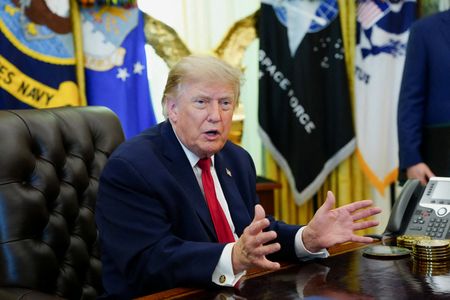
Adding to Europe’s challenges, the United States under President Donald Trump eased some sanctions, at one point temporarily allowing Russian oil sales — though that waiver lapsed in mid-June.
European diplomats are now working on a package that would expand sanctions to cover banks, cryptocurrency networks, drone manufacturing, and oil traders and refiners. The proposed measures would add scores of individuals and entities to the blacklist, including nearly 90 banks, pushing the total number of sanctioned lenders to more than 100 — representing over half of Russia’s internationally connected banking institutions.
Russian President Vladimir Putin recently declared that Russia would continue pursuing its goal of fully seizing four Ukrainian regions, dismissing what he described as a new Ukrainian proposal to scale back hostilities. Putin also indicated that Russia anticipates a resumption of U.S.-led diplomatic efforts to end the conflict, pending resolution of what he called the “hot phase” of the U.S.-Israeli confrontation with Iran.
There are signs that the financial pressure is mounting. Russia’s second-largest lender, VTB, is planning to increase its financial reserves, according to the bank’s first deputy CEO, who spoke with Reuters on Friday. The move is intended to provide a buffer against higher fuel prices and potential loan losses.
Data from the Russian central bank also shows that the amount of cash being kept outside the banking system has climbed more than 17% compared to the same period last year, now exceeding 19 trillion roubles — roughly $243 billion. That trend is squeezing banks that depend on customer deposits to fund their lending operations.
Taras Skvortsov, chief financial officer of Russia’s largest bank, Sberbank, acknowledged the pressures but suggested the banking sector has adapted. “All major banks are already under sanctions … and when they were introduced in 2022, there was stress,” he told Reuters. “By 2026, everyone has become so used to it. Many clients of the sanctioned banks do not even know about sanctions.”