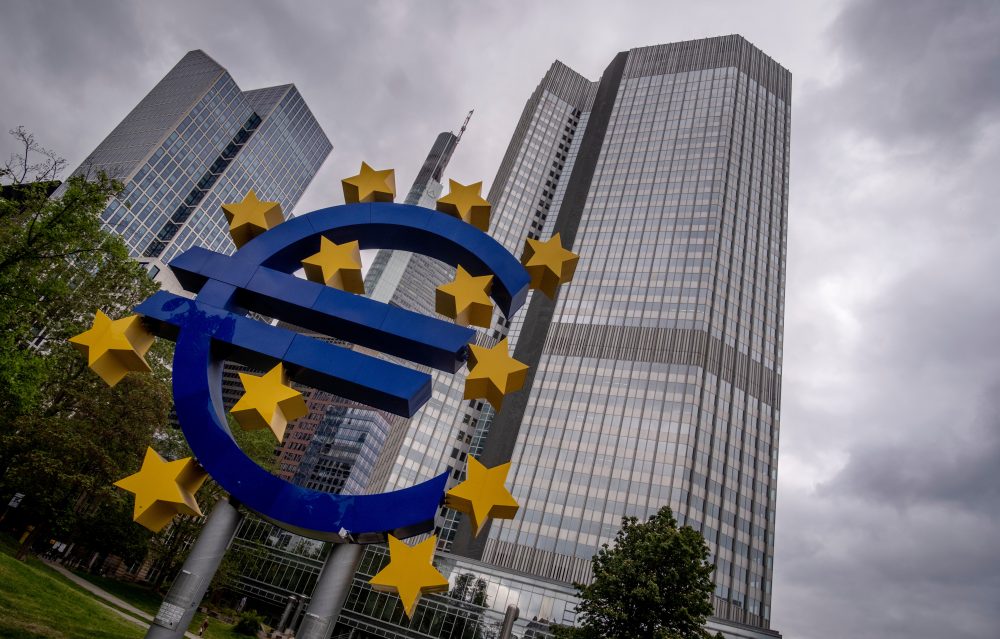

FRANKFURT, Germany — Europe’s central bank opted Thursday to leave interest rates where they are, citing ongoing uncertainty over how wild swings in energy prices could affect inflation across the continent.
The European Central Bank, which sets monetary policy for the 21 nations that share the euro, kept its key benchmark rate at 2.25%. That follows a quarter-point increase at its June 11 meeting, a move designed to help control rising consumer prices linked to higher oil costs stemming from the US-Iran war and the disruption of oil shipments through the Strait of Hormuz.
Financial analysts suggest the bank is simply pressing pause to collect more data as oil prices continue to fluctuate. Prices dropped after a ceasefire was announced, but climbed again once that agreement fell apart and fighting resumed. Many economists are now pointing to the bank’s September 10 meeting as the next likely opportunity for another rate hike.
In an official statement, the bank said: “Uncertainty remains high and the full inflationary impact of the energy shock has yet to play out. With today’s decision, the Governing Council remains well positioned to navigate the uncertainty caused by the conflict.”
Bank President Christine Lagarde has indicated the institution is making decisions on a meeting-by-meeting basis, guided by the latest available data, and has not signaled any predetermined direction for future rate changes.
When central banks raise interest rates, borrowing becomes more expensive — whether for a home mortgage or a business loan. That tends to reduce consumer spending and business investment, which helps slow the pace of price increases. Inflation across the eurozone came in at an annual rate of 2.8% in June, a drop from the 3.2% recorded in May.
The international oil benchmark Brent crude climbed to $98 per barrel Thursday, following US President Donald Trump’s July 8 declaration that a memorandum of understanding on a ceasefire and future negotiations was “over.” Before the ceasefire collapsed, oil had been trading near $76 per barrel — not far from its pre-war level of roughly $73.
Brent crude jumped an additional 4% Thursday after Iranian-backed Houthi rebels attacked two Saudi oil tankers near the Bab al-Mandeb Strait, raising fresh concerns about Saudi Arabia’s ability to route oil shipments through the Red Sea as an alternative to the Strait of Hormuz.