
DES MOINES, Iowa — A Dutch researcher whose groundbreaking work revolutionized global food safety standards has been selected as this year’s World Food Prize recipient, with officials crediting his innovations for preventing countless foodborne illnesses and cutting food waste worldwide.
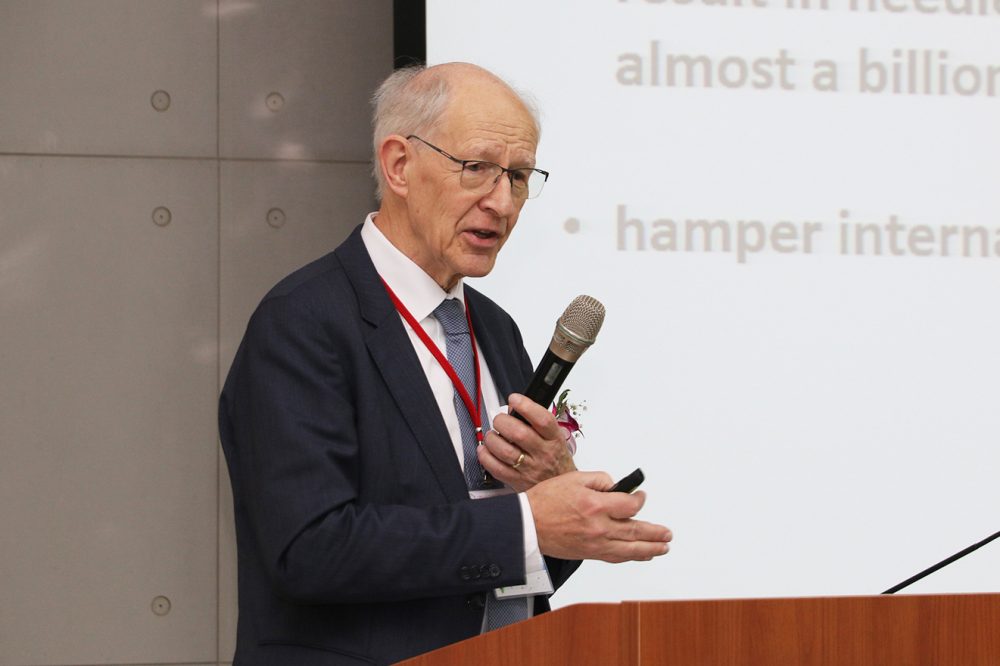
Huub Lelieveld from the Netherlands received the prestigious recognition after spending 60 years developing improved food safety techniques and promoting international trade policies that help distribute safe food more efficiently across the globe, the organization revealed Wednesday.
“I just did what I thought was right,” Lelieveld told The Associated Press during an interview. “I want everybody to have enough food but … it should also be safe.”
When Lelieveld started his research career at Unilever, he found the existing food manufacturing safety protocols to be “illogical,” he explained.
At that time, food products underwent sterilization or chemical treatment only after being produced, and manufacturing equipment required shutdowns for cleaning one to two times daily — a process that was both challenging and lengthy. The processed products also depended heavily on preservatives, salt, sugar and acids to minimize contamination risks, which compromised both taste and nutritional value.
“I realized very soon that they did things in the wrong way, in my view,” Lelieveld explained. “From the beginning, I’ve been working on … convincing people that you should do it in a different way.”
Working alongside his team, Lelieveld created sanitary production techniques and machinery that made food manufacturing more streamlined and reduced dependence on chemical additives.
Once he had successfully implemented and validated these processes at Unilever, Lelieveld said the corporation allowed him to share his findings publicly for worldwide adoption.
“My philosophy was: You should not compete on food safety,” Lelieveld stated. “Spreading the technology, the hygienic technology, was very important.”
According to World Health Organization data, contaminated food results in 600 million cases of foodborne illness and 420,000 fatalities annually.
The World Food Prize, headquartered in Iowa, was established by Norman Borlaug, who won the Nobel Peace Prize in 1970 for his contributions to dramatically boosting agricultural production and combating hunger in numerous nations. This agricultural science recognition comes with a $500,000 prize.
Following 40 years with Unilever, Lelieveld established the Global Harmonization Initiative in 2004 to encourage unified food and trade standards worldwide. Using a network of several thousand scientists globally, this nonprofit also tackles major food security issues and supports food safety training programs.
The GHI “is extremely useful because it has this enormous pool of knowledge about food safety and food protection,” Lelieveld noted.
According to Lelieveld, obstacles to widespread access to safe food and water remain, and he envisions a future where communities can create safe food and water locally, even when international trade faces restrictions.
“You can’t stop the transport of water through the air, with the clouds,” he explained. “You can produce safe water everywhere, but we need to distribute this knowledge to the people that need it and that is the biggest challenge.”