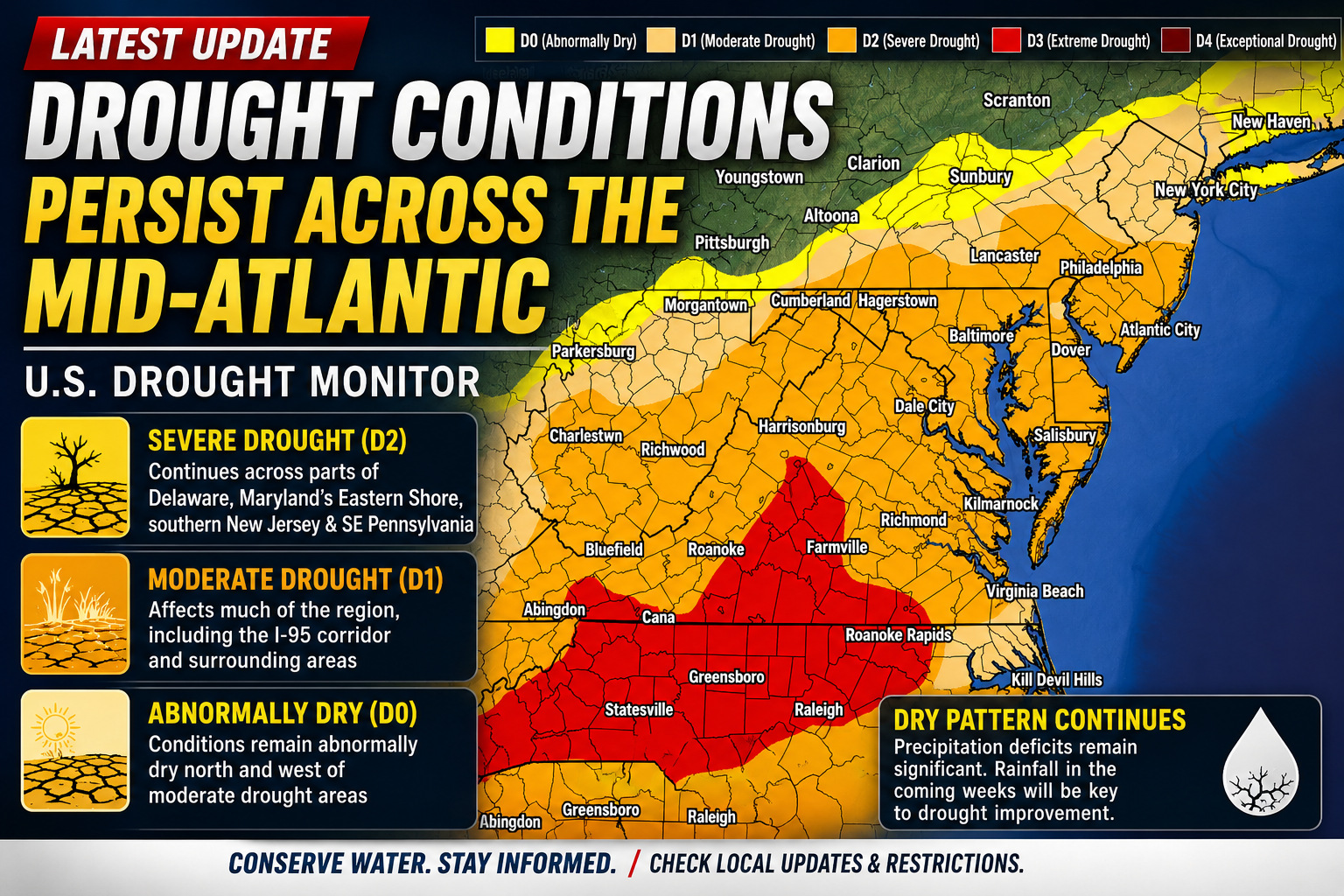

The latest update from the U.S. Drought Monitor shows drought conditions continuing across portions of the Mid-Atlantic region, including parts of Maryland’s Eastern Shore, Delaware, New Jersey, and southeastern Pennsylvania, as long-term precipitation deficits continue to impact groundwater, streamflows, and agriculture.
According to the latest drought information statement issued by the National Weather Service Philadelphia/Mount Holly, severe drought conditions, classified as D2 on the U.S. Drought Monitor scale, remain in place across portions of the region. Moderate drought, or D1 conditions, continue across much of the forecast area, while abnormally dry conditions persist elsewhere.
The Delmarva Peninsula continues to be one of the more concerning areas in the region. The drought statement noted that drought conditions worsened across portions of Delmarva over the past several weeks with little improvement observed. Maryland has continued its Drought Warning for counties along the Maryland Eastern Shore, while drought watches and warnings also remain in effect for parts of southeastern Pennsylvania and all of New Jersey.

In Delaware, ongoing dry conditions continue to take a toll on hydrologic conditions statewide. The University of Delaware Climate Office reported that the state has experienced eight consecutive months of below-normal precipitation, leading to rainfall deficits exceeding 11 inches since late summer of last year. Streamflows across portions of the state have dropped to some of the lowest levels ever recorded for this time of year, while groundwater recovery remains sluggish after consecutive dry seasons.
The broader Mid-Atlantic region has experienced one of its more significant drought episodes in recent decades. The National Integrated Drought Information System noted that the 2024-2025 drought became one of the worst drought periods seen in parts of the Mid-Atlantic in more than two decades, impacting agriculture, water resources, ecosystems, and increasing wildfire concerns.
Recent rounds of rainfall have provided some temporary relief in isolated areas, but precipitation deficits remain substantial overall. Seven-day average streamflows across much of the Mid-Atlantic continue running below normal, and reservoir levels remain below seasonal averages in several locations.
Looking ahead, we expect periods of rainfall over the coming week, though it remains uncertain whether enough widespread precipitation will occur to significantly improve long-term drought conditions. Warmer temperatures expected heading deeper into late spring and early summer could also increase evaporation rates and further stress soil moisture across the region.