
CAIRO (AP) — Mediators working to prevent all-out war in the Middle East have made meaningful progress in pushing the United States and Iran back toward negotiations, two regional officials said Monday, as a brief halt in hostilities offered a rare moment of calm.
The announcement came after three consecutive days passed without either the U.S. or Iran reporting any new attacks — a notable pause following approximately two weeks of relentless military strikes that had raised serious fears of a full-scale war returning to the region.
The two officials, who requested anonymity given the sensitivity of the ongoing regional discussions, said mediators led by Qatar and Pakistan were actively working to close the divide between Washington and Tehran. Their goal is to restore an interim ceasefire agreement that had been largely unraveled by the recent back-and-forth military exchanges.
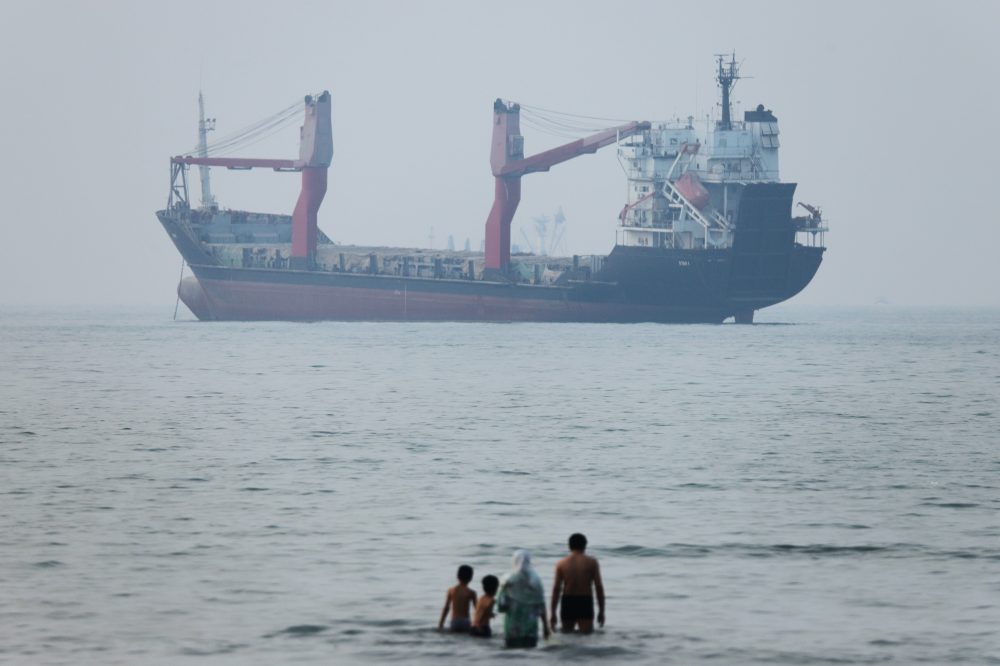
The U.S. halted its strikes after nearly two weeks of targeting Iranian coastal areas and infrastructure — an escalation that was triggered when Iran began firing on vessels attempting to pass through the Strait of Hormuz, a vital chokepoint for the world’s oil supply. The Pentagon declined to comment when asked about the situation.
U.S. Ambassador to the United Nations Mike Waltz told Fox News that President Donald Trump is “giving talks some space. He’s giving it a little bit of room.” Waltz added, “We’ve had both Oman and Iran, and a number of our other negotiators, engaged at every level, from the most senior levels all the way down to the technical level over the past few weeks, and particularly in the past few days.”
Waltz also pushed back on suggestions that the U.S. supply of missile interceptors used to defend against Iranian attacks was running low, though independent experts have raised doubts about how long either side can sustain the current pace of military activity.
Iran’s army spokesperson confirmed Sunday on state television that Tehran had also stood down its attacks during the same period the U.S. paused its strikes. In recent days, Iran had launched counterattacks targeting countries in the region that host American military forces, resulting in the deaths of at least three service members at a base in Jordan and one in Iraq.
One of the regional officials described the diplomatic progress as “significant,” noting that mediators are collaborating with Iran and Oman on a system for managing ship traffic through the Strait of Hormuz — the flashpoint that triggered the latest round of military exchanges.
Iran’s Foreign Ministry spokesperson Esmail Baghaei said at a Monday news conference in Tehran that while mediators are carrying messages between the two sides, no direct talks with the U.S. are underway.
“Mediators may convey messages to us from the American side regarding ongoing developments in the region. But at present, we have no negotiations with the American side,” Baghaei said.
He noted that Iran and Oman had already held several rounds of discussions on Friday and Saturday about how to manage vessel movement through the strait. Oman sits on the opposite side of the Strait of Hormuz from Iran.
“The objective is for Iran and Oman, as the two coastal states, to develop mechanisms to ensure safe navigation through the Strait of Hormuz while respecting the sovereign rights and sovereignty of both coastal states, as well as Iran’s security and national interests,” Baghaei said. He was careful to stress, however, that “the situation in the Strait of Hormuz has not changed” and that the waterway remains closed.
Tehran has maintained that the interim agreement with the U.S. grants it authority to oversee shipping in the strait for the time being, and has pushed back against American efforts to establish an alternate route through the waterway that passes near Oman. Prior to the war, the strait had been recognized as an international waterway.
The U.S. military reported Saturday that its recently reinstated naval blockade of Iran remained in effect, with a dozen commercial vessels redirected, two disabled, and two boarded. American forces “remain highly vigilant, focused, lethal, and ready,” a military statement read.
The 60-day window established when both nations signed the interim agreement in mid-June is now past its halfway point. Major unresolved issues — most significantly Iran’s nuclear program, which sits at the core of the broader conflict — remain on the back burner as diplomats focus on keeping communication alive between the two sides.
Worries persist not only about the Strait of Hormuz but also about another strategically important waterway, the Bab al-Mandeb strait leading to the Red Sea. Iranian-backed Houthi rebels in Yemen threatened last week to blockade Saudi shipping in that area and fired on at least one Saudi tanker, setting it ablaze.
The ongoing tensions continue to weigh on global energy markets and the broader economy, with gasoline prices ticking upward once again.
A maritime organization overseen by the U.S. Navy reported Sunday that commercial shipping through the Strait of Hormuz had dropped to a three-week low, though no new attacks had been confirmed in the preceding 72 hours. Traffic through the Bab al-Mandeb was described as steady.
Separately, Israeli Prime Minister Benjamin Netanyahu is scheduled to travel to Washington on Tuesday for a meeting with President Trump, according to Netanyahu’s office. The two leaders last met in Washington in February, weeks before they launched the war on Iran that resulted in the deaths of senior Iranian leaders, including Supreme Leader Ayatollah Ali Khamenei.
Iranian-backed Hezbollah began firing on Israel two days after that war started, prompting Israel to respond with airstrikes and ground operations in southern Lebanon. Since then, the U.S. has backed direct talks between Lebanon and Israel in an effort to ease tensions on that front and work toward disarming Hezbollah.