
BEIJING (AP) — For almost five decades, American presidents have navigated a delicate diplomatic balancing act regarding Taiwan and China, where even minor verbal mistakes can spark international tensions.
The United States maintains a “One China” policy that acknowledges Beijing’s stance that Taiwan belongs to China, while simultaneously maintaining unofficial relationships with the self-governing island.
This approach deliberately maintains vagueness through what experts call strategic ambiguity. The U.S. commits to providing Taiwan with defensive capabilities against potential Chinese aggression, but stops short of specifying exactly what military response it would provide against Beijing.
As former assistant defense secretary Joseph Nye told Chinese officials in 1995 when they questioned America’s response to a Taiwan crisis: “We don’t know, and you don’t know.”
“The idea was, stick to the very careful language that’s been crafted and don’t vary,” explained Mike McCurry, who served as White House press secretary during Bill Clinton’s presidency. “Because there are too many people listening and paying attention.”
This carefully constructed policy aims to safeguard Taiwan’s security and independence without making excessive commitments or antagonizing Beijing. The policy may face renewed scrutiny during President Donald Trump’s current visit to China. Historical examples show how U.S. officials have previously stumbled over this delicate language, necessitating rapid diplomatic damage control.
“It’s the precision of the words,” noted John Kirby, who worked as a spokesman across multiple Democratic administrations at the State Department, Pentagon, and President Joe Biden’s White House. “They just have to be so extraordinarily precise when you’re talking about Taiwan because, quite frankly, the stakes are enormously high.”
A review of presidential missteps regarding Taiwan policy reveals a pattern of verbal confusion:
Biden made four separate suggestions that America would provide military intervention if China invaded Taiwan, prompting White House staff to repeatedly clarify that he wasn’t abandoning decades of established precedent.
In an August 2021 ABC News interview, Biden discussed America’s military commitment to NATO allies under attack and included, “Same with Taiwan.” The White House subsequently stated that Taiwan policy remained unchanged.
During a CNN forum that October, Biden declared America was committed to Taiwan’s defense against Chinese attack, leading to similar White House corrections.
At a May 2022 Tokyo press conference, Biden answered “yes” when questioned about using military force to protect Taiwan. “That’s the commitment we made,” he stated, forcing Defense Secretary Lloyd Austin to reconfirm America’s “One China” policy adherence.
Biden made similar implications during a September 2022 “60 Minutes” CBS interview, triggering additional White House clarifications.
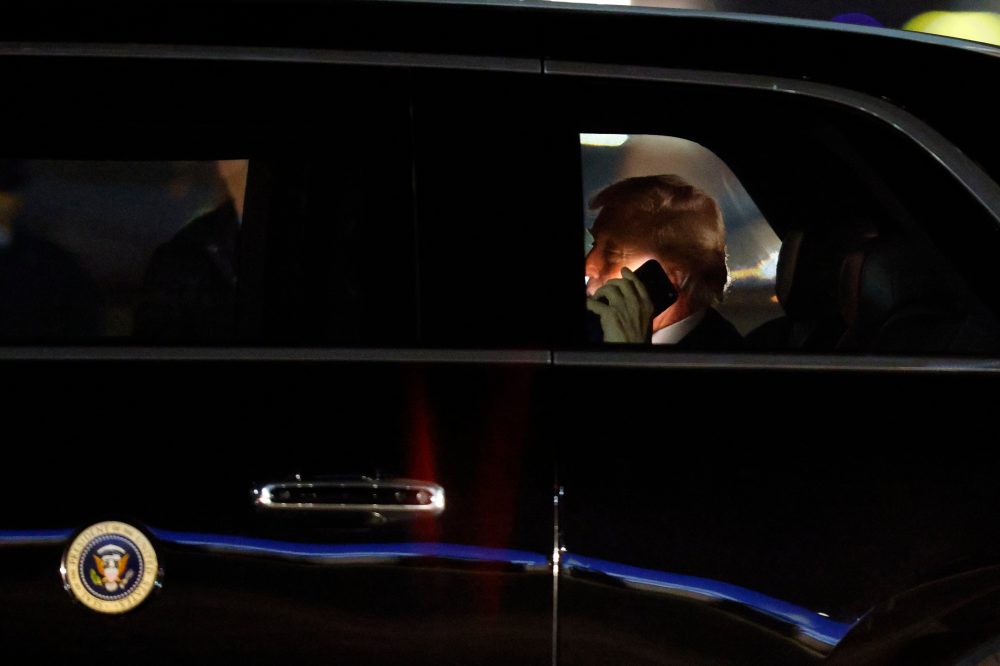
Trump, as president-elect in 2016, accepted a phone call from Taiwanese President Tsai Ing-wen — potentially the first president to do so since America ended diplomatic relations with the island in 1979. He later dismissed the controversy, posting: “Interesting how the U.S. sells Taiwan billions of dollars of military equipment but I should not accept a congratulatory call.”
The following year, Trump’s White House released a statement about a Germany meeting between Xi and Trump that incorrectly identified Xi as president of the Republic of China — Taiwan’s official name — rather than the correct People’s Republic of China. Officials later corrected the transcript.
“There is a lot of difficulty to navigate a lot of these concepts. However, the reason why that is the case — a lot of misunderstanding and misspeaking — is because those concepts are conceptual traps set up by China,” said Miles Yu, who served as principal China policy adviser to Secretary of State Mike Pompeo during Trump’s first term. “You cannot explain something that’s unexplainable.”
Yu, currently a senior fellow and China Center director at the Hudson Institute, supports more definitive statements regarding America’s Taiwan defense commitment. He described the “One China” policy concept, or Beijing’s “One China” principle claiming Taiwan as an inseparable Chinese territory, as “completely of Chinese making.”
“No one inside the Chinese high command has ever believed there is any ambiguity as to America’s resolve to defend Taiwan,” Yu stated.
He argued that America has consistently maintained Taiwan defense plans proportional to Chinese threats, demonstrated by Washington’s repeated force deployments to the Taiwan Strait during periods of heightened tension.
Currently, Trump’s White House maintains no policy changes have occurred but dismisses the need for careful verbal maneuvering, pointing to Trump’s approval of significant Taiwan arms sales.
Following the 1949 Chinese civil war conclusion, Washington recognized Chiang Kai-shek’s Nationalists as China’s legitimate government, even after that administration relocated from Beijing to Taiwan. However, through an agreement with Beijing starting in 1979 under Jimmy Carter, America began following the “One China” policy.
Carter’s administration conducted months of secret negotiations with China to establish this agreement. Yet Carter later stated it “does nothing to prevent” future presidents or Congress from “even going to war” to defend Taiwan.
During a 1998 Shanghai roundtable, Bill Clinton endorsed the “three no’s”: America not supporting Taiwan independence; rejecting the “two Chinas” concept of separate China and Taiwan; and opposing Taiwan’s membership in international organizations.
However, the following year, Clinton stated, “You know what I’ve done in the past,” appearing to reference previous U.S. military interventions and suggesting similar action regarding Taiwan.
In a 2001 Associated Press interview, George W. Bush was questioned whether America might use military force against a Chinese Taiwan attack and responded, “It’s certainly an option.” Bush later told CNN this didn’t indicate a tougher stance, saying, “I have said that I will do what it takes to help Taiwan defend itself.”
Five years later, during Chinese President Hu Jintao’s Washington state visit, Bush’s White House announcer mistakenly announced the Republic of China national anthem would play, instead of the People’s Republic of China. The correct anthem was eventually played.
In 1989, George H.W. Bush said during a China banquet that while America follows “the bedrock principle that there is but one China, we have found ways to address Taiwan constructively without rancor.”
During a 2014 Beijing joint press conference with Xi, Barack Obama stated, “We encourage further progress by both sides of the Taiwan Strait towards building ties, reducing tensions and promoting stability on the basis of dignity and respect.”
Nevertheless, maintaining accuracy remains challenging.
“Anybody who has been at the State Department, the Pentagon or even the White House podium can tell you: When the issue of Taiwan came up, you went to your notes,” Kirby explained. “You didn’t freelance it.”
Kirby remembered that he “got cocky once and didn’t,” misrepresenting the policy and creating “a little kerfuffle.”
Major errors typically first prompt complaints from U.S. policy officials, Kirby said, who express their dissatisfaction clearly: “You’ll be highly encouraged to make a statement correcting it right away.”