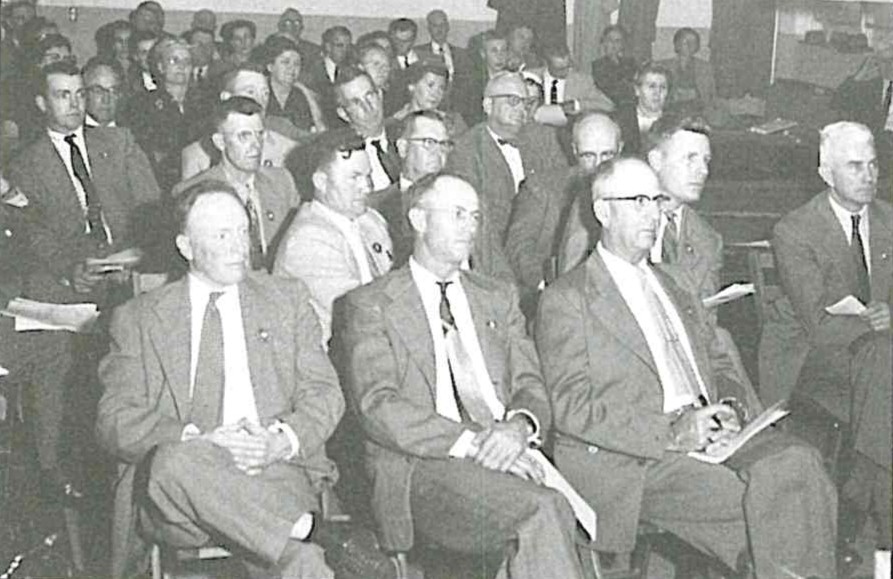

As America celebrates 250 years as a nation, it’s worth taking a moment to recognize one of the country’s oldest and most important industries — farming. Agriculture has helped shape the economy, culture, and character of the United States, and nowhere is that more visible than right here in Delaware.
In the late 1700s, farming looked very different from what we see today. Most operations were small, family-run, and dependent on hand tools, animal power, and tight-knit communities to get the work done. The vast majority of people living in Delaware at that time were involved in agriculture in some way.
The 1800s brought significant change. New mechanical inventions — including the steel plow and the reaper — allowed farmers to produce more than ever before. The expansion of railroads opened up new markets, and agriculture began shifting toward a more commercial, interconnected system.
But with modernization came new headaches. Farmers struggled with unpredictable prices, difficulty accessing supplies, and a constant need to keep up with evolving practices. Cooperative organizations began forming across the country to help address these issues, and Delaware was no exception.
County Farm Bureaus were established in the early 1900s through county extension agents, who used them as a platform to promote modern farming techniques and education. The Delaware Farm Bureau was formally organized in 1920, with W.V. Cosden serving as its first president.
At the time, the organization also functioned as a purchasing cooperative, allowing farmers to pool their resources and buy seed, fertilizer, and equipment at significantly reduced prices. However, the cooperative began to struggle when non-members started taking advantage of the purchasing benefits without paying dues. The financial strain proved too much, and in 1926, the Delaware Farm Bureau was forced to shut down.
Despite the disbandment, the need for a unified agricultural voice in Delaware didn’t go away. As farmers faced the Great Depression, the demands of wartime food production, and rapid technological shifts, the importance of having an organized group standing up for their interests became undeniable. Farm numbers were declining while farm sizes were growing, and producers were being forced to adapt to entirely new business models.
In 1944, the Delaware Farm Bureau was reestablished with a renewed mission to protect Delaware agriculture and grow its membership. The organization quickly regained its footing as a vital resource for farmers — advocating on policy issues, providing educational programs, and strengthening community ties. George Simpson of Houston served as the first president of the reorganized Delaware Farm Bureau, leading efforts to unite farmers, improve communication among them, and encourage shared problem-solving.
Today’s Delaware farms bear little resemblance to those early colonial operations. Modern agriculture relies on heavy machinery, data-driven decision-making, and a global marketplace. Delaware has diversified its agricultural output over the years, with poultry, produce, and grain production now forming the backbone of the state’s farming economy.
Yet through all the changes, the core values that have long defined Delaware farming — cooperation, community, and a commitment to supporting local producers — have remained constant. The Delaware Farm Bureau stands as a testament to that enduring spirit. Its history is a reminder that agriculture isn’t simply an industry; it’s a living tradition passed down through generations of Delawareans who work the land, look out for one another, and continue to adapt to whatever challenges come their way.