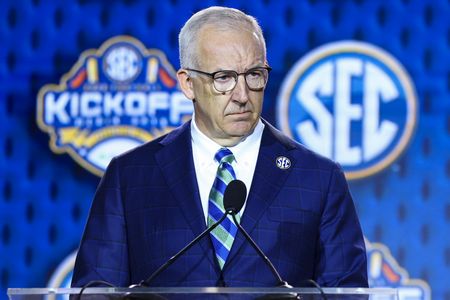

SEC commissioner Greg Sankey wasted no time setting the record straight when conference media days got underway in Tampa on Monday, addressing doubts about whether talks of breaking away from the NCAA are actually serious.
“So they’re real. People have talked about that,” Sankey said. “They’ve opined about the frustrations that bring them to the point of saying we should look at something significantly different. I do not believe that is a leverage point. I think that’s just honest communication.”
Sankey added that he would rather those conversations stay behind closed doors rather than show up in the press the following morning, but acknowledged he cannot control everything. He framed the remarks as a reflection of deep dissatisfaction with the current state of college athletics.
“I would prefer that stay in a meeting room or on a videoconference, not be part of the D1.ticker the next morning, but I don’t control all of that. What I think is important is those comments represent a high level of frustration with the circumstance in which we find ourselves. We have regulated ourselves more progressively than other colleagues by choice, across our league. We’ve had different academic eligibility restrictions in the past. So we have different transfer restrictions in the past. Some of what you hear comes out of a culture that we can regulate ourselves,” he said.
Sankey made clear that the NCAA must operate in what he called “a healthy manner” or risk those frustrations growing into something far more serious.
As the leader of one of college sports’ most dominant conferences, Sankey did not shy away from describing where the SEC and the broader NCAA membership are at odds. Points of contention include a potential end to conference championship games — Sankey is firmly in favor of keeping the SEC’s title game — disagreements over the size of the College Football Playoff, and concerns about how other conferences approach scheduling.
“We had what I’ll call an unsatisfactory conversation with members of the College Football Playoff staff and some of their advisers in Destin,” Sankey said, referring to the disparity between the SEC’s demanding nine-game schedule and the easier roads some other conferences have to the playoff. “That’s rehashing from a couple months ago, that’s not a secret. That’s a reminder of that process needing to continually improve.”
“My confidence is that people will act with integrity. I do think we have questions about the understanding of the strength and rigor associated with competing in the Southeastern Conference,” he added.
Beyond conference matters, Sankey has increasingly found himself navigating the political landscape, making trips to Capitol Hill and participating in video calls as part of efforts to shape the Protect College Sports Act.
The bipartisan bill, which was introduced with backing from former Alabama head coach Nick Saban and others connected to college athletics, quickly drew opposition from both the SEC and the Big Ten in June, ahead of Congressional hearings.
Sankey has pushed Congress on several fronts on behalf of the SEC, including the need for nationwide eligibility and transfer standards, health and safety expectations for student-athletes, support for educational opportunities, scholarship protections, and oversight of agent activity. While negotiations over the bill’s provisions continue, Sankey made clear he does not view the current version as adequate.
“We support the effort behind the Protect College Sports Act. However, we believe changes to the act are necessary to make it most effective,” Sankey said. “If Congress is going to act, and again I believe it should for the reasons identified, we have one opportunity to get this legislation right. If Congress passes a bill and it’s signed into law, we won’t be returning to DC in a year or two asking and receiving help to correct the gaps that exist. That’s why it’s important that these commonsense areas be addressed now before the bill becomes law.”